
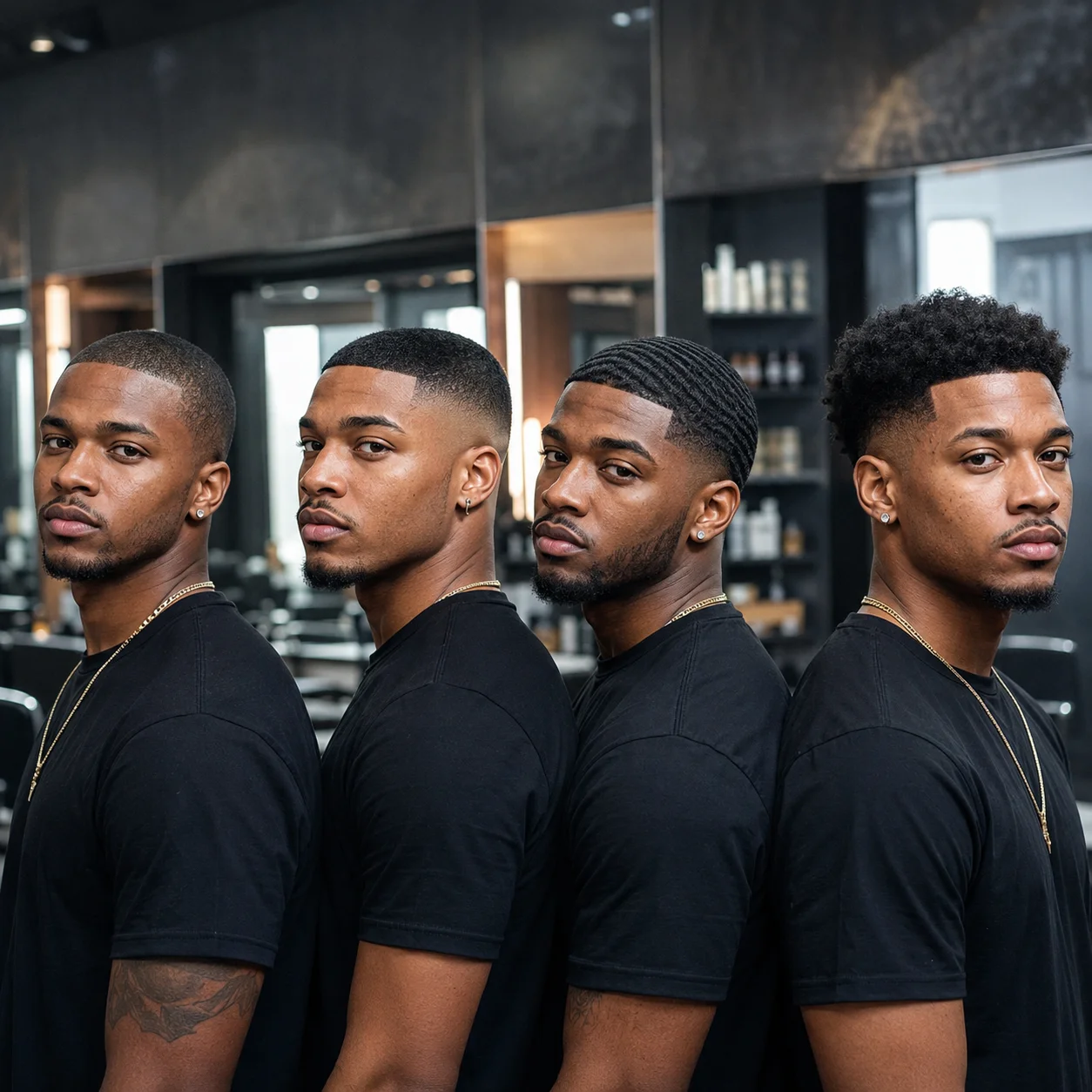
Short hair is the easiest way to look sharp without spending an hour in front of the mirror every morning. But “short haircut” isn’t one style — it’s a whole category, and picking the wrong version for your face shape, hair type, or lifestyle is why some cuts look effortless and others look like a bad photocopy of a barbershop poster.
This guide breaks down the best black men hairstyles for short hair by texture, maintenance level, and face shape, with real barber tips for each one — not just a photo gallery with no context.
How to Choose the Right Short Haircut
Before you sit in the chair, three things decide whether a style will actually work for you:
- Face shape — determines where you want visual width added or removed (fade height, hairline shape).
- Hair type — coily, curly, or wavy hair behaves differently under clippers than straight hair, which affects how a fade grows out.
- Maintenance tolerance — a skin fade needs a touch-up every 1–2 weeks; a buzz cut can stretch to 3–4.
Bring a photo to your barber, but also describe the maintenance you’re willing to do — a good barber will adjust the cut, not just copy the photo.
Best Black Men Hairstyles for Short Hair
1. Buzz Cut
A uniform, all-over clipper cut, usually between a #1 and #3 guard.
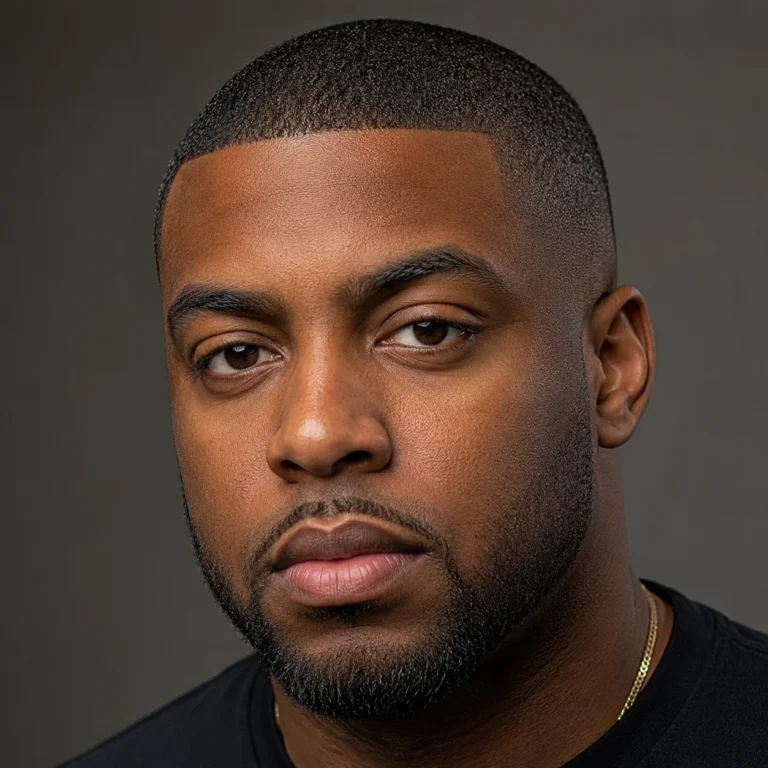
2. Low Fade
Fade starts just above the ears and blends into longer hair on top.
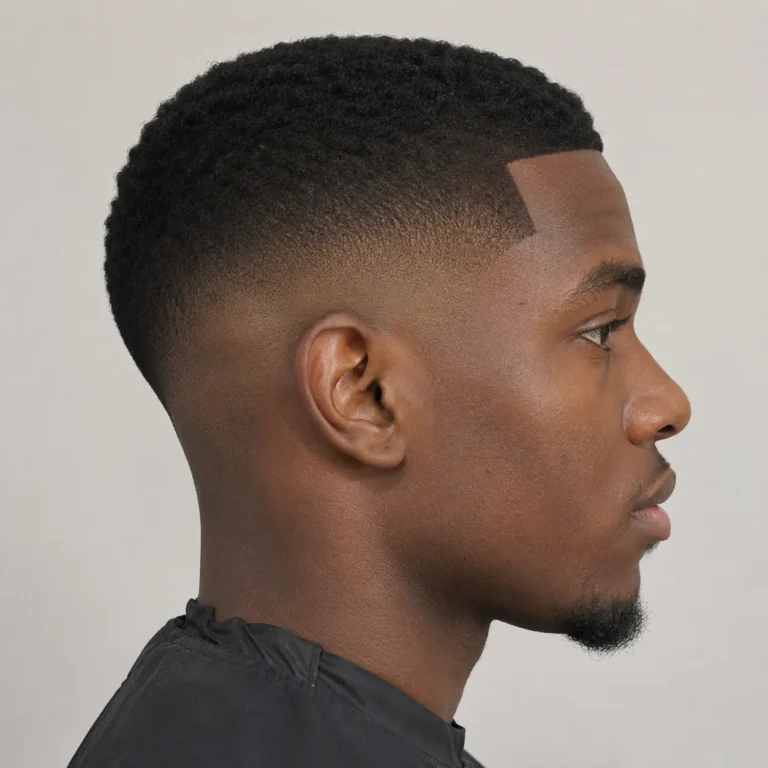
- Best face shape: Round, oval
- Hair type: All types
- Maintenance: Medium (every 2–3 weeks)
- Barber tip: Request a “shadow” transition, not a hard line, for a more mature look.
- Products: Matte pomade for top hair
- Pros: Subtle, workplace-friendly
- Cons: Grows out faster around the edges than a high fade
- Avoid if: You want a bold, high-contrast look
3. High Fade
Fade begins high on the sides, leaving a shorter section on top than a low fade.
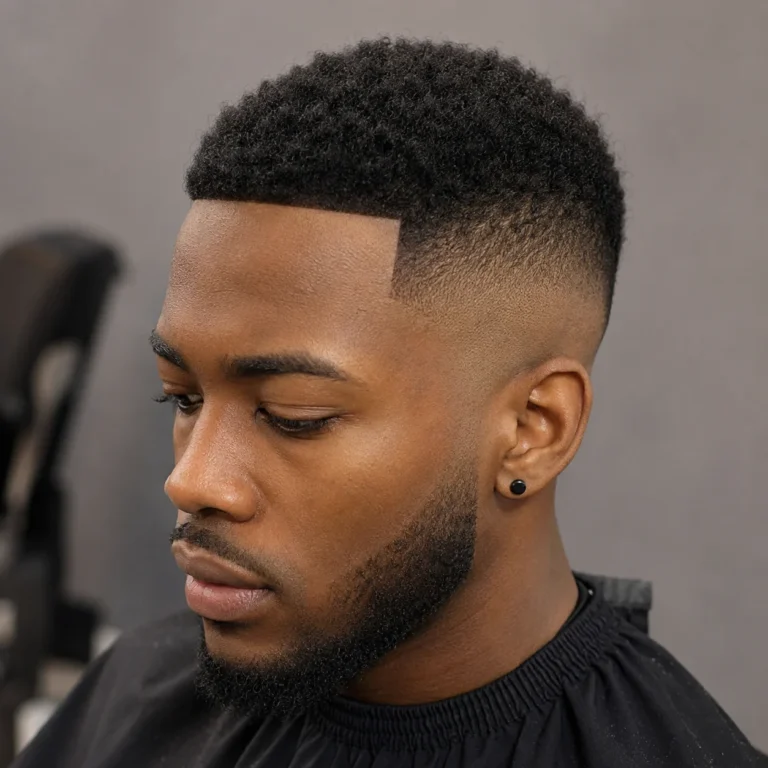
- Best face shape: Long, oval
- Hair type: Coily, thick
- Maintenance: High (every 1–2 weeks)
- Barber tip: Pairs well with a defined line up for extra sharpness.
- Products: Firm-hold pomade or edge control
- Pros: Bold, modern silhouette
- Cons: Grows out visibly fast
- Avoid if: You can’t commit to frequent barber visits
4. Mid Fade
A middle ground — fade starts around temple height.
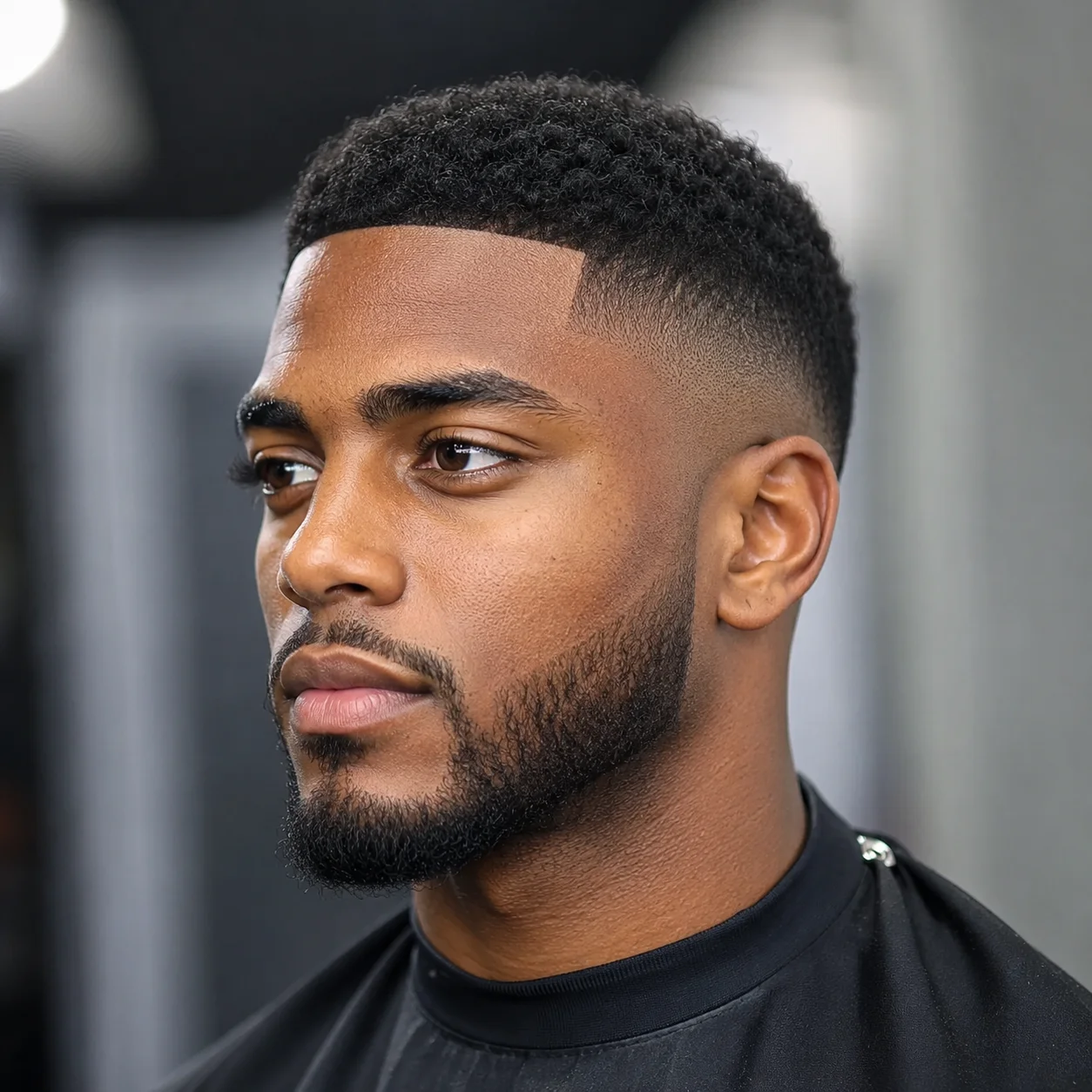
- Best face shape: Square, diamond
- Hair type: All types
- Maintenance: Medium
- Barber tip: Ask for the fade to match your natural hairline curve, not a straight line.
- Products: Cream pomade
- Pros: Balances boldness with subtlety
- Cons: Requires a skilled barber to blend correctly
- Avoid if: Your barber isn’t confident with blending — a bad mid fade shows visible lines
5. Temple Fade
Fade focused specifically around the temples, often paired with longer hair on top.
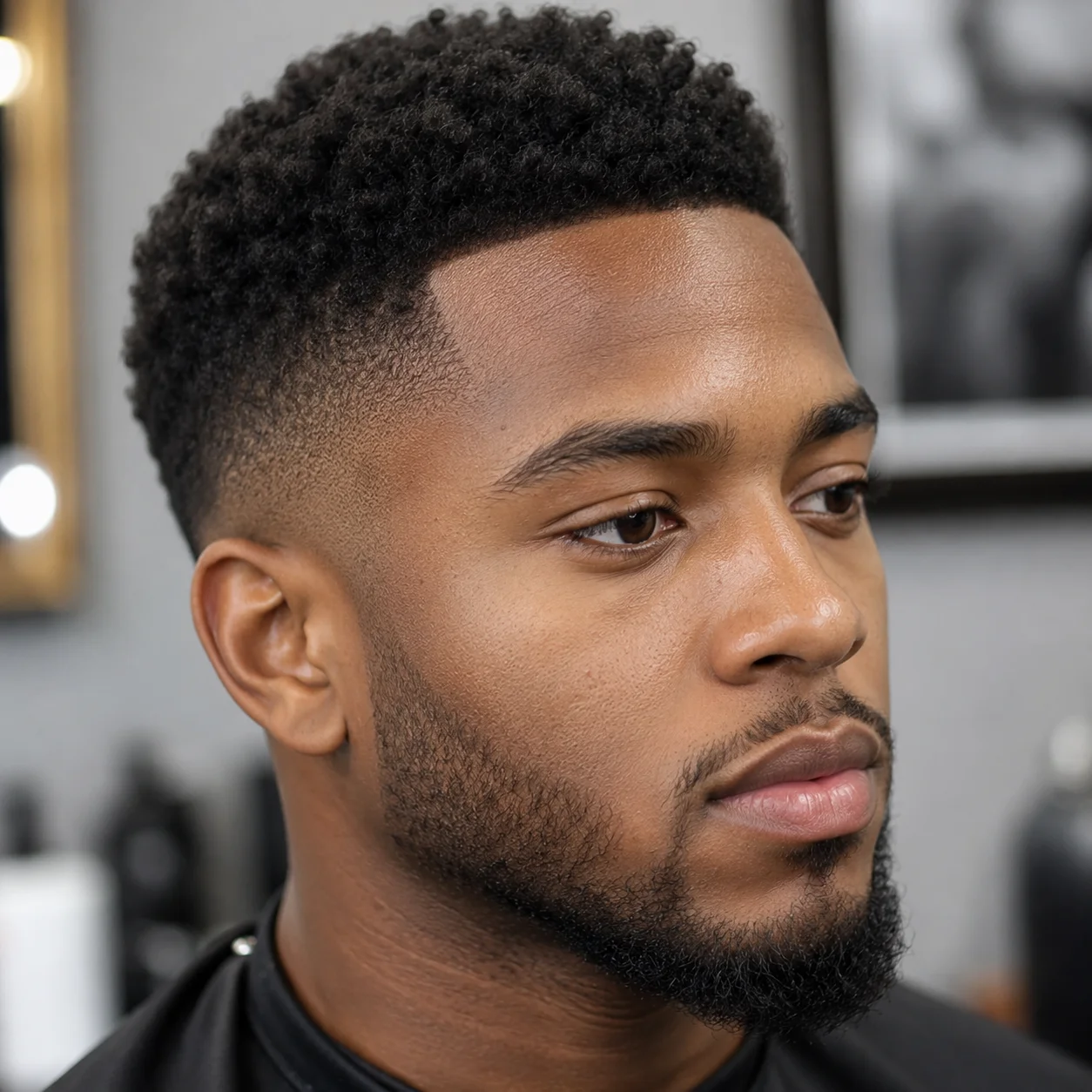
- Best face shape: Round, heart
- Hair type: Curly, coily
- Maintenance: Medium-high
- Barber tip: Great for slimming a rounder face by adding height illusion.
- Products: Curl cream or twist cream on top
- Pros: Adds definition without going full skin fade
- Cons: Less dramatic than a full fade
- Avoid if: You want maximum contrast
6. Drop Fade
The fade line curves downward behind the ear instead of staying straight.
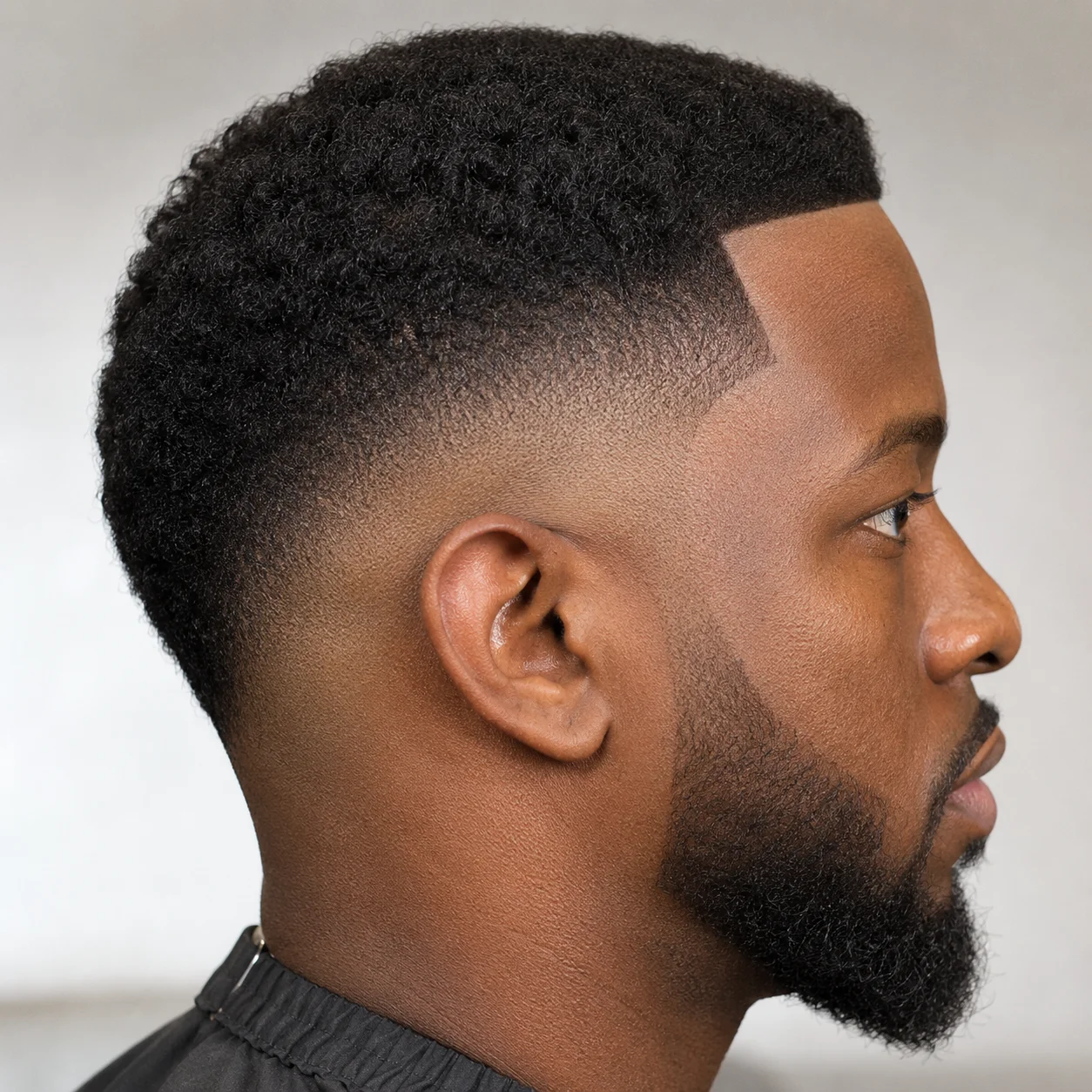
- Best face shape: Square, oval
- Hair type: All types
- Maintenance: High
- Barber tip: Works best combined with a curved line up in the back.
- Products: Matte clay
- Pros: More dynamic, trendy silhouette
- Cons: Harder to maintain the exact curve between visits
- Avoid if: You prefer a classic, understated look
7. Burst Fade
Fade curves around the ear in a semicircle rather than running straight across.
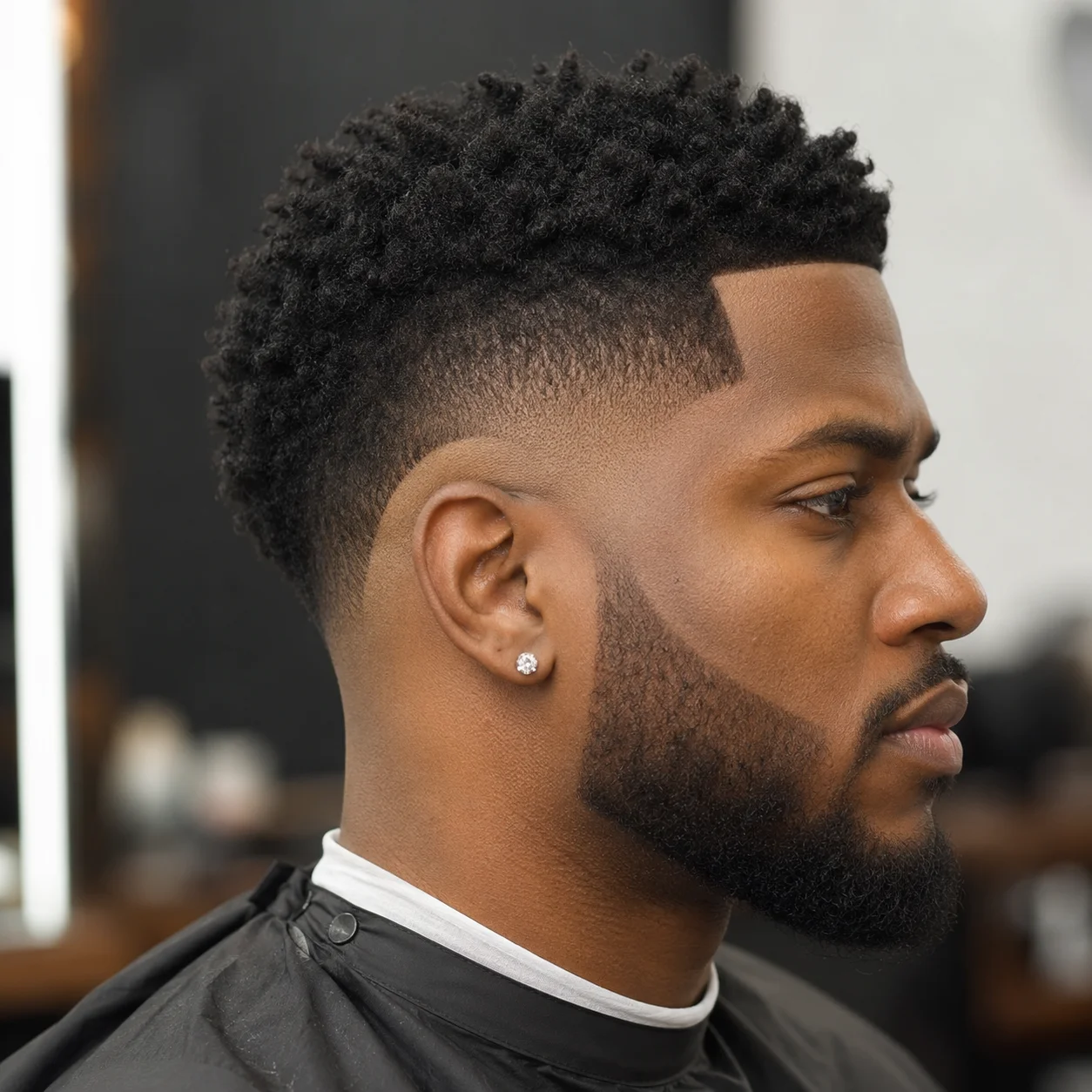
- Best face shape: Round, square
- Hair type: Coily, curly
- Maintenance: High
- Barber tip: Pairs well with a mohawk or curly top for contrast.
- Products: Curl activator
- Pros: Unique, stands out
- Cons: One of the harder fades to maintain precisely
- Avoid if: You want low-effort upkeep
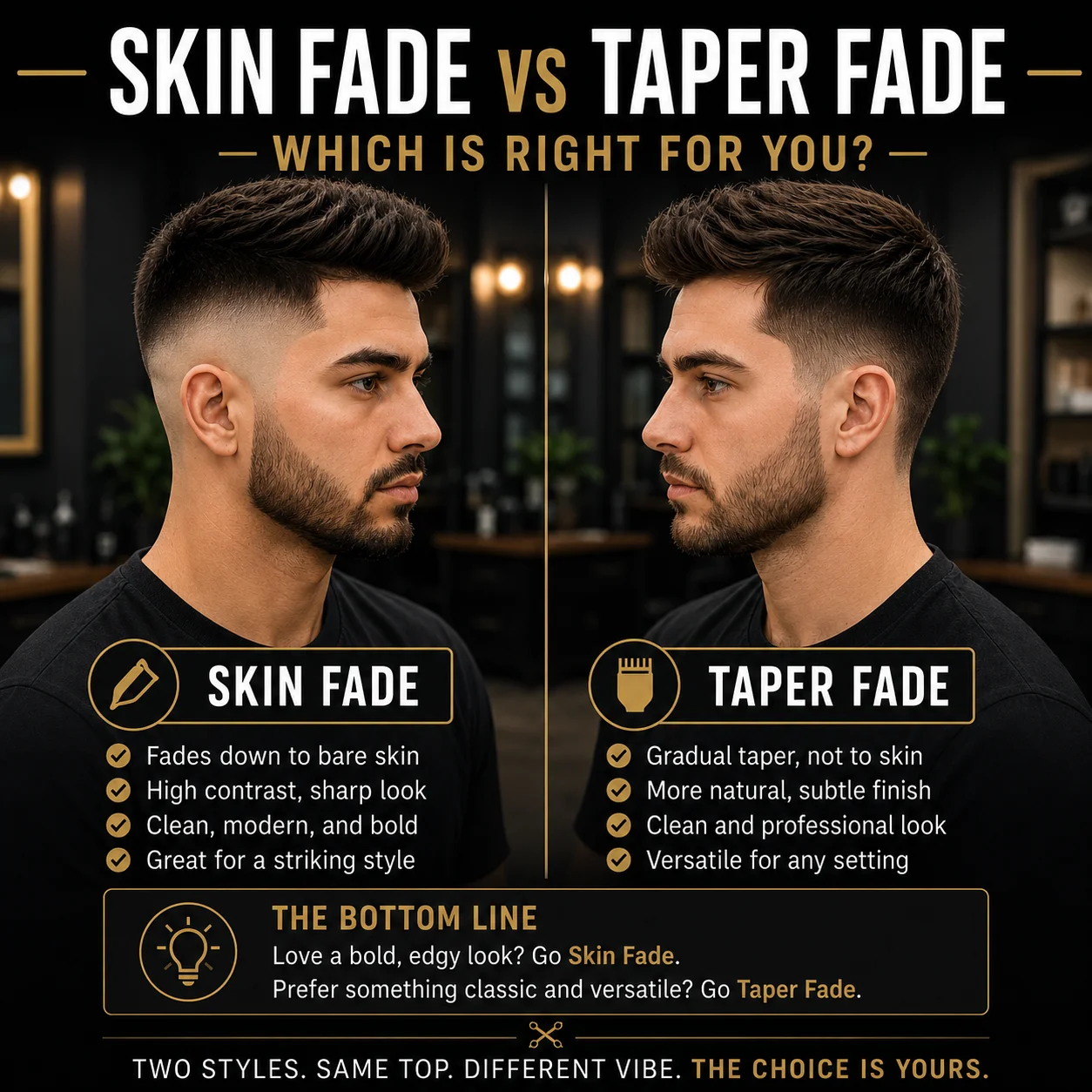
8. Skin Fade (Bald Fade)
Fade blends all the way down to bare skin.
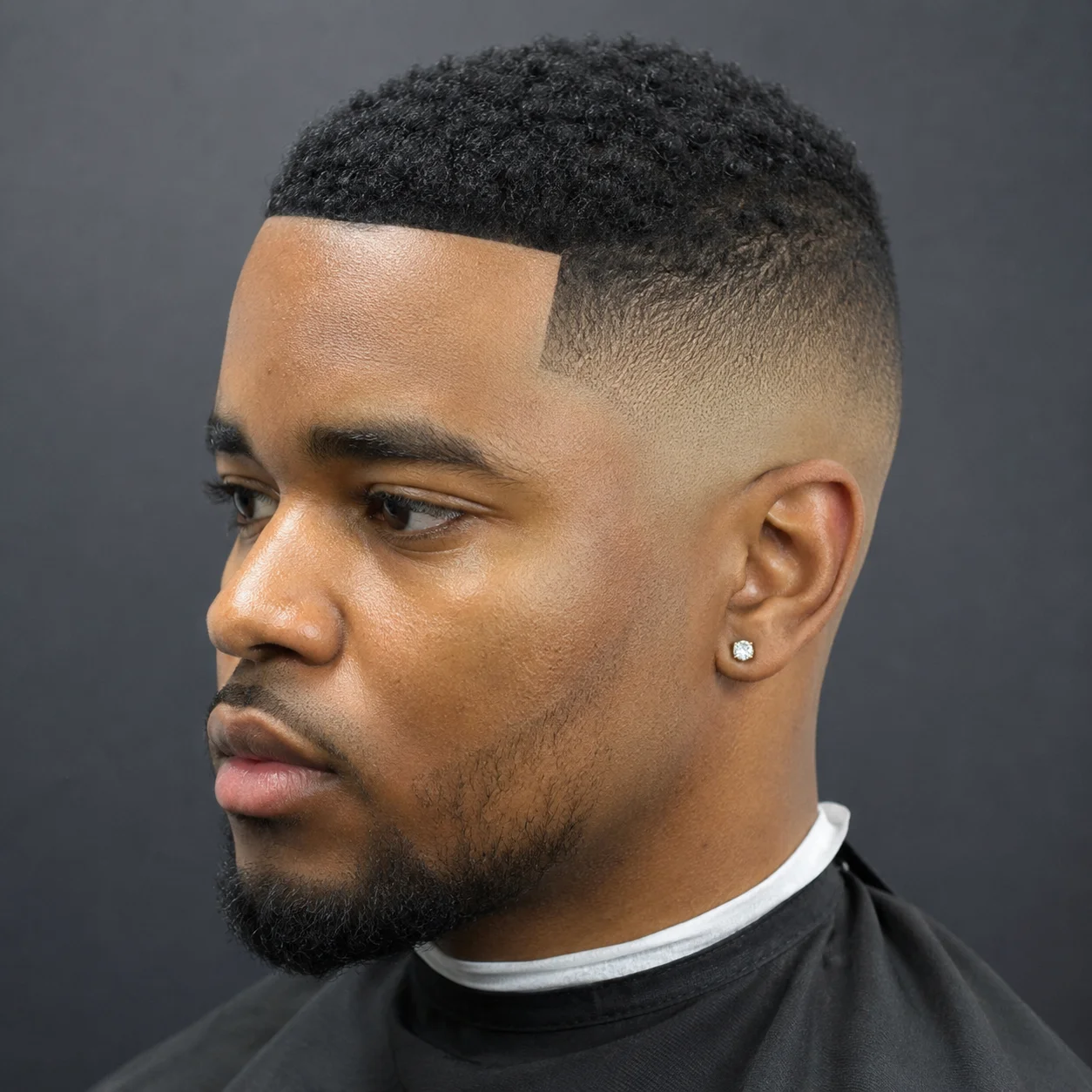
- Best face shape: Oval, long
- Hair type: All types
- Maintenance: Very high (weekly touch-ups recommended)
- Barber tip: Ask your barber which razor they use — a fresh blade avoids razor bumps common in coily hair.
- Products: Aftershave balm, scalp moisturizer
- Pros: Crisp, sharp, professional
- Cons: Fastest-growing-out fade of all; can cause irritation for sensitive skin
- Avoid if: You’re prone to razor bumps or ingrown hairs
9. Caesar Cut
Short, horizontally-textured fringe with a straight hairline, no part.
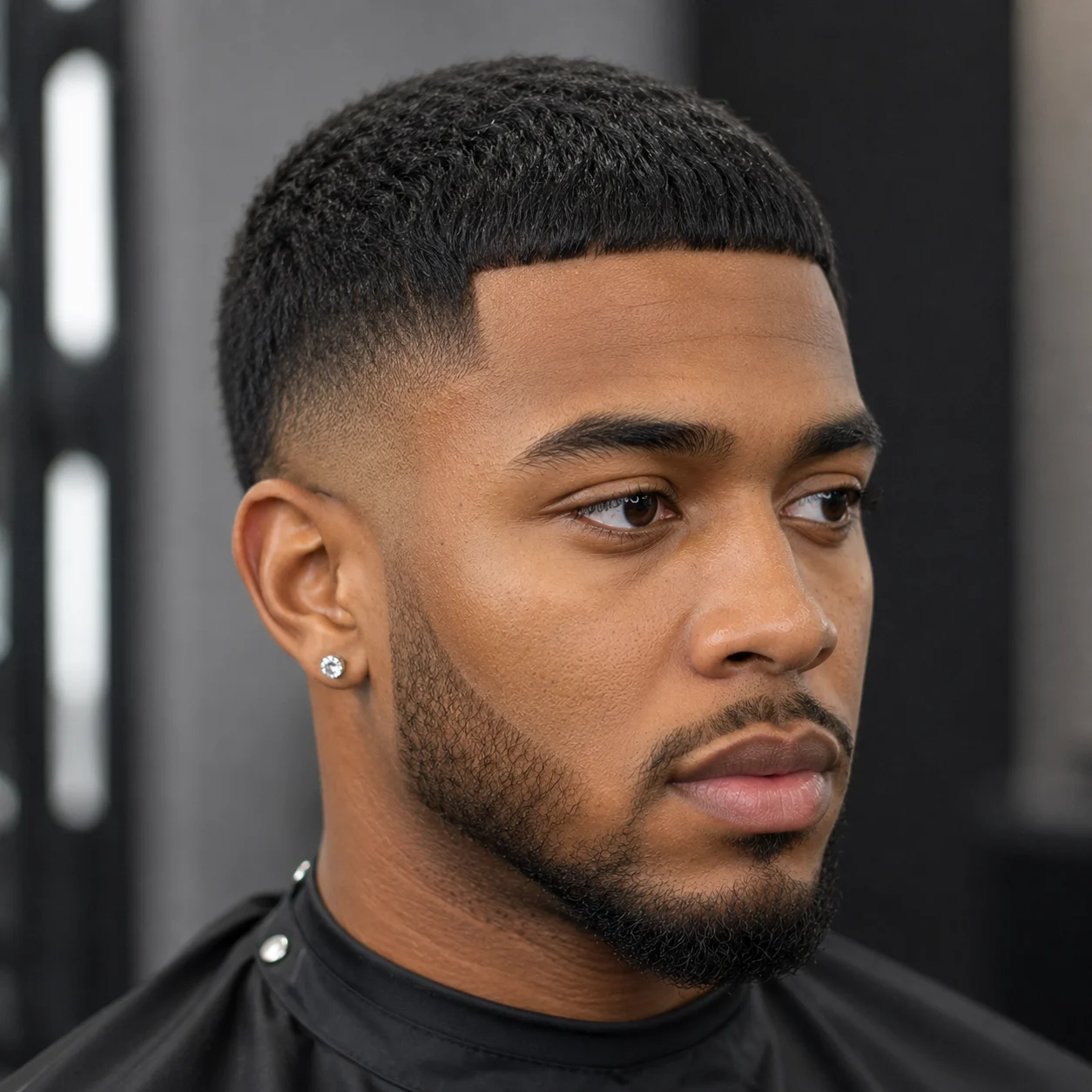
- Best face shape: Oval, square
- Hair type: Straight, wavy, thin
- Maintenance: Low-medium
- Barber tip: Works especially well combined with a low fade on the sides.
- Products: Light matte paste
- Pros: Classic, professional, low styling effort
- Cons: Less texture definition on coily hair
- Avoid if: You have very tight coils that resist lying flat
10. Crew Cut
Slightly longer on top than a buzz cut, tapered on the sides.
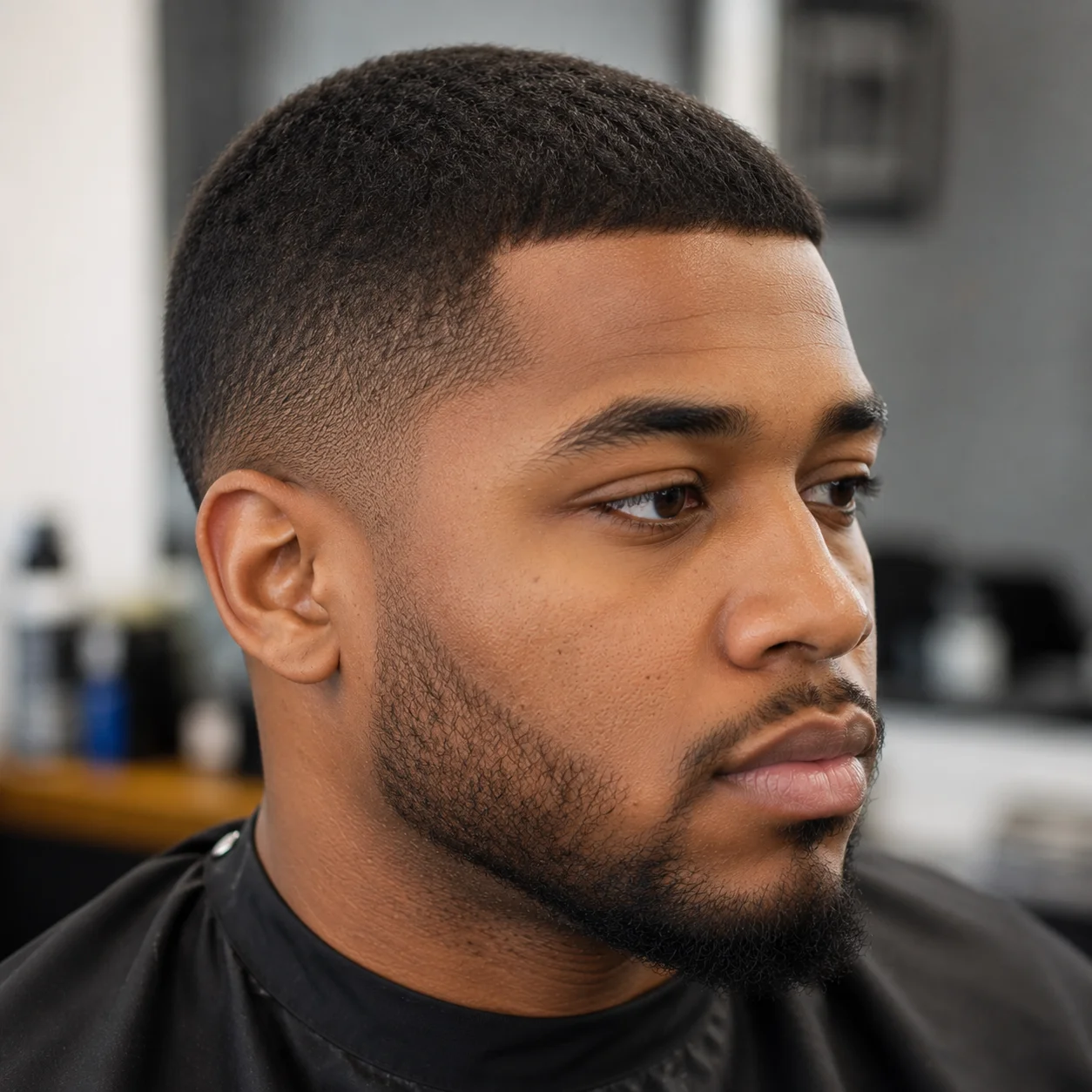
- Best face shape: Round, square
- Hair type: All types
- Maintenance: Low
- Barber tip: A textured crop variation adds movement on top.
- Products: Light pomade
- Pros: Versatile, easy to maintain, ages well
- Cons: Can look plain without added texture
- Avoid if: You want a statement style
11. Afro Fade
Natural afro texture on top, faded sides.
- Best face shape: Long, diamond
- Hair type: Coily, thick
- Maintenance: Medium
- Barber tip: Use a pick, not a brush, to maintain volume between cuts.
- Products: Curl-defining cream, leave-in conditioner
- Pros: Celebrates natural texture, adds height
- Cons: Requires regular moisture to avoid dryness/breakage
- Avoid if: You’re not willing to moisturize daily
12. Waves (360 Waves)
Deep, uniform wave pattern created through brushing and durag use.
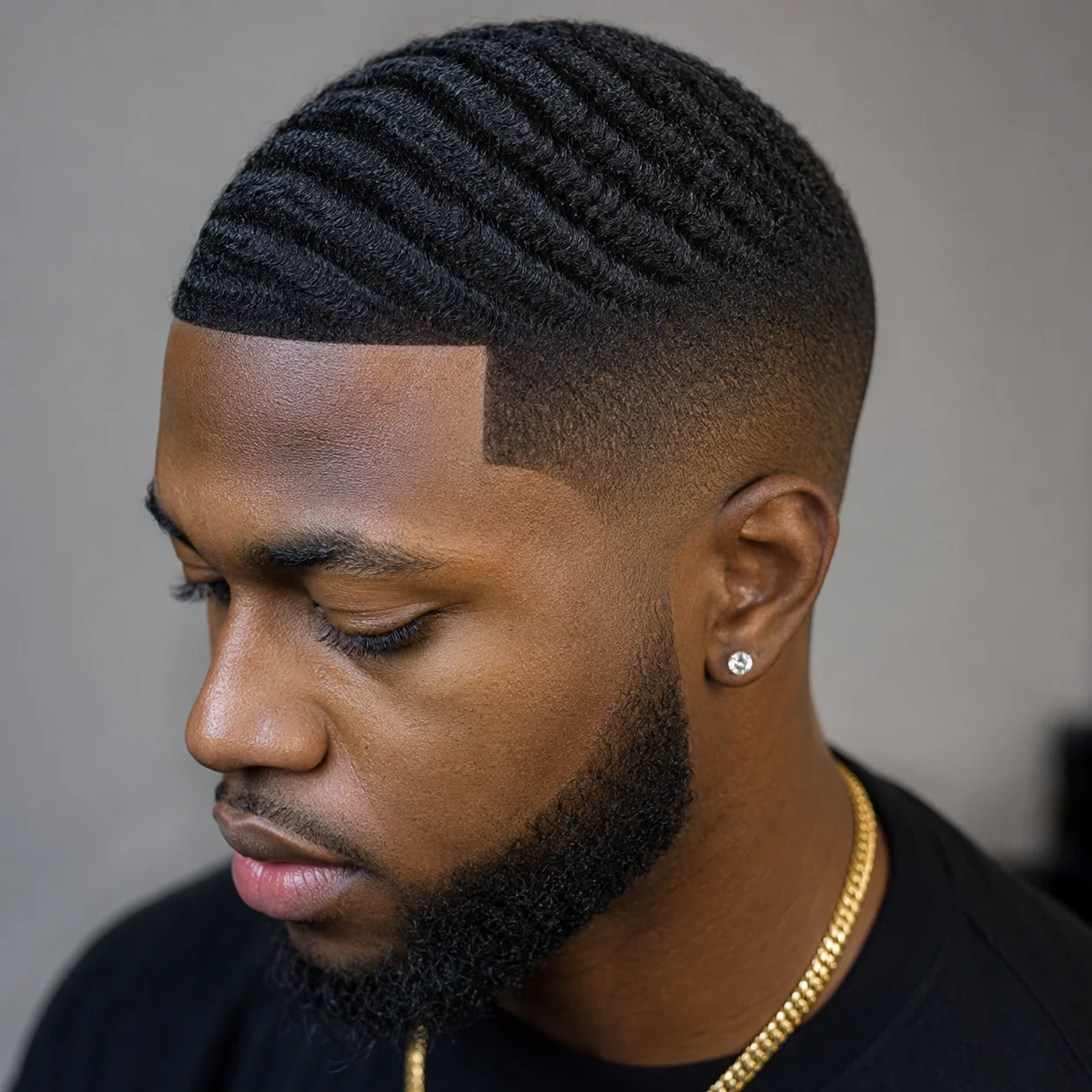
- Best face shape: All shapes
- Hair type: Coily, curly (waves form best on tighter curl patterns)
- Maintenance: High (daily brushing required)
- Barber tip: Ask for a light fade underneath to make the wave pattern more visible.
- Products: Wave pomade, durag, boar-bristle brush
- Pros: Distinctive, textured look
- Cons: Takes weeks of daily brushing to establish the pattern
- Avoid if: You aren’t willing to brush 2–3 times a day for several weeks
13. Short Twists
Small, tightly coiled twists close to the scalp.
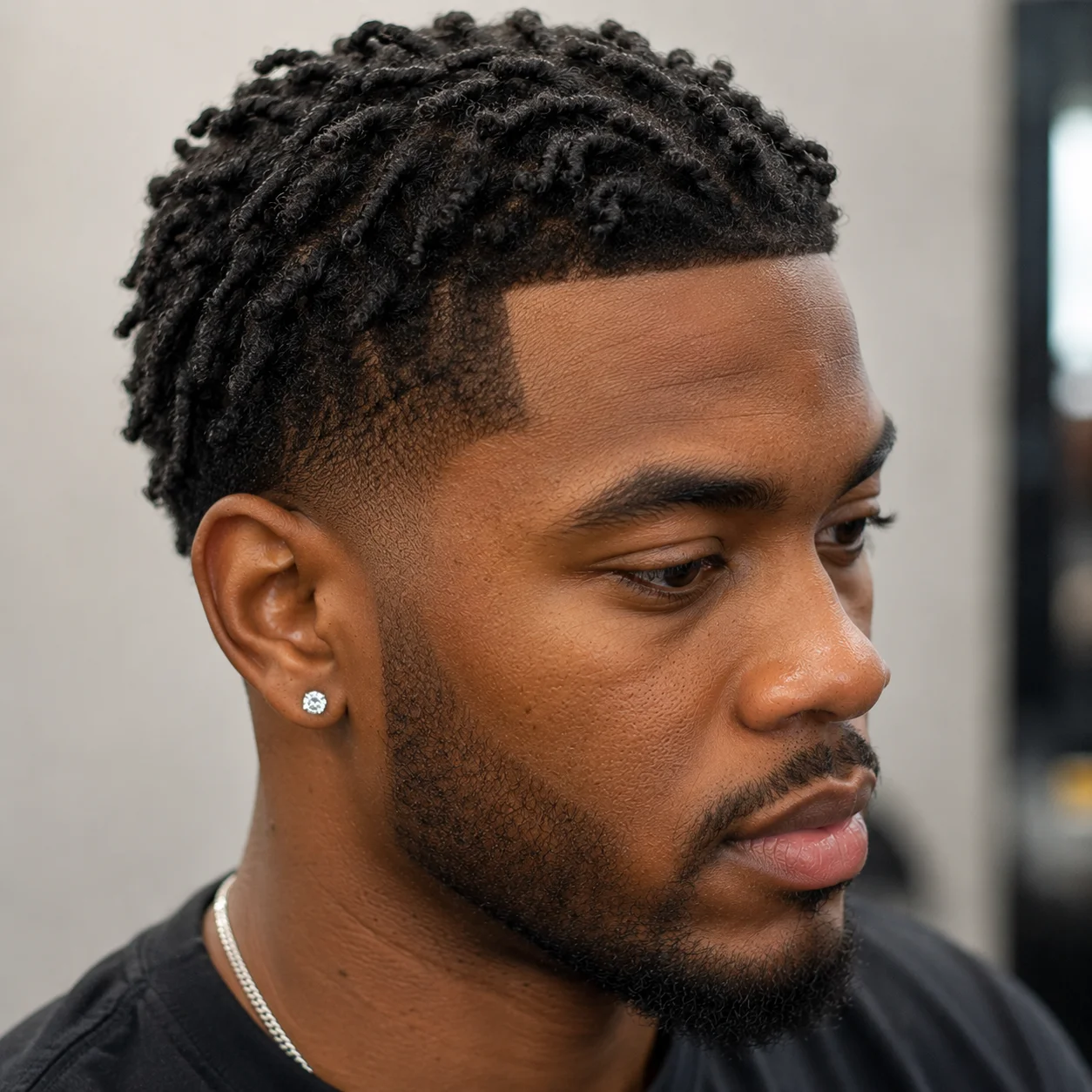
- Best face shape: Oval, heart
- Hair type: Coily, curly
- Maintenance: Medium (re-twist every 1–2 weeks)
- Barber tip: Twist while hair is damp for a cleaner, more defined coil.
- Products: Twist cream, edge control
- Pros: Protective, low daily styling
- Cons: Twists loosen over time and need re-twisting
- Avoid if: You want a completely wash-and-go routine
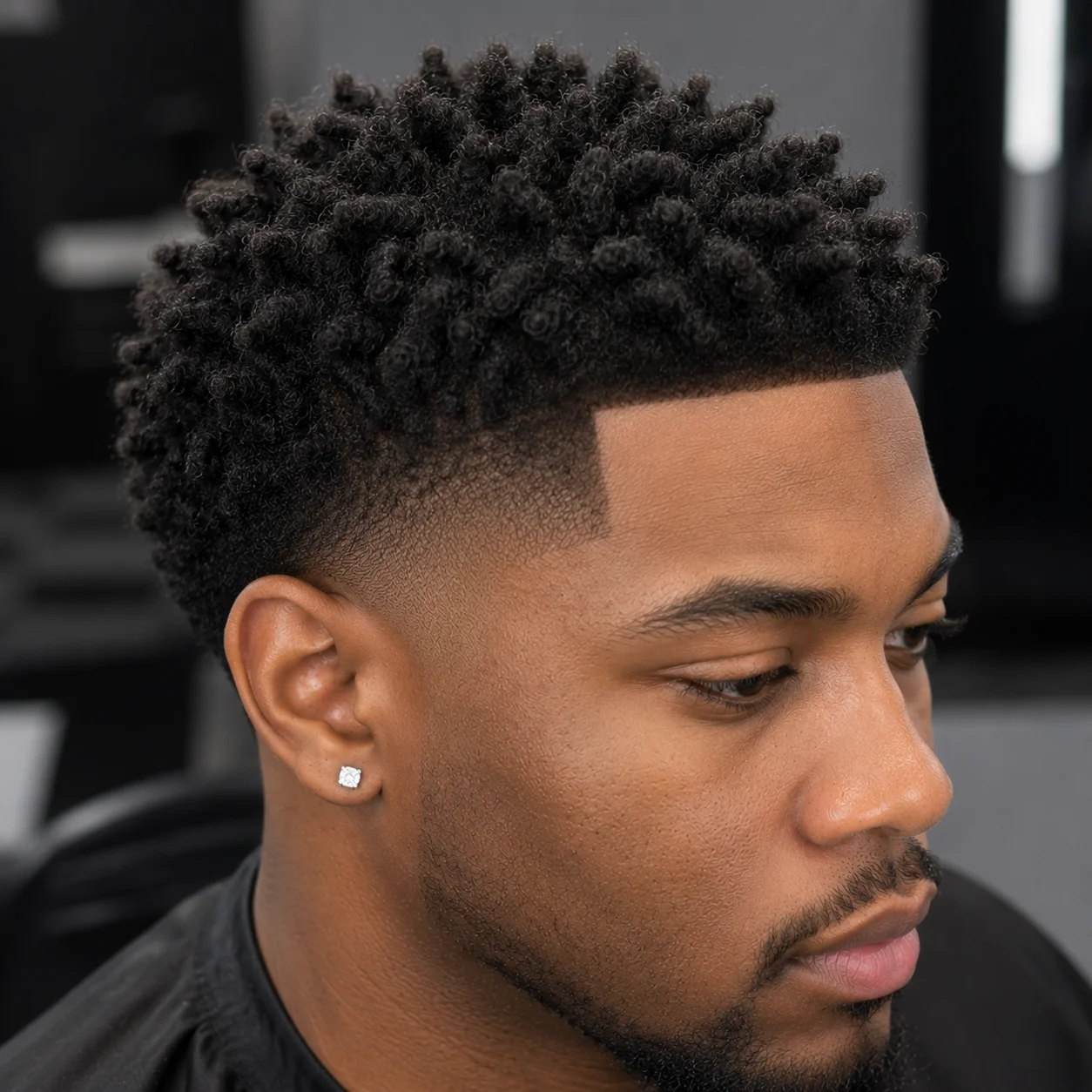
14. Sponge Twists
Twist pattern created using a curl sponge rather than manual twisting.
- Best face shape: Round, square
- Hair type: Coily
- Maintenance: Low-medium
- Barber tip: Use the sponge in one consistent direction to avoid a matted look.
- Products: Curl sponge, twist cream
- Pros: Faster than manual twisting, uniform texture
- Cons: Can pull on very fine or thin hair
- Avoid if: Your hair is thin or prone to breakage
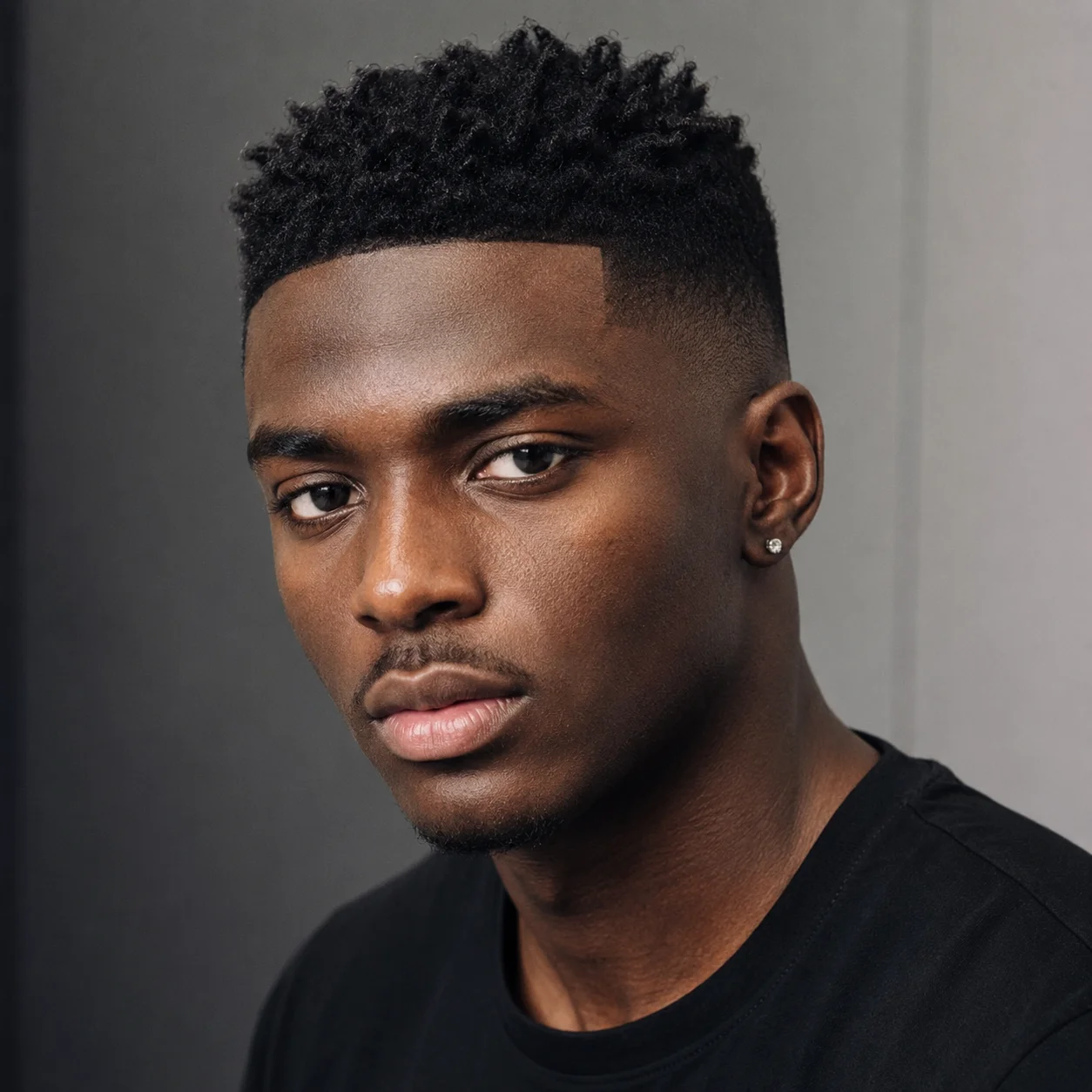
15. Textured Crop
Short on the sides, choppy, textured longer section on top.
- Best face shape: Square, diamond
- Hair type: Wavy, curly, thick
- Maintenance: Medium
- Barber tip: Point-cutting (not just clippers) on top gives the choppy texture.
- Products: Matte clay or paste
- Pros: Modern, low daily effort once cut correctly
- Cons: Needs a barber skilled in scissor/point-cutting
- Avoid if: Your barber only does clipper work
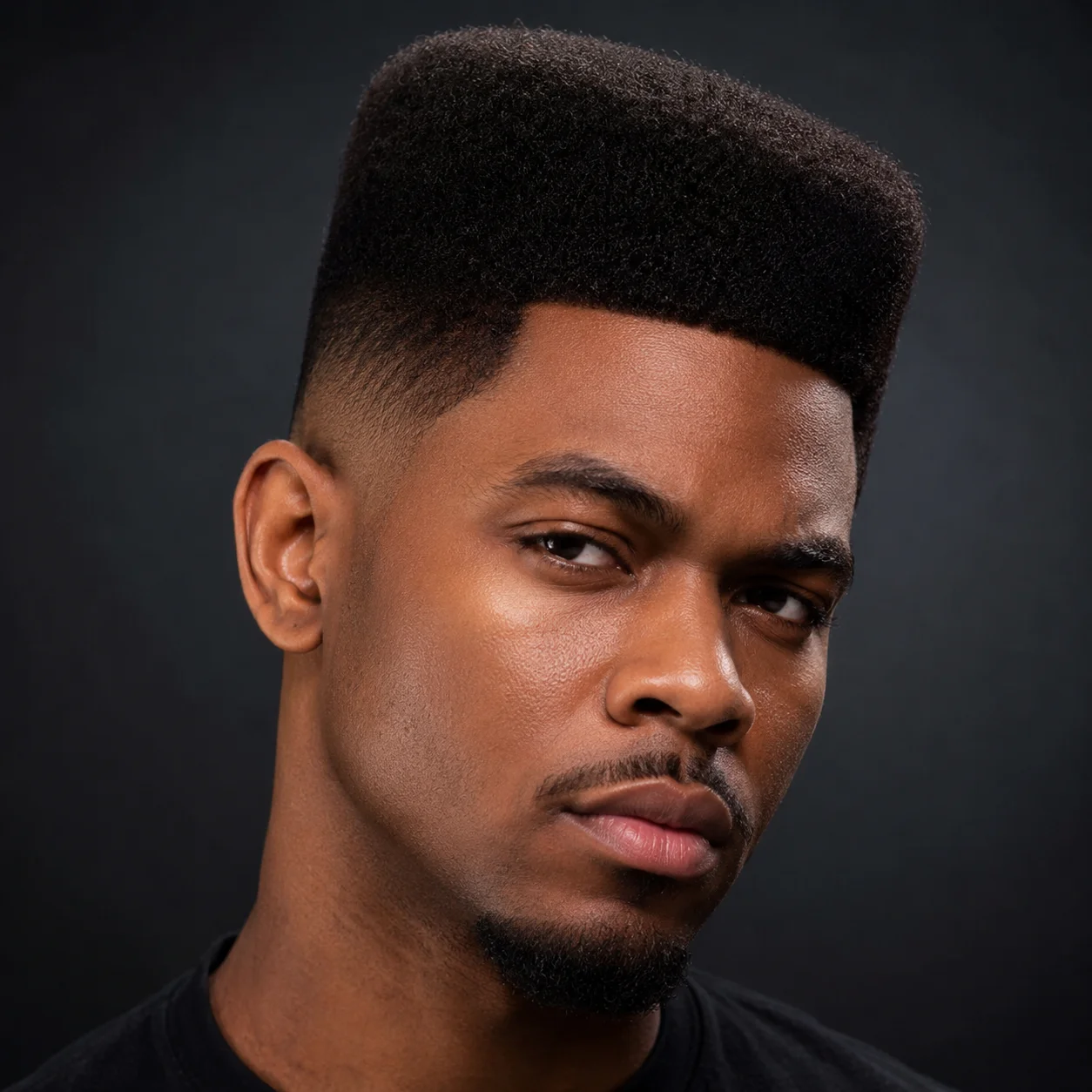
16. High Top Fade
Tall, flat-topped section on top with a faded base — a modern take on the ’90s classic.
- Best face shape: Round, heart
- Hair type: Coily, thick
- Maintenance: High
- Barber tip: Requires product and sometimes a pick to maintain the flat shape daily.
- Products: Strong-hold gel or edge control
- Pros: Bold, statement style, adds height
- Cons: High daily styling effort
- Avoid if: You want a wash-and-go morning routine
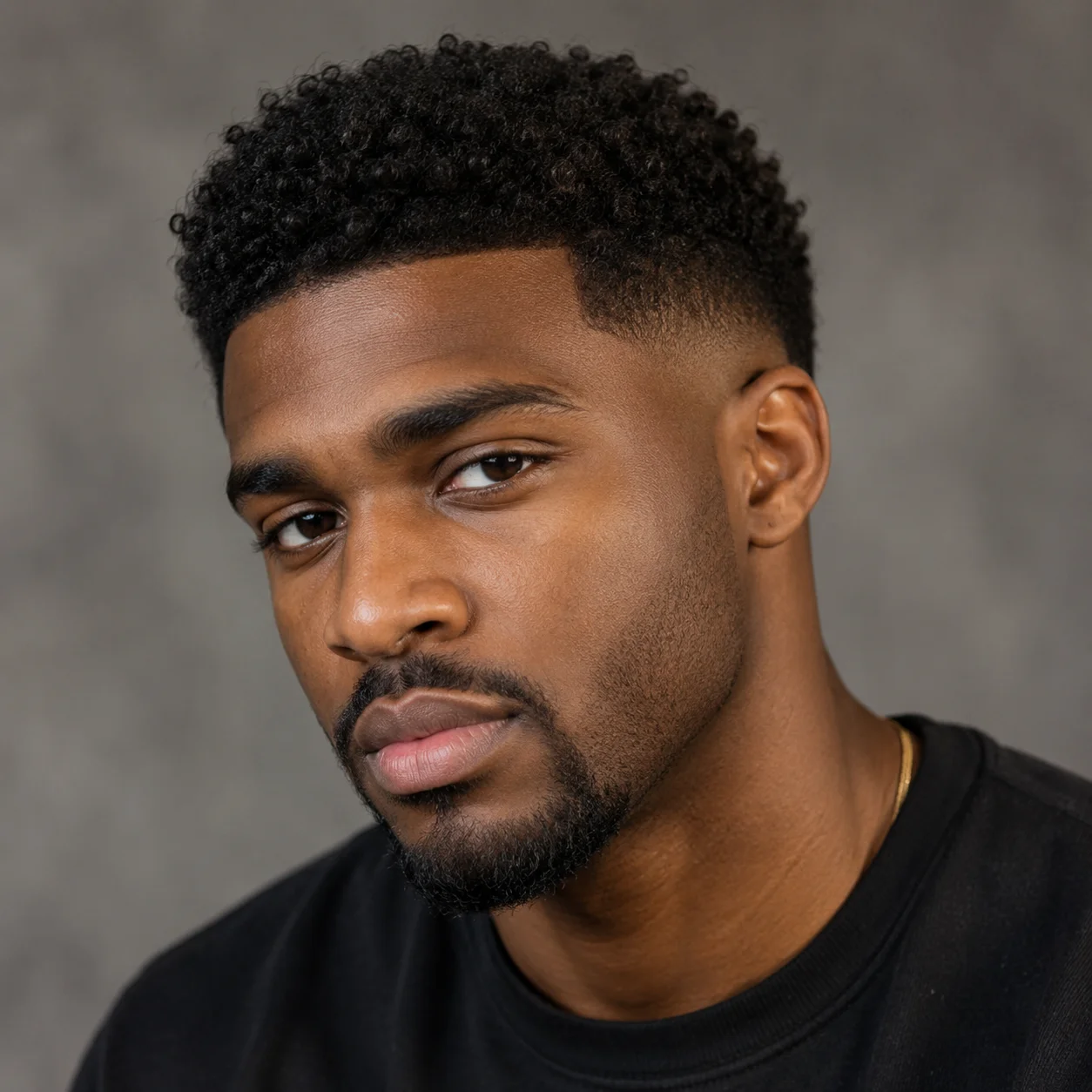
17. Curly Top Fade
Natural curls left longer on top, faded sides.
- Best face shape: Oval, long
- Hair type: Curly
- Maintenance: Medium
- Barber tip: Ask for curls to be cut with scissors over a pick, not clippers, to preserve curl shape.
- Products: Curl cream, diffuser if blow-drying
- Pros: Natural, low-fuss texture
- Cons: Curl definition varies with humidity
- Avoid if: You live somewhere very humid and dislike frizz
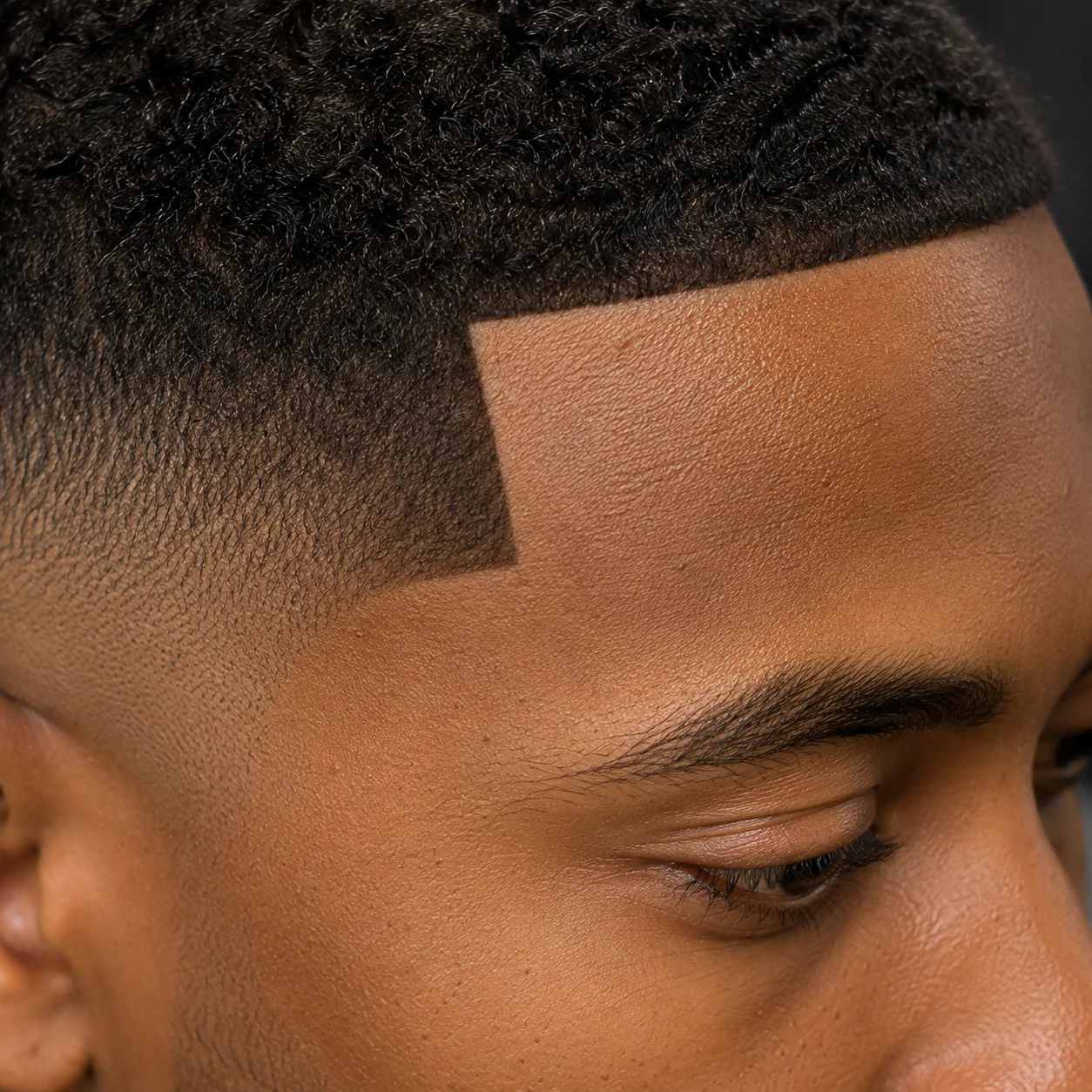
18. Line Up (Edge Up)
A crisp, straight-edged hairline, often paired with any other style on this list.
- Best face shape: All shapes
- Hair type: All types
- Maintenance: High (weekly)
- Barber tip: Follow your natural hairline shape — an overly straight line looks unnatural on a rounded hairline.
- Products: Edge control, aftershave balm
- Pros: Instantly sharpens any cut
- Cons: Grows out fastest of all details, very noticeable when it does
- Avoid if: You can’t get a touch-up weekly
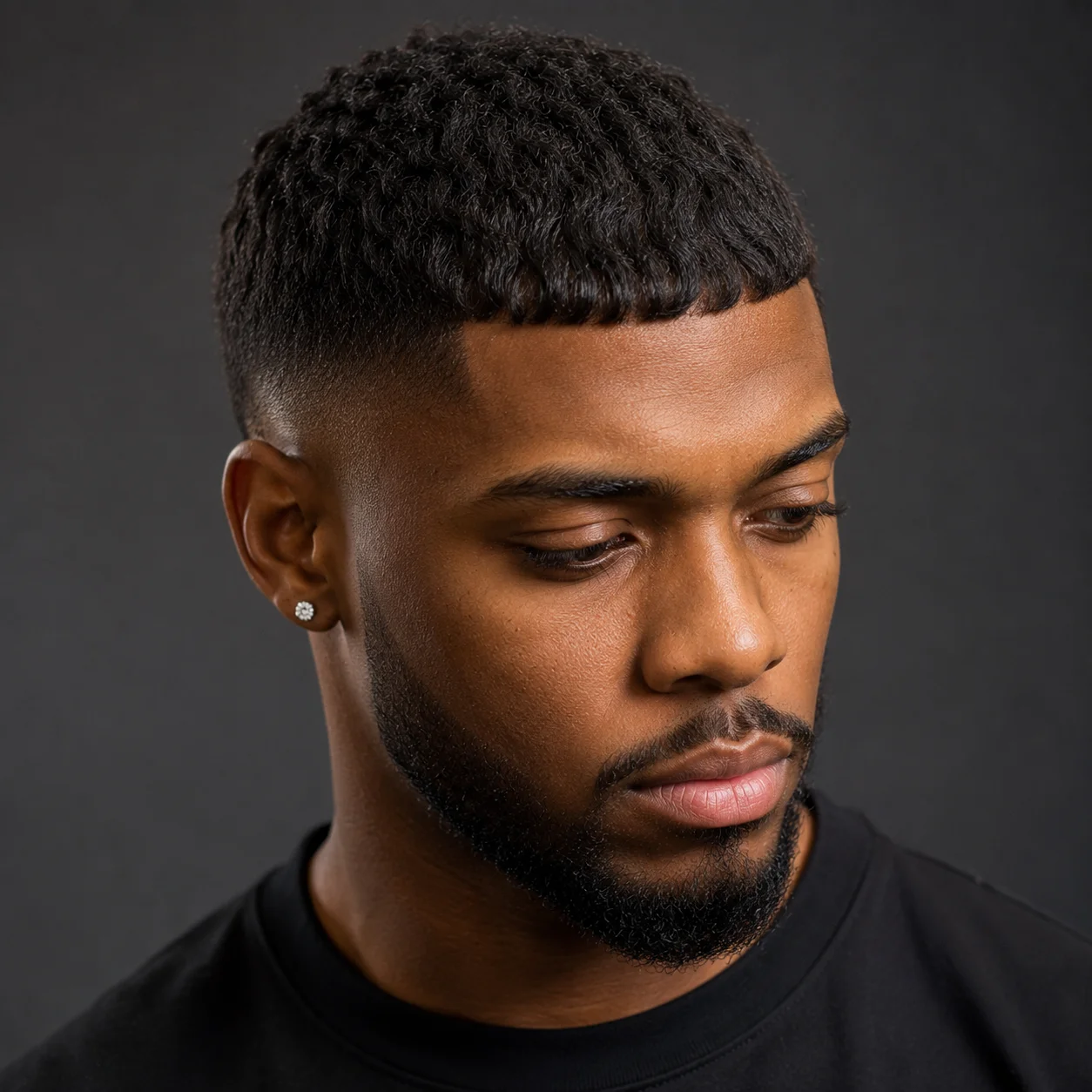
19. French Crop
Short, textured fringe with a straight-across finish and tapered or faded sides.
- Best face shape: Oval, square
- Hair type: Straight, wavy, thick
- Maintenance: Low-medium
- Barber tip: Blunt scissor-cut fringe, not clippers, for the best texture.
- Products: Matte paste
- Pros: Clean, professional, minimal styling
- Cons: Less effective on very tight coils
- Avoid if: Your hair type doesn’t hold a fringe shape well
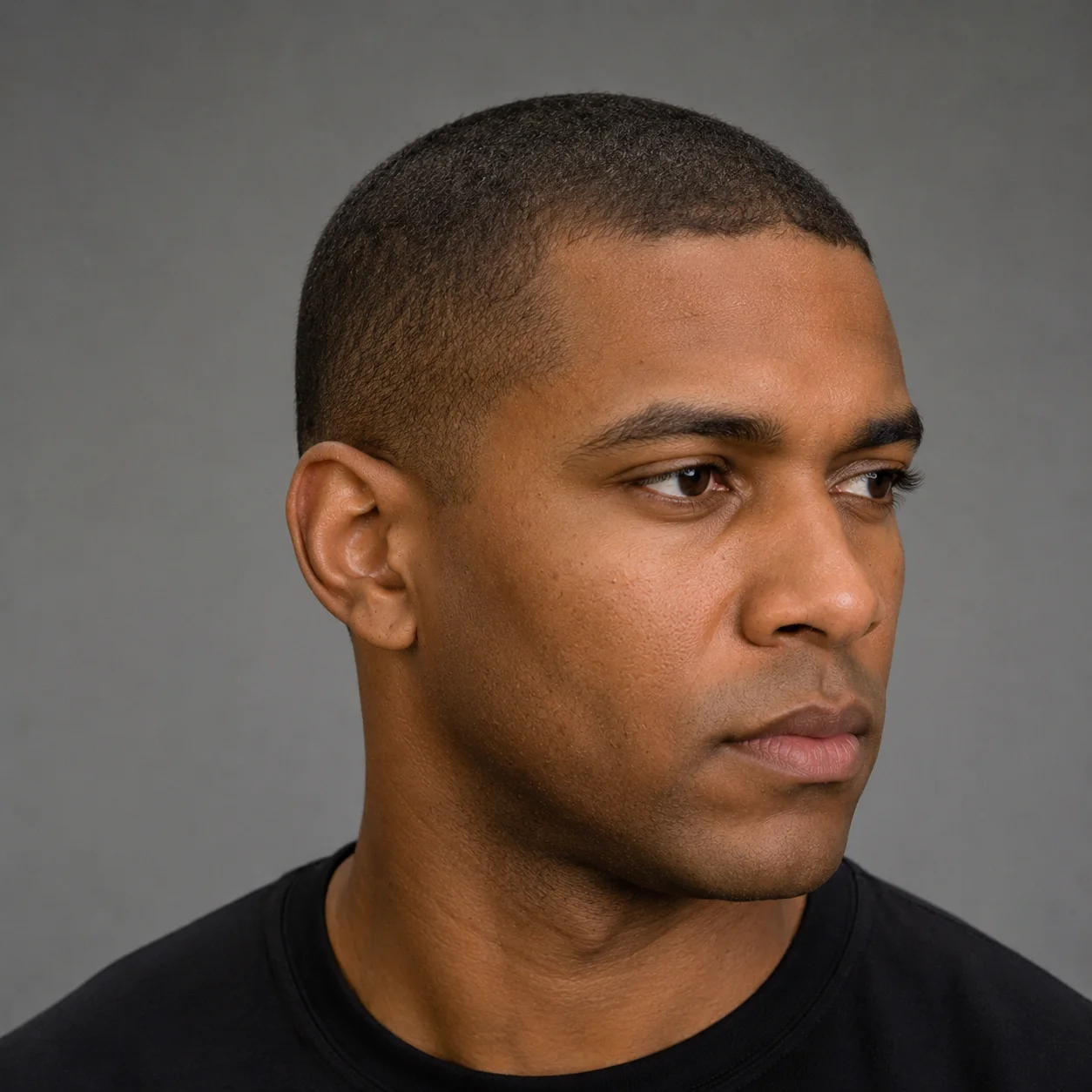
20. Military Cut
Very short, uniform length, minimal fade contrast — built for zero maintenance.
- Best face shape: Oval, round
- Hair type: All types
- Maintenance: Very low
- Barber tip: A slight fade at the neckline keeps it from looking severe.
- Products: None required
- Pros: Lowest-maintenance option on this list
- Cons: Minimal styling versatility
- Avoid if: You want a fashion-forward statement look
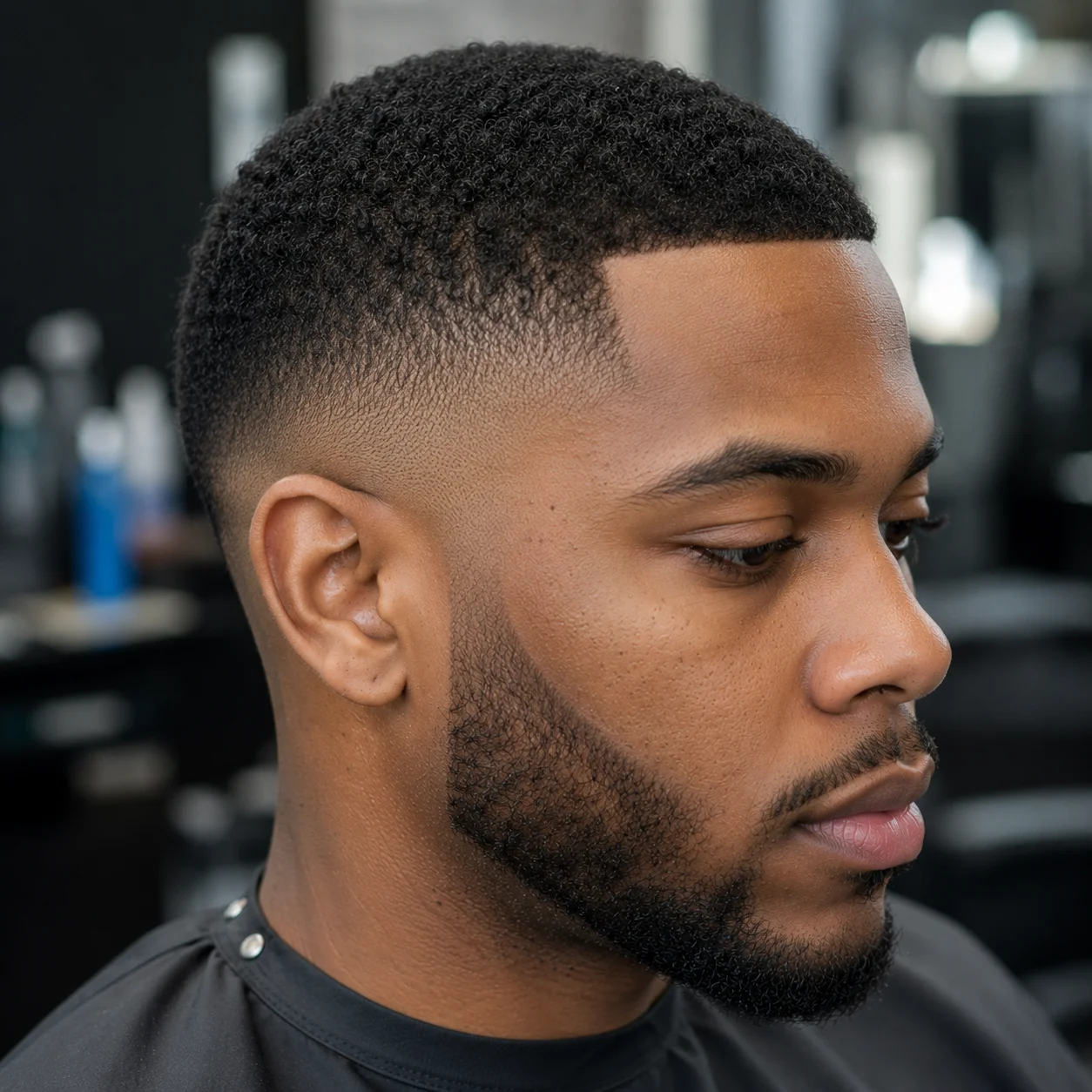
21. Shadow Fade
A softer, more gradual fade with less harsh contrast than a skin fade.
- Best face shape: Long, diamond
- Hair type: All types
- Maintenance: Medium
- Barber tip: Great “grows out gracefully” option between skin-fade appointments.
- Products: Light pomade
- Pros: Forgiving as it grows out
- Cons: Less crisp than a hard fade
- Avoid if: You want maximum definition
22. Taper Fade
Sides and back gradually shorten toward the neckline without a hard fade line.
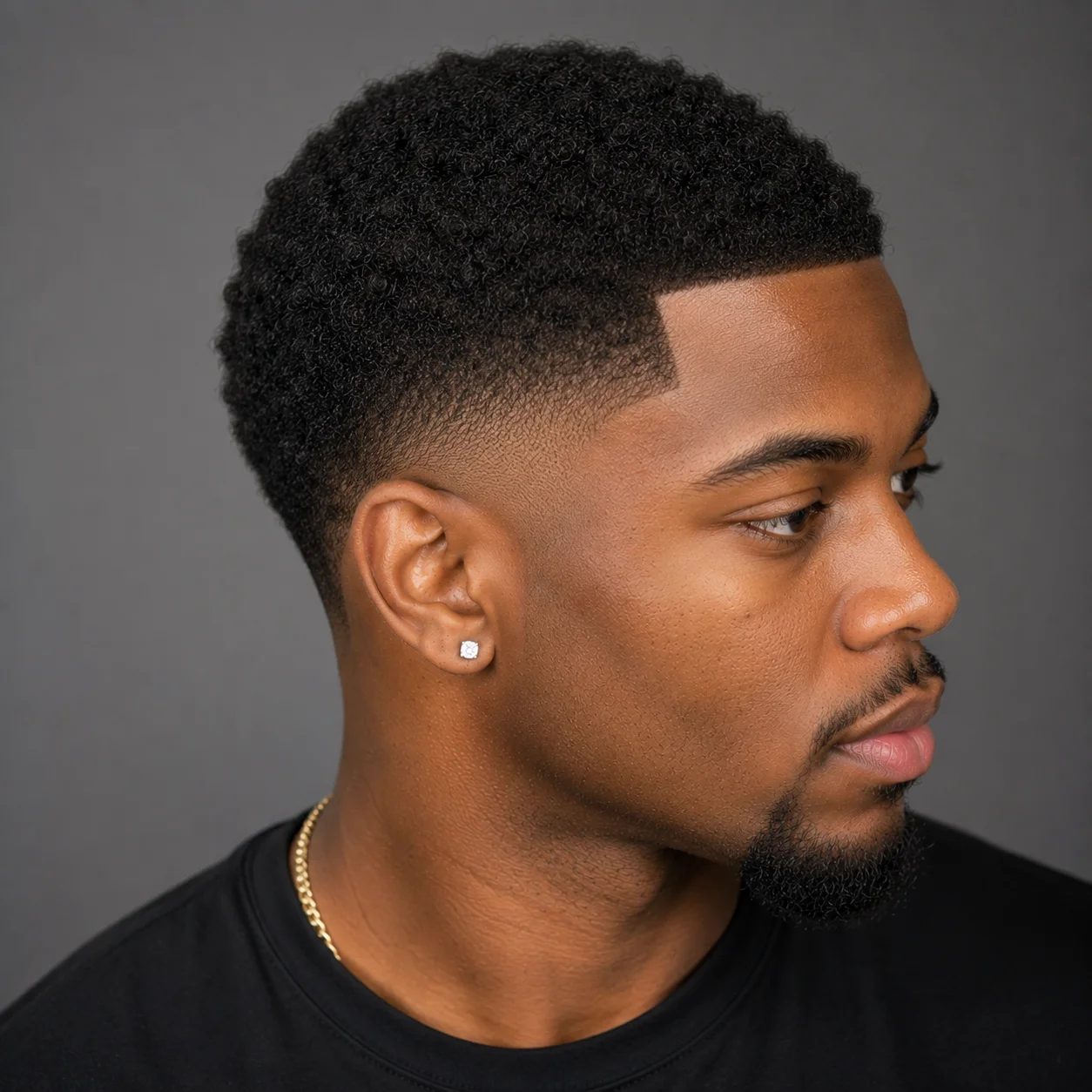
- Best face shape: Round, square
- Hair type: All types
- Maintenance: Low-medium
- Barber tip: The most versatile, professional-friendly fade — ask for this if unsure.
- Products: Cream or pomade, light hold
- Pros: Works in almost every setting, ages gracefully
- Cons: Less bold than a high or burst fade
- Avoid if: You specifically want a high-contrast look
23. Short Afro
Natural, unfaded afro kept at a short, even length.
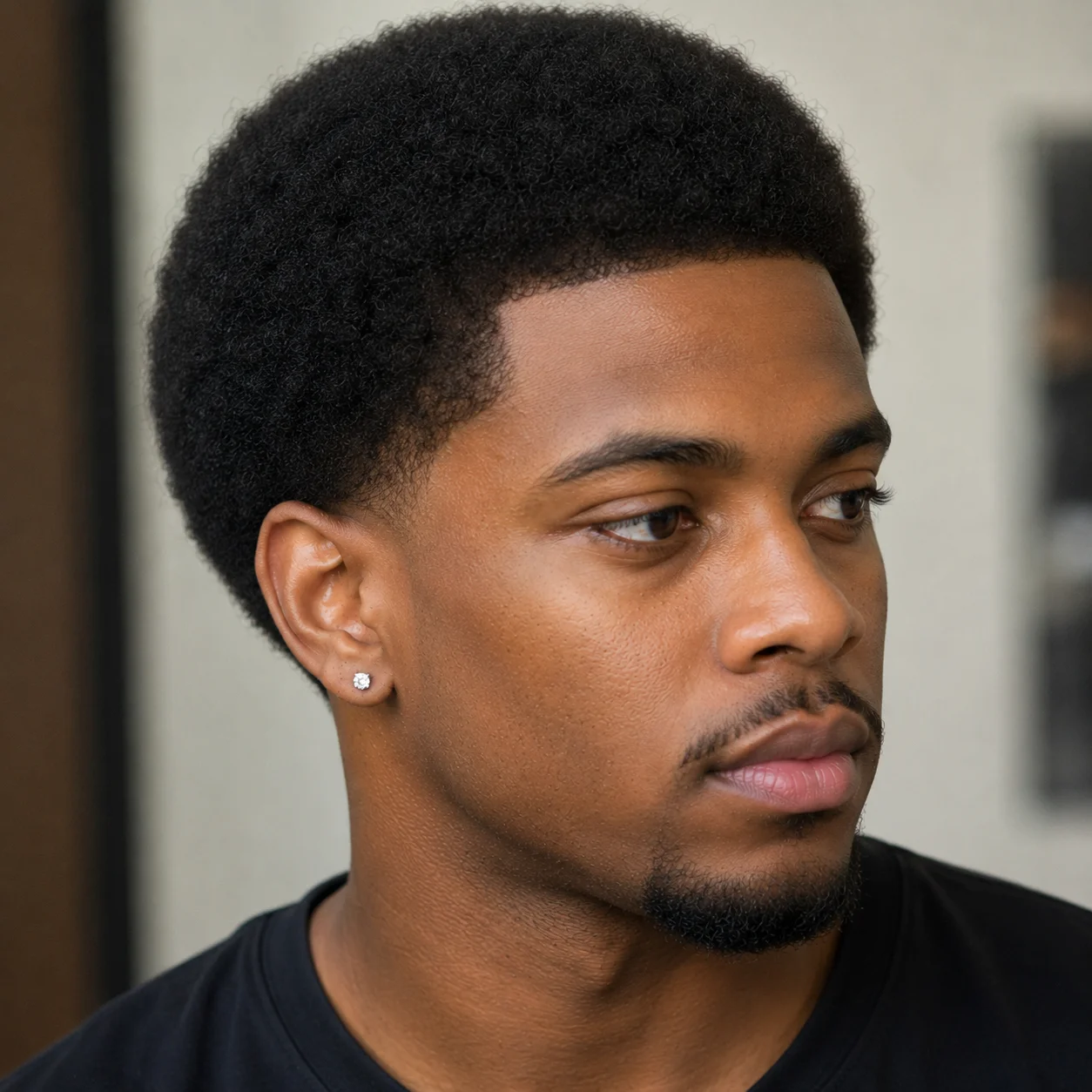
- Best face shape: Oval, long, diamond
- Hair type: Coily
- Maintenance: Medium
- Barber tip: Trim with shears for shape retention rather than an all-over clipper buzz.
- Products: Leave-in conditioner, curl cream
- Pros: Fully natural, protective, no chemical or heat styling needed
- Cons: Requires consistent moisture to prevent dryness
- Avoid if: You’re not willing to moisturize several times a week
24. Mohawk Fade
A strip of longer hair down the center, faded sides.
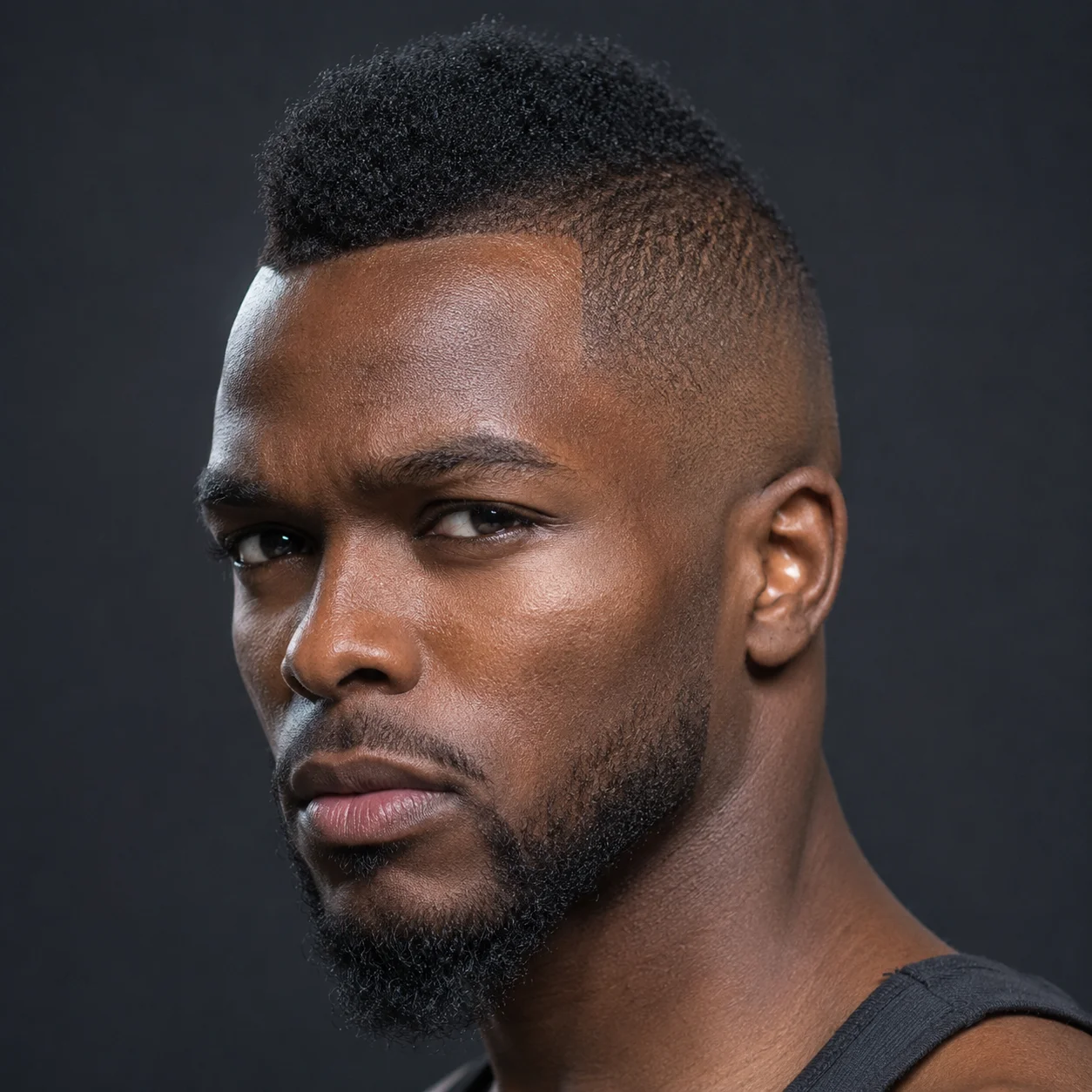
- Best face shape: Round, square
- Hair type: Coily, curly, thick
- Maintenance: High
- Barber tip: Pairs well with a burst or drop fade for extra edge.
- Products: Strong-hold gel
- Cons/Pros/Avoid: Bold and attention-grabbing (pro), high daily styling effort (con); avoid in conservative workplaces
25. Waves with Low Fade Combo
Combines a low fade with an established 360-wave pattern on top.
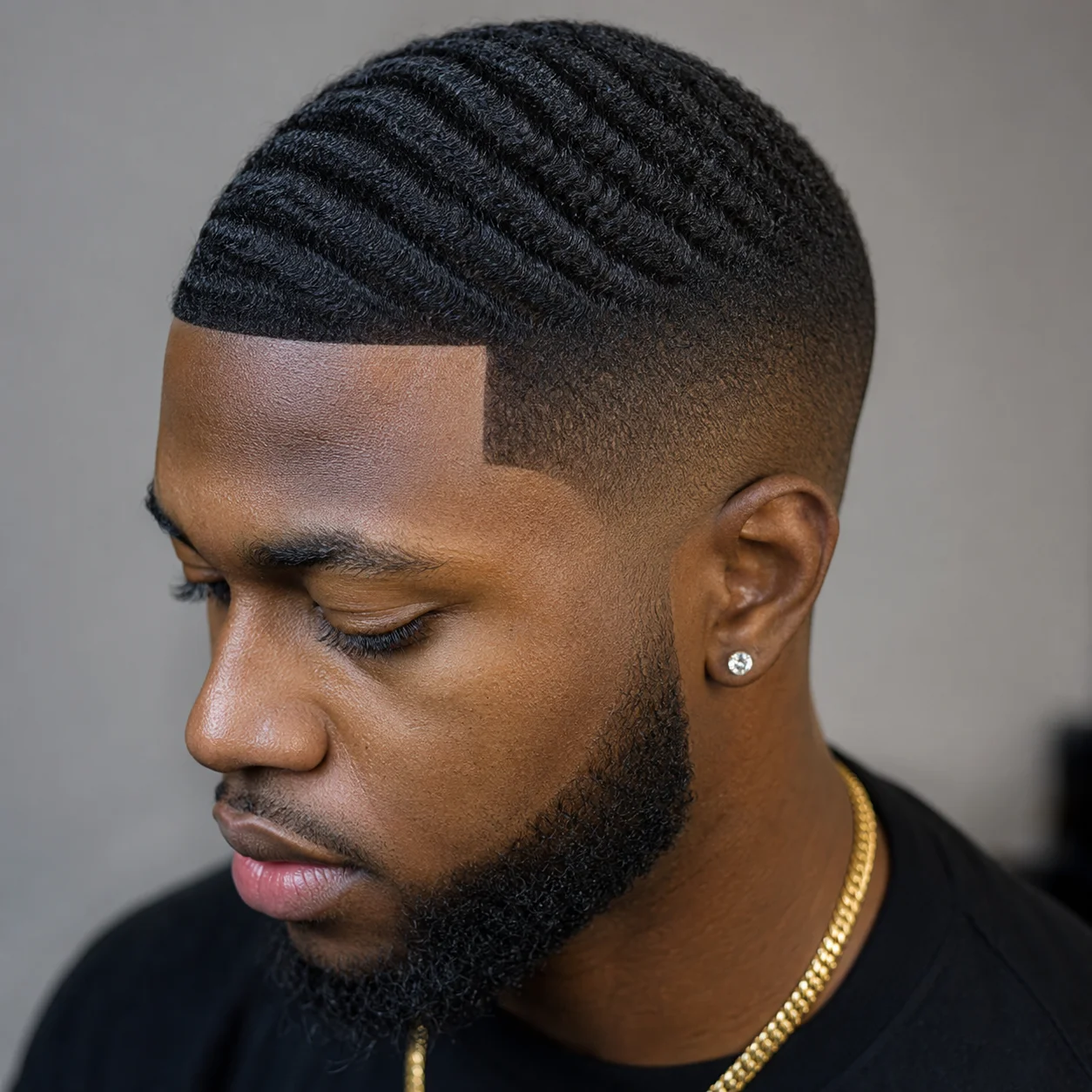
- Best face shape: All shapes
- Hair type: Coily, curly
- Maintenance: High
- Barber tip: Keep the fade subtle so it doesn’t compete visually with the wave pattern.
- Products: Wave pomade, durag, brush
- Pros: Combines two popular trends in one low-key package
- Cons: Requires upkeep on both the fade and the wave pattern
- Avoid if: You already struggle to maintain waves alone
Hairstyles by Face Shape
| Face Shape | Recommended Styles | Why It Works |
|---|---|---|
| Oval | Buzz cut, Caesar cut, French crop | Oval faces suit almost anything; these keep proportions balanced. |
| Round | Temple fade, high top fade, mohawk fade | Adds height and reduces visual width. |
| Square | Textured crop, drop fade, taper fade | Softens strong jawlines with textured tops. |
| Diamond | Afro fade, curly top fade, mid fade | Balances a narrower forehead and chin. |
| Long | Low fade, shadow fade, short afro | Avoids adding extra height and keeps proportions even. |
| Heart | Temple fade, French crop | Balances a wider forehead with fuller sides. |
Hairstyles by Hair Type
| Hair Type | Best Styles | Notes |
|---|---|---|
| Coily | Afro fade, waves, short twists | Retains moisture better with twists or curl cream. |
| Curly | Curly top fade, textured crop | Scissor-cut tops preserve the curl pattern. |
| Thick | High top fade, mohawk fade | Thick hair holds height and shape well. |
| Thin | Caesar cut, crew cut, French crop | Shorter styles reduce the appearance of thinning. |
| Straight | French crop, Caesar cut | Clean lines work best on straight textures. |
| Wavy | Textured crop, taper fade | Waves add natural texture without extra product. |
Maintenance Guide
Washing routine: Wash 1–2 times per week with a sulfate-free shampoo. Over-washing strips natural oils that coily and curly hair need.
Moisturizing: Apply a leave-in conditioner or light oil daily, especially for afro, twist, and curly styles. Coily hair is naturally drier and needs consistent moisture to avoid breakage.
Brushing: Use a boar-bristle brush for wave patterns (2–3 times daily during the setting phase) and a wide-tooth comb or pick for afros and curls to avoid disrupting curl definition.
Hair growth: Healthy growth depends more on scalp care and moisture than any single product — protect your hairline from tension styles and excessive heat.
Edge maintenance: Avoid over-applying edge control daily, which can cause traction alopecia over time. Use sparingly and let edges rest between applications.
Barber visit frequency: Skin fades and line-ups: every 1–2 weeks. Low fades, tapers, textured crops: every 3–4 weeks. Buzz cuts and military cuts: every 4–6 weeks.
Styling Products Guide
- Pomades: Best for taper fades, Caesar cuts, and crew cuts needing light hold and shine.
- Hair creams: Best for curly or coily tops that need definition without heavy shine.
- Curl sponge: Best for creating or maintaining sponge twists and coil definition on short coily hair.
- Leave-in conditioner: Best for afros, twists, and any coily style prone to dryness.
- Beard oil: Pairs with any short haircut to keep facial hair moisturized and complement a clean fade.
- Hair moisturizer: Best for daily use on coily and curly hair types to prevent breakage between wash days.
Mistakes to Avoid
- Waiting too long between fade touch-ups. A skin fade grows out visibly within a week — schedule ahead.
- Skipping moisture on coily hair. Dryness leads to breakage, especially on shorter cuts where damage is more visible.
- Over-applying edge control. Daily heavy use around the hairline can contribute to hair thinning over time.
- Choosing a style based on a photo alone. Your hair type changes how a cut looks — describe your texture to your barber, not just the picture.
- Brushing waves too aggressively. This can cause breakage; use medium pressure and let the pattern develop over weeks.
- Ignoring face shape. A high-contrast fade that looks great on a long face can overwhelm a round one.
Frequently Asked Questions
1. What is the best short haircut for black men? The taper fade is the most versatile option — it’s professional-friendly, works with most face shapes, and requires only moderate upkeep.
2. How often should I get a fade touched up? Skin fades and high fades need touch-ups every 1–2 weeks. Low fades and tapers can stretch to 3–4 weeks.
3. What’s the difference between a low fade and a high fade? A low fade starts just above the ears, giving a subtle transition. A high fade starts higher on the sides, creating a bolder, higher-contrast look.
4. Can I get waves with short hair? Yes — 360 waves actually form best on shorter, tightly coiled hair, since the curl pattern is easier to train with consistent brushing.
5. What’s a good low-maintenance style for black men? Buzz cuts, crew cuts, and military cuts require the least daily styling and the longest stretch between barber visits.
6. How do I keep my hairline sharp between barber visits? Use edge control sparingly and a straight-edge razor at home for light touch-ups, but leave shaping to your barber to avoid uneven lines.
7. What products should I use for coily hair? Leave-in conditioner, curl-defining cream, and a light oil help retain moisture, which coily hair loses faster than other textures.
8. Which fade is best for a round face? A temple fade or high top fade adds visual height, which helps balance rounder proportions.
9. How long does it take to develop 360 waves? Most people see a visible pattern within 2–4 weeks of consistent brushing, with fuller development around 8–12 weeks.
10. What’s the difference between a taper and a fade? A taper gradually shortens hair without a hard line, while a fade creates a more defined, blended transition down to very short or skin-level hair.
11. Are twists a protective style? Yes, short twists and sponge twists protect the ends of coily hair from manipulation and breakage compared to daily combing or brushing.
12. What haircut works best for a receding hairline? A buzz cut or skin fade tends to work well, since shorter length reduces the visual contrast between hairline and scalp.
13. How do I prevent razor bumps from a skin fade? Ask your barber to use a fresh blade and shave in the direction of hair growth; using a soothing aftershave balm afterward also helps.
14. Can thin hair handle a high fade? Yes, but a high top fade or heavily textured style may look sparse on very thin hair — a taper or Caesar cut is often more forgiving.
15. How often should I wash short black hairstyles? 1–2 times per week is typically enough; over-washing removes natural oils that coily and curly hair rely on for moisture.
16. What’s the best beard pairing for a fade? A well-lined beard that connects cleanly to a low or taper fade creates a polished, cohesive look for professional settings.