The undercut is one of the simplest haircuts to understand and one of the most versatile to wear: short sides and back, a much longer top, and a clear jump in length between them. This guide covers the 14 main types of undercut, how it differs from a fade, which version suits your hair and face, how to ask your barber for it, and how to style and maintain it.
Quick answer: an undercut keeps the sides and back very short (usually a #1 to #3 clipper guard, or shaved) and leaves 3 to 6 inches on top, with no blending between the two. The most popular versions are the slicked-back undercut, the disconnected undercut and the textured short undercut. Expect to tidy the sides every 2 to 4 weeks.
Jump to: 14 undercut styles · Polish undercut · slicked-back undercut · disconnected undercut · which suits you · how to ask · how to style · FAQ
What Is an Undercut?
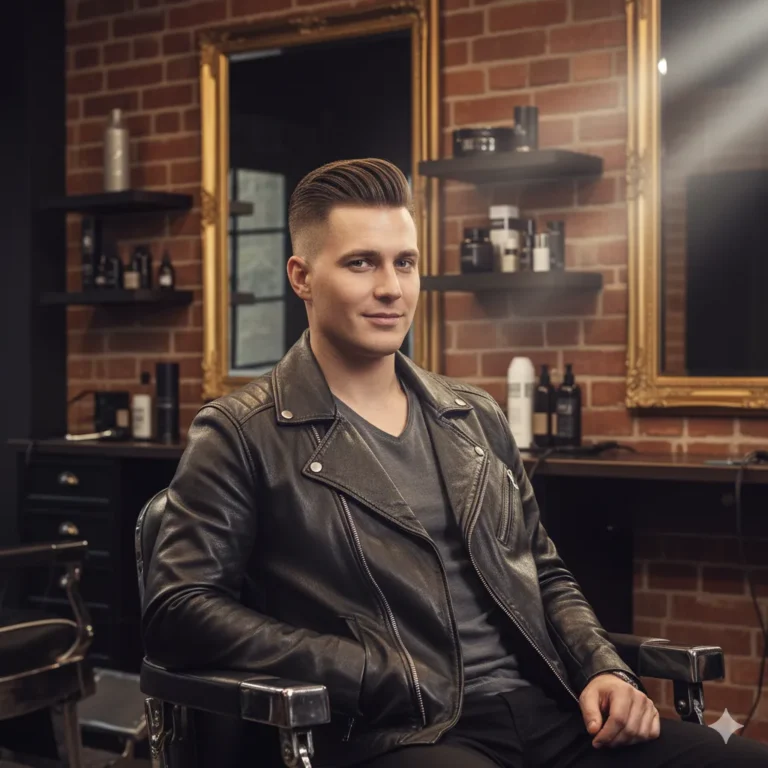
An undercut is a haircut where the sides and back are cut short, all at one length or close to it, while the hair on top is left long. The defining feature is the hard transition: the top hair sits over the short sides rather than blending into them. That is what separates it from a fade or a taper.
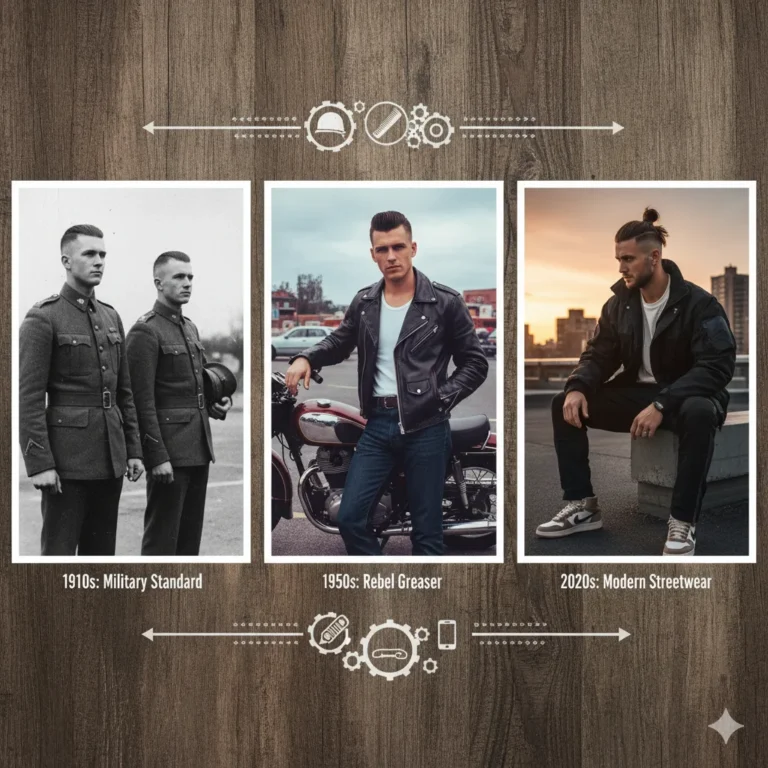
The cut has been around for over a century and has come back in waves, most recently becoming one of the defining men’s haircuts of the 2010s. Today it is less about a single look and more a base you can style in many ways, from slicked back to messy and textured.
| Undercut | Fade | Taper | |
|---|---|---|---|
| Sides | One short length | Gradual blend down to skin or very short | Gradual blend at temples and neckline only |
| Transition to top | Abrupt, disconnected | Blended | Blended |
| Look | High contrast, bold | Clean, sharp | Subtle, conservative |
| Grows out | Quickly loses shape | Fairly quickly | Most gracefully |
Not sure which you want? Read skin fade vs taper fade, fade haircuts for men or our taper haircut guide.
14 Types of Undercut Hairstyles for Men
1. Classic Undercut
Top: 3 to 5 inches. Sides: #2 or #3 all round. Best for: most men, office jobs.
The original version: short, even sides and a longer top worn back or to the side. It is clean and easy to understand for any barber.

2. Slicked-Back Undercut
Top: 4 to 6 inches. Sides: #1 to #2 or shaved. Best for: straight and wavy hair, formal settings.
The top is combed straight back with a shiny pomade or a light cream for a softer finish. It is the version most people picture when they hear “undercut”. See our slick back haircuts guide.
3. Disconnected Undercut
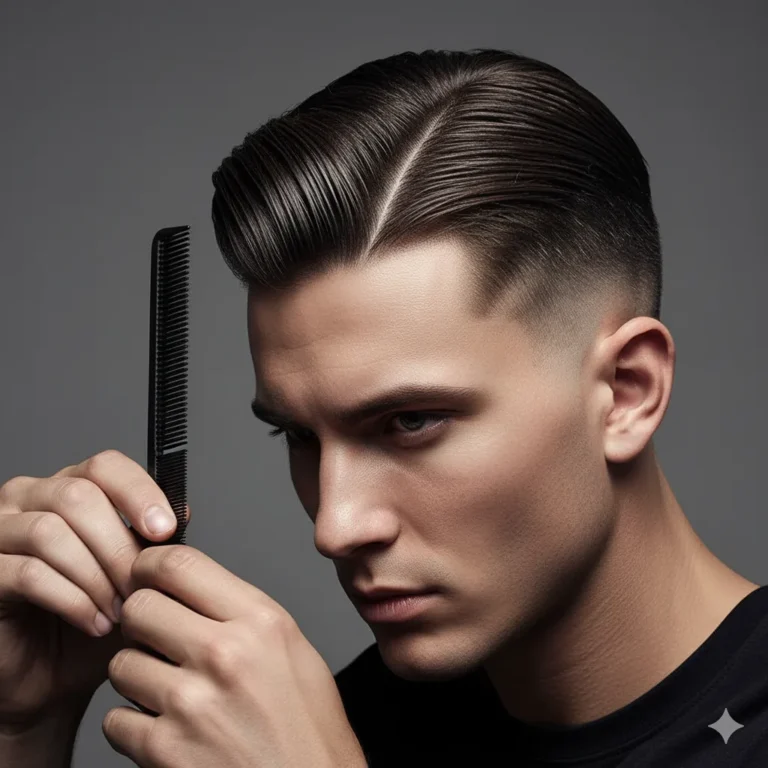
Top: 4 to 6 inches. Sides: #0 to #2. Best for: thick hair, bold looks.
The strongest contrast: very short sides and a long top with a visible line between them. It looks most dramatic when the top is worn back or flipped over to one side.
4. Polish Undercut
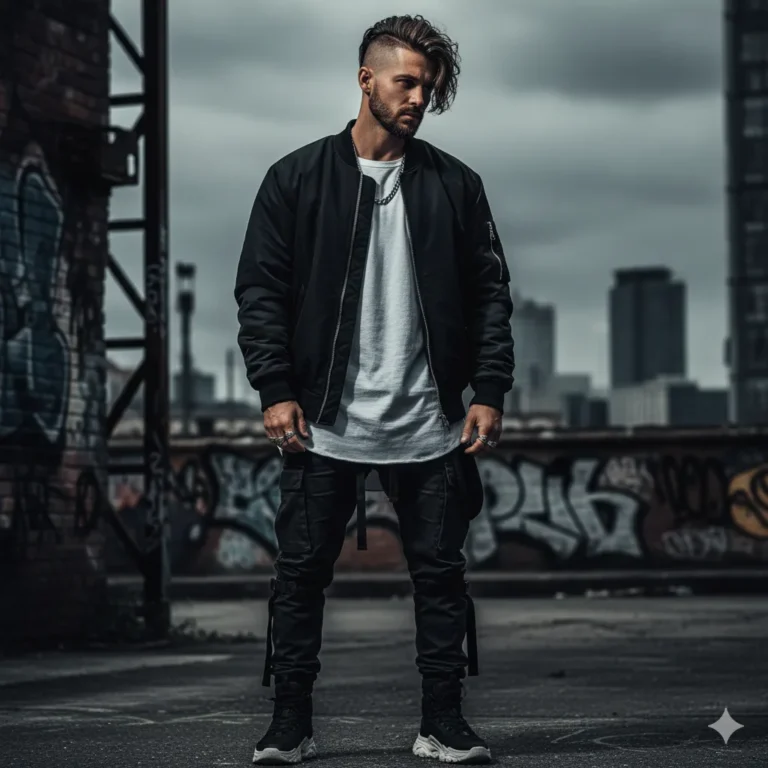
Top: 3 to 5 inches, slightly longer at the front. Sides: short taper rather than one length. Best for: straight hair, men who want a softer undercut.
Despite the name, it is a cousin of the undercut: the sides are short but usually tapered rather than one length, and the top is longer at the front and swept back or to the side, so the contrast is noticeable but less harsh. It is popular in Central and Eastern Europe and is a good middle ground if a full disconnected undercut feels too bold. Ask for “short tapered sides, longer top swept back, keep it connected at the corners.”
- Sides and back: a short taper, often around a #1 to #2 at the neckline and getting longer toward the top of the sides, rather than one flat length.
- Top: about 3 to 5 inches, longest at the front so it can be pushed back or to the side.
- Connection: the corners are blended, so there is no hard shelf like a disconnected undercut.
- Styling: blow-dry the top back, then a matte paste for a natural look or a light pomade for shine.
- Upkeep: sides every 3 to 4 weeks to keep the taper clean.
| Polish undercut | Classic undercut | |
|---|---|---|
| Sides | Tapered, getting longer upward | One short length all around |
| Transition | Blended at the corners | Sharp jump in length |
| Look | Softer, more office-friendly | Bolder, more contrast |
5. Side-Swept Undercut
Top: 3 to 5 inches. Sides: #2 or #3. Best for: medium hair, high or uneven hairlines.
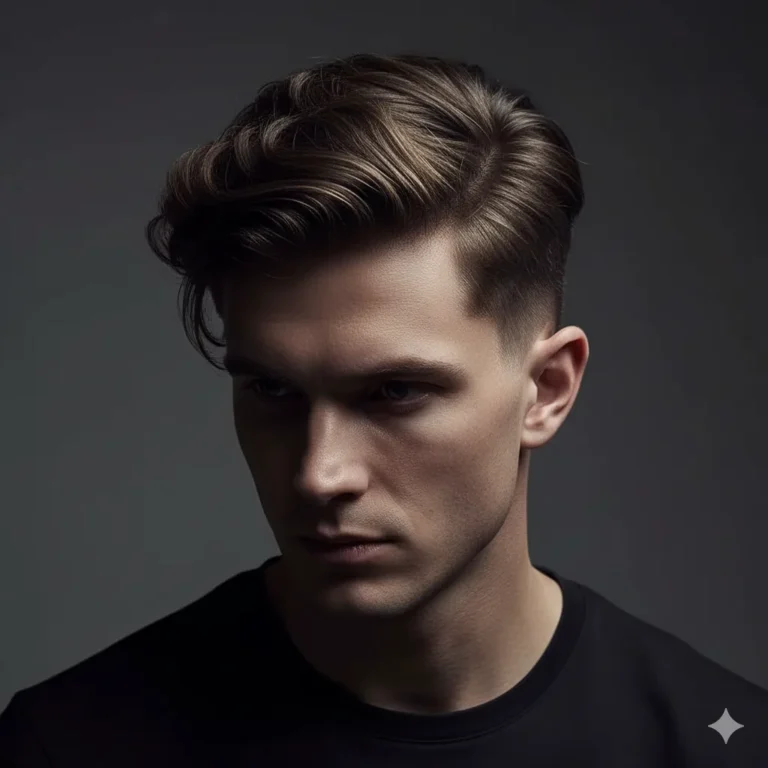
The top is swept to one side, often with a fringe that falls across the forehead. It hides a high hairline well and suits straight to wavy hair.
6. Pompadour Undercut
Top: 4 to 6 inches at the front. Sides: #1 to #2. Best for: thick hair, round faces.
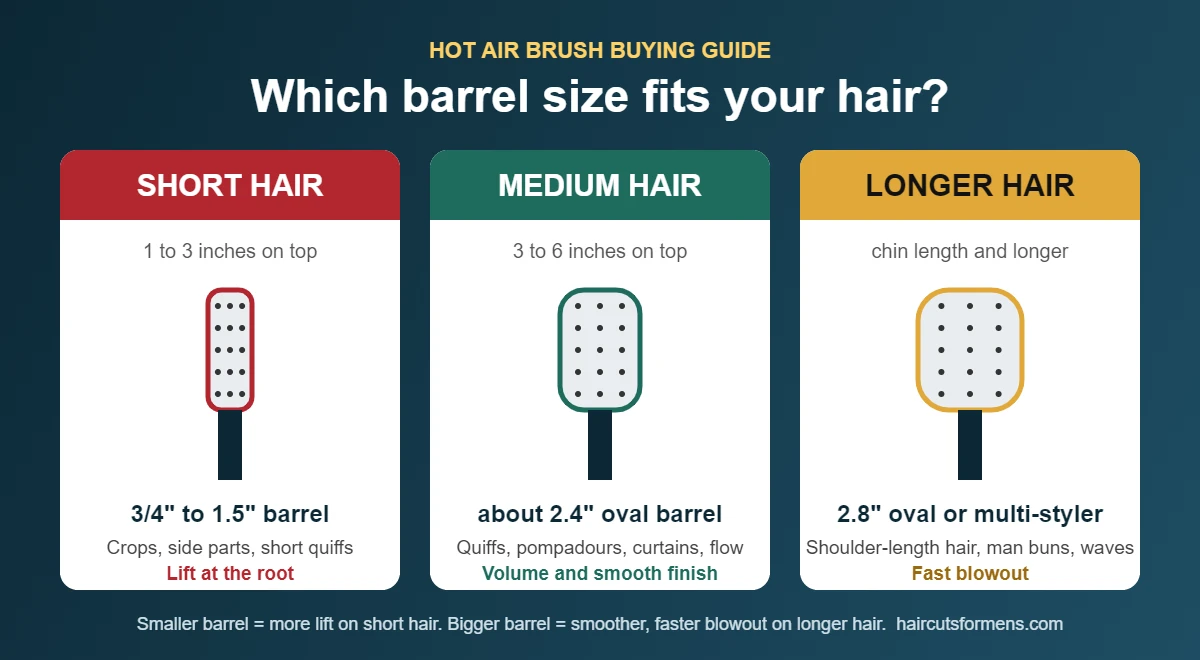
Volume at the front, swept up and back, with short undercut sides. It needs a blow dryer (see our best hair dryers and brushes for men) and a firm product. Our pompadour haircuts guide covers the styling in detail.
7. Undercut Quiff
Top: 3 to 4 inches at the front. Sides: #2. Best for: straight and wavy hair.
Like the pompadour version but looser and more textured, with the front pushed up rather than combed smooth. See our quiff haircuts guide.
8. Curly or Wavy Undercut
Top: 2 to 4 inches (dry). Sides: #1 to #3. Best for: curly and wavy hair.
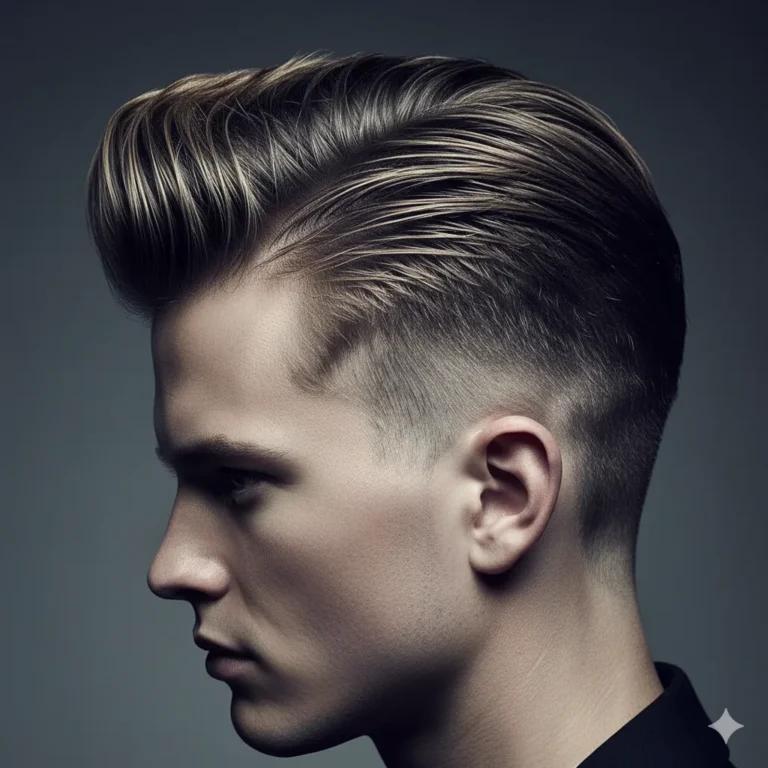
Short sides take away the bulk that makes textured hair look wide, while the top shows off the curl or wave. Ask for the top to be cut or checked dry. More ideas in our curly and wavy haircuts guide.
9. Short Undercut
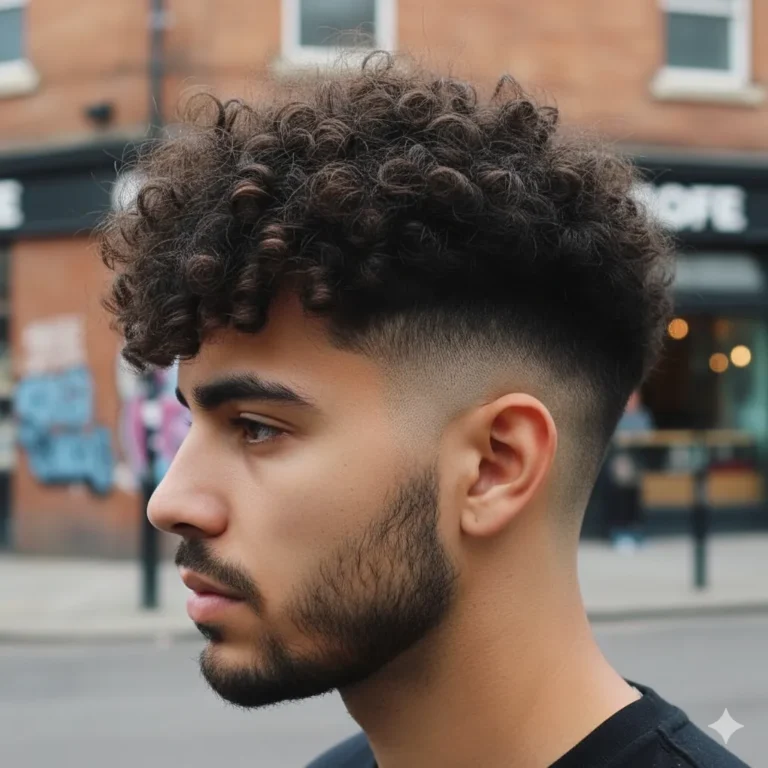
Top: 1.5 to 3 inches. Sides: #1 to #2. Best for: low maintenance, fine hair.
A shorter top that needs only a little matte clay. It is the easiest undercut to live with day to day. A textured crop with undercut sides is a popular version.
10. Medium Undercut
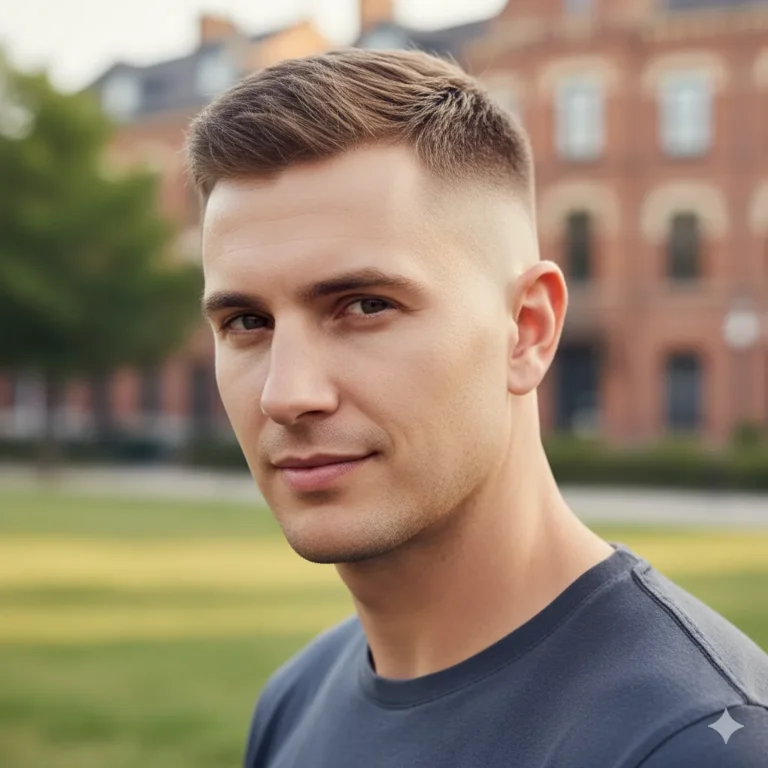
Top: 4 to 5 inches. Sides: #2 or #3. Best for: men who like styling flexibility.
Long enough to slick back, push to the side or wear messy. It is the most versatile length if you want different looks for work and weekends.
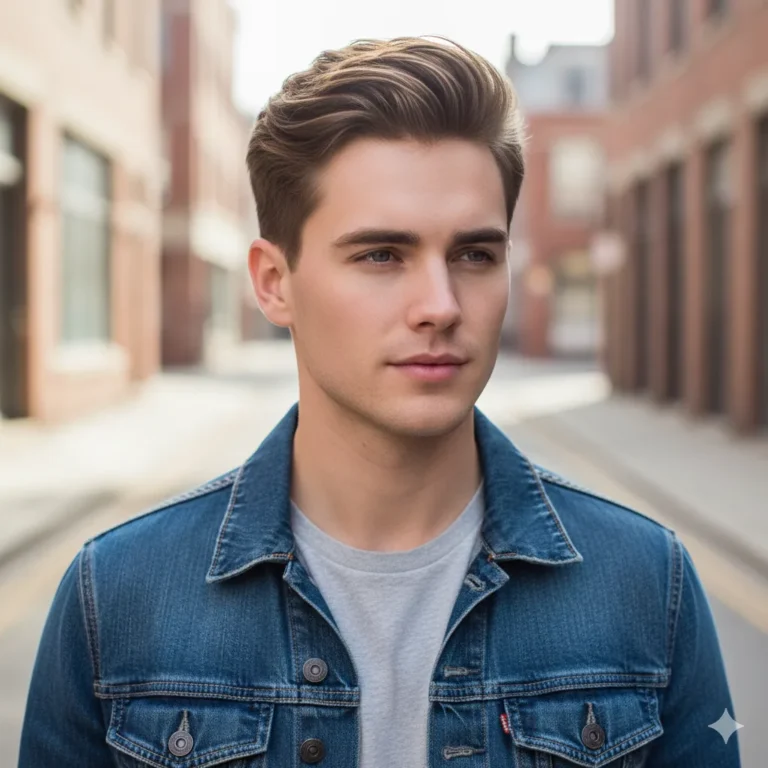
11. Long Undercut
Top: 6 inches and up. Sides: #1 to #3, often hidden when hair is down. Best for: long hair, thick hair.
Long hair on top over very short sides. Worn down it looks like a long cut; tied up, the undercut shows. It also removes weight if your hair is very thick. See medium and long haircuts.
12. Man Bun Undercut
Top: 7 inches and up. Sides: #1 to #2. Best for: long straight or wavy hair.
The long top is tied into a bun at the crown with the short sides on show. Use a soft elastic and vary the position to avoid stressing the hairline.
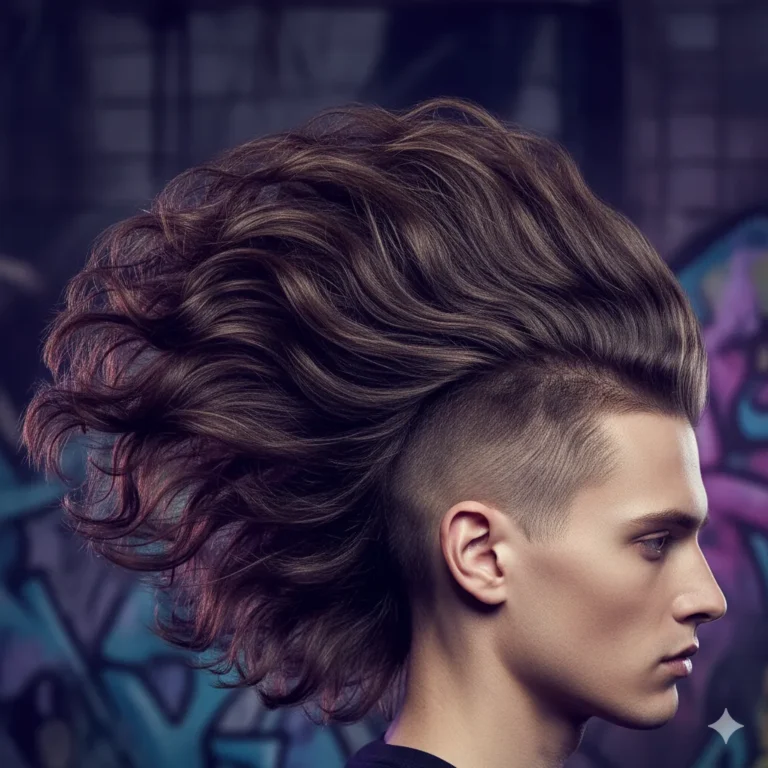
13. Fade Undercut
Top: 3 to 5 inches. Sides: faded from skin to #2 below the disconnection. Best for: men who want a cleaner neckline.
The sides are faded rather than one length, but there is still a hard line where the top begins. It grows out a little more neatly than a classic undercut. Fade height options are explained in low vs mid vs high fade.
14. Undercut With Hard Part
Top: 3 to 5 inches. Sides: #1 to #2. Best for: straight hair, formal looks.
A razor-shaved line separates the side part from the short sides. It looks very sharp when fresh, but the line needs re-cutting every 1 to 2 weeks.
Which Undercut Suits You?
| Your situation | Best undercut |
|---|---|
| Round face | Pompadour or quiff undercut: height on top, nothing at the sides |
| Square face | Classic or side-swept undercut |
| Long / oblong face | Side-swept or short undercut; avoid tall volume |
| Oval face | Any style |
| Fine or thinning hair | Short undercut with a textured top; avoid very long tops that separate |
| Thick hair | Disconnected, medium or long undercut |
| Curly or wavy hair | Curly or wavy undercut with the top cut dry |
| Conservative workplace | Classic or Polish undercut with a #3 on the sides |
See our full guide to haircuts by face shape. If your hairline is receding, check haircuts for receding hairlines first.
How to Ask Your Barber for an Undercut
- Side length: give a clipper guard number (#1, #2, #3) or say “shaved”.
- Where the disconnection sits: high (near the parietal ridge, the widest part of the head) for a bold look, or lower for a subtler one.
- Disconnected or slightly blended: a true undercut is disconnected; ask for “soften the corners” if you want it less harsh.
- Top length in inches, and how you will wear it (back, side, up).
- Neckline: tapered, squared or rounded.
Example script: “Disconnected undercut, #2 on the sides and back up to the widest part of my head, about 5 inches on top so I can slick it back, tapered neckline.”
Bring a photo. More help: how to ask your barber and the barber instruction generator.
How to Style an Undercut
- Start with damp, towel-dried hair.
- Add a pre-styler (sea salt spray or a little mousse) if you want volume.
- Blow-dry in the direction you will wear it: back for a slick back, up for a pompadour or quiff, sideways for a side sweep.
- Apply your product from back to front, starting with a fingertip-sized amount.
- Shape with a comb for a neat finish or with your fingers for texture.
| Look | Product | Finish |
|---|---|---|
| Slicked back | Pomade | Shiny, sleek |
| Textured / messy | Matte clay or paste | Natural |
| Pompadour or quiff | Firm pomade or fibre | Medium shine |
| Curly or wavy top | Curl cream | Soft, defined |
| Long top | Light cream or sea salt spray | Loose |
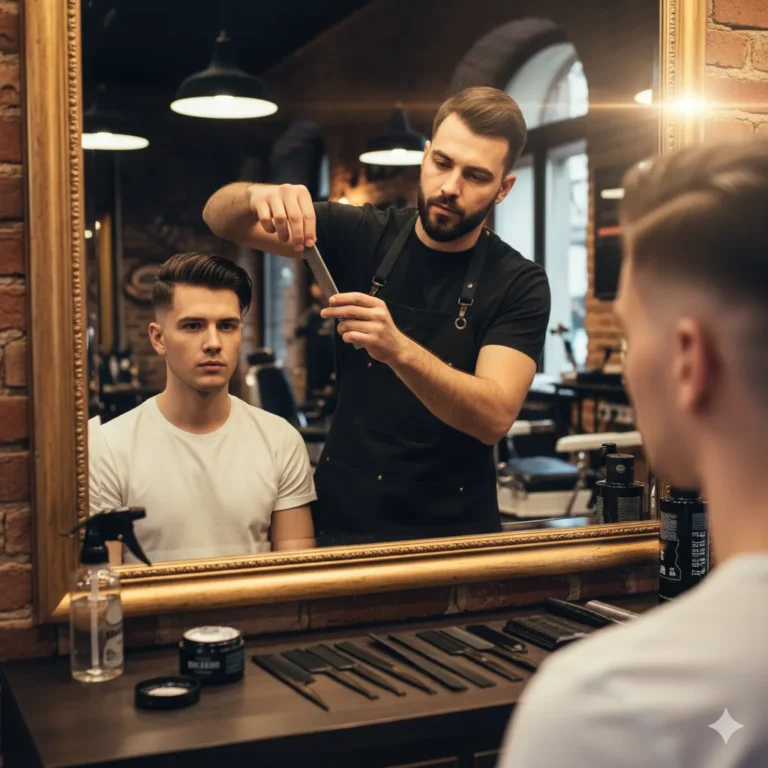
Undercut Maintenance
- Sides every 2 to 4 weeks. The contrast is the whole point, and it disappears as the sides grow.
- Top every 6 to 10 weeks to keep the shape and remove split ends.
- Between visits, some men tidy the sides at home with clippers using the same guard. Leave the disconnection line to your barber.
- Growing it out? Expect an awkward phase of 2 to 3 months while the sides catch up. A taper on the sides helps bridge the gap.
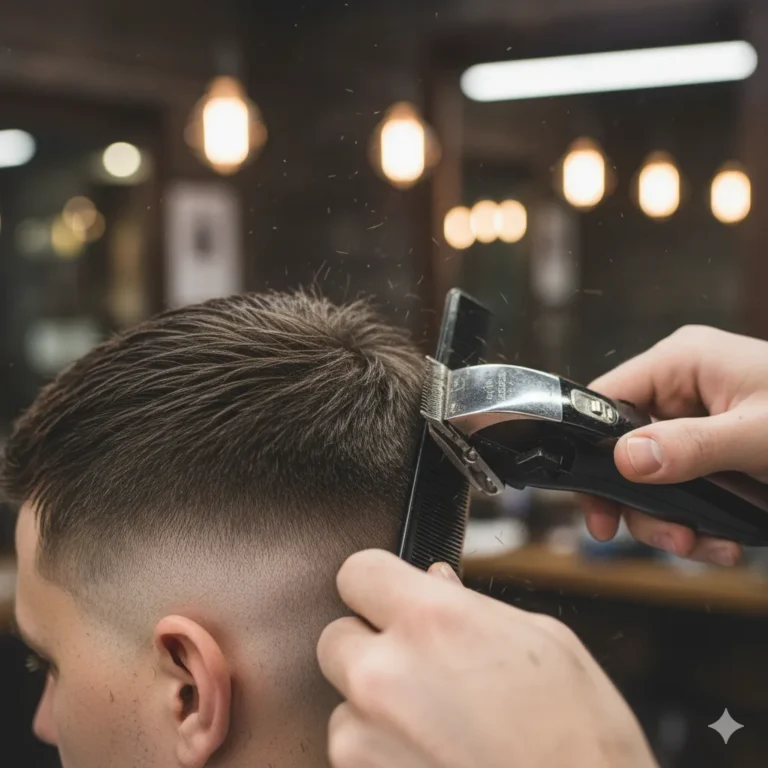
Undercuts and Beards
An undercut leaves the sides of the head bare, so a beard balances the look. Short stubble or a short boxed beard pairs well with the classic and slicked-back versions; a fuller beard suits long and disconnected undercuts. If you have a fade undercut, ask your barber to fade the sideburns into the beard. More combinations are in our beard trends and haircut combos guide.
Undercut FAQ
What is an undercut haircut?
A haircut with short sides and back and a much longer top, with no blending between the two lengths.
What is the difference between an undercut and a fade?
A fade blends gradually from short to long. An undercut has an abrupt change in length, so the top sits over the short sides.
How long does hair need to be for an undercut?
About 3 inches on top for a short undercut and 4 to 6 inches for slicked-back or pompadour styles.
What clipper guard should I use for the sides?
A #1 or #2 for strong contrast, a #3 for a softer, more office-friendly look.
Is an undercut professional?
A classic or Polish undercut with neat sides and a combed top is accepted in most workplaces. Very short, disconnected versions are bolder.
What is a Polish undercut?
A softer variation with short, usually tapered sides and a longer top that is longer at the front and swept back or to the side.
How often should I get an undercut trimmed?
The sides every 2 to 4 weeks and the top every 6 to 10 weeks.