
Introduction
Curly hair is its own animal. It doesn’t fall the way straight hair does, it doesn’t behave the same after a wash, and a cut that looks great on someone with fine, straight strands can look like a triangle on someone with dense 3B curls. That’s the honest truth most generic men’s grooming articles skip over.
If you’ve typed “haircuts for curly hair men” into Google, you’ve probably already been burned once. Maybe a barber took too much off the top and your curls sprang up into a shape you didn’t ask for. Maybe you tried a fade that left your curls looking disconnected from the sides. That’s not bad luck — it’s usually a mismatch between the cut and the curl pattern, density, and face shape underneath it.
This guide covers every real option: fades, crops, mullets, afros, quiffs, and the low-maintenance cuts you can wear to the gym and the office in the same week. We’ll go by curl type (2A through 4C), by face shape, by length, and by how much time you’re actually willing to spend styling in the morning. By the end, you’ll know exactly what to ask your barber for — and what to avoid.
Why Curly Hair Needs the Right Haircut
Straight hair falls in a predictable line. Curly hair doesn’t — it coils, it shrinks, and it reacts to humidity, cutting technique, and even the direction your barber’s shears move. A cut that’s technically “correct” on paper can still look wrong once the curls dry and spring up.
Shrinkage changes everything. Curly hair can shrink 30–75% from its stretched length depending on curl pattern. A barber who cuts curly hair wet, using the same length logic as straight hair, will often leave you with a cut that looks two inches shorter once it dries. This is the single most common complaint men have after a bad curly haircut.
Curl pattern affects how a fade blends. Fades rely on smooth graduation between skin and length. Curls resist that graduation because they don’t lie flat — which is why fade blending on curly hair needs a barber who understands curl behavior, not just clipper work.
Density and porosity change product needs and cut shape. Thick, coarse curls hold shape differently than fine, low-density curls. A cut that gives volume to fine curls can look overwhelming on thick, high-density hair, and vice versa.
The bottom line: curly hair needs a cutting approach built around curl definition and moisture retention, not a generic template. Every recommendation below accounts for that.
How to Choose the Best Haircut for Curly Hair Men
Before you pick a style off Pinterest, walk through these five factors. A good barber consultation covers all five before a single clip touches your hair.
Hair Density
Density is how many strands you have per square inch — separate from curl type. You can have fine curls that are dense (lots of thin strands) or coarse curls that are sparse.
- High density: Handles fades, tapers, and shorter cuts well because there’s enough curl to create texture without looking thin.
- Low density: Benefits from length on top and cuts that create the illusion of volume, like a curly quiff or textured crop.
Curl Type (2A–4C)
The curl type chart (2A through 4C) determines how tight your curl pattern is, from loose waves to tight coils.
- 2A–2C (waves): Most versatile; works with almost every cut on this list.
- 3A–3C (curls to tight curls/ringlets): Best suited to cuts that leave enough length for curl definition to show.
- 4A–4C (coils to tight coils): Needs cuts that respect shrinkage and often benefit from an afro-shaped silhouette or a fade that frames dense coils.
Face Shape
Face shape changes which silhouette flatters you most — height on top, width at the sides, or a rounder overall shape.
Lifestyle
Someone in a corporate office five days a week needs a different maintenance routine than someone who trains twice a day or works outdoors.
Maintenance Level
Be honest about how much time you’ll spend styling. A curly mullet or shag needs almost no daily effort. A curly pompadour needs a diffuser, curl cream, and ten minutes every morning (see our best curly hair products for men).
35+ Best Haircuts for Curly Hair Men
Below is every major curly haircut men are asking barbers for right now. Each entry covers who it suits, maintenance, styling difficulty, barber instructions, products, pros, cons, ideal face shapes, ideal curl types, and celebrity inspiration where relevant.
1. Curly Fade
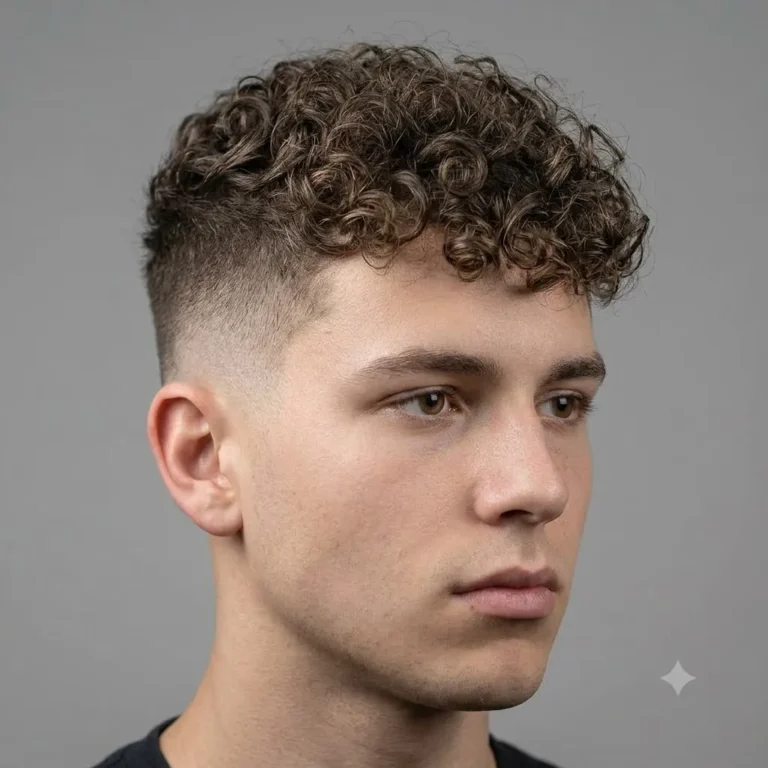
Who it suits: Men who want short sides with curl definition preserved on top.
Maintenance: Medium — fade needs a touch-up every 2–3 weeks.
Styling difficulty: Low to medium.
Barber instructions: “Fade the sides with a 1–1.5 guard, leave 2–3 inches on top, cut curls dry to see true curl fall.”
Products: Curl cream, light-hold gel.
Pros: Clean, modern, easy to maintain sides.
Cons: Fade needs frequent upkeep to stay sharp.
Ideal face shapes: Oval, square, round.
Ideal curl types: 2B–3B.
Celebrity inspiration: Athletes and musicians with tapered curl fades are common on red carpets and sidelines alike.
2. Low Fade

Who it suits: Men who want subtlety — a fade that starts low near the ear.
Maintenance: Medium.
Styling difficulty: Low.
Barber instructions: “Start the fade just above the ear, blend into a 2 guard, leave length on top for curl movement.”
Products: Sea salt spray, curl cream.
Pros: Office-friendly, subtle, ages well.
Cons: Less dramatic contrast than higher fades.
Ideal face shapes: Oval, heart, diamond.
Ideal curl types: 2A–3A.
Celebrity inspiration: Common in corporate and professional grooming looks.
3. Mid Fade

Who it suits: Men wanting more contrast than a low fade without going extreme.
Maintenance: Medium.
Styling difficulty: Low to medium.
Barber instructions: “Blend starting mid-way up the side, taper into a 0.5 at the bottom, leave curls untouched on top.”
Products: Curl mousse, diffuser.
Pros: Balanced, versatile, works with most curl types.
Cons: Requires consistent upkeep to avoid grow-out lines.
Ideal face shapes: Square, oval, round.
Ideal curl types: 2B–3C.
4. High Fade

Who it suits: Men who want maximum contrast and a bold, modern look.
Maintenance: High — grows out visibly fast.
Styling difficulty: Medium.
Barber instructions: “Start the fade high, just below the crown, skin out at the bottom, leave 2+ inches of curl on top for contrast.”
Products: Curl cream, strong-hold gel for definition.
Pros: Sharp, striking, great for thick curls.
Cons: Needs a touch-up every 2 weeks; unforgiving of uneven growth.
Ideal face shapes: Round, square. Ideal curl types: 3A–4B.
5. Burst Fade
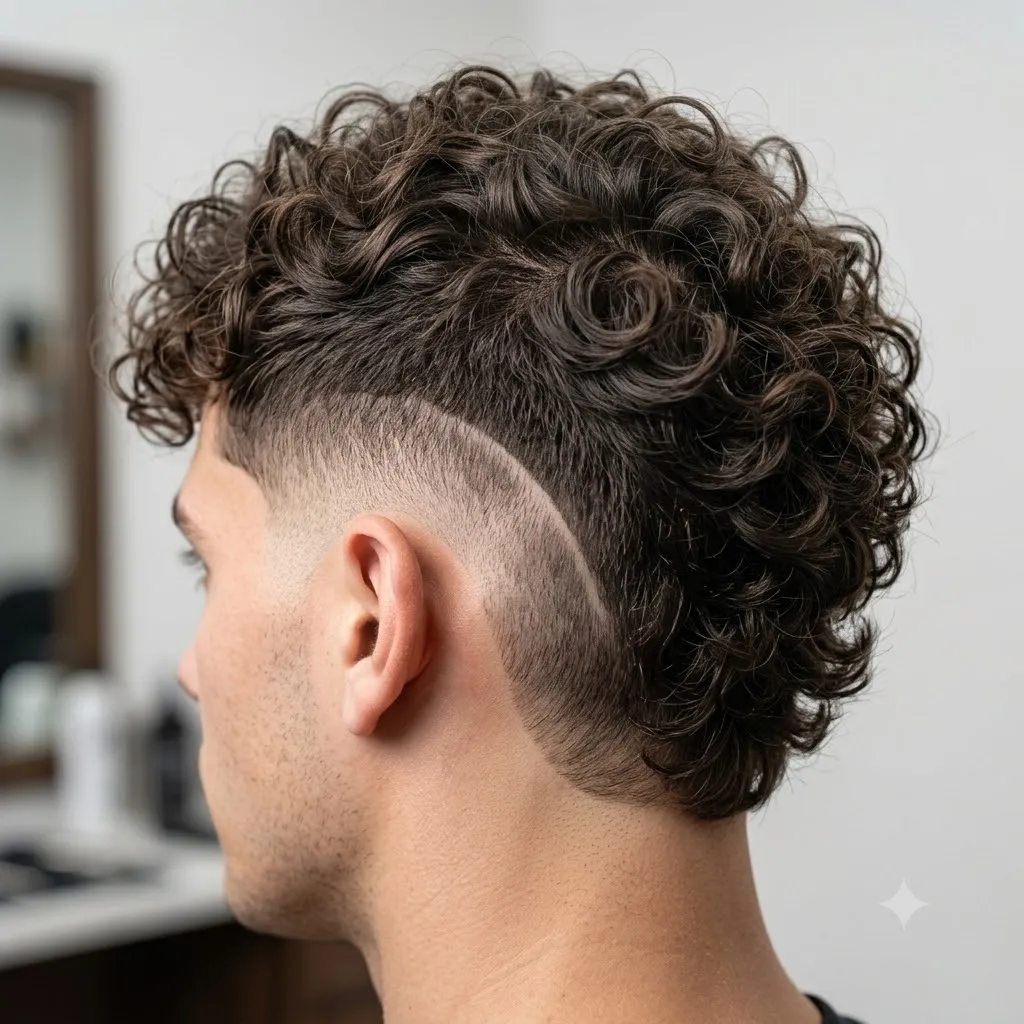
Who it suits: Men who want a rounded fade that wraps around the ear without a straight line down the neckline.
Maintenance: High.
Styling difficulty: Medium.
Barber instructions: “Fade in a semi-circle around the ear only, leave the back longer, taper curls on top into a rounded silhouette.”
Products: Light curl cream.
Pros: Unique shape, great with curly mullets and shags.
Cons: Barber skill-dependent — hard to DIY or get right with an inexperienced barber.
Ideal face shapes: Oval, heart.
Ideal curl types: 2C–3B.
6. Drop Fade

Who it suits: Men who want the fade line to “drop” behind the ear for a rounder finish.
Maintenance: High.
Styling difficulty: Medium.
Barber instructions: “Drop the fade line behind the ear, curve it downward, blend into the nape.”
Products: Curl cream, light gel.
Pros: Flatters round and square faces by softening angles.
Cons: Needs a skilled barber; grows out unevenly.
Ideal face shapes: Square, round.
Ideal curl types: 2B–3C.
7. Temple Fade
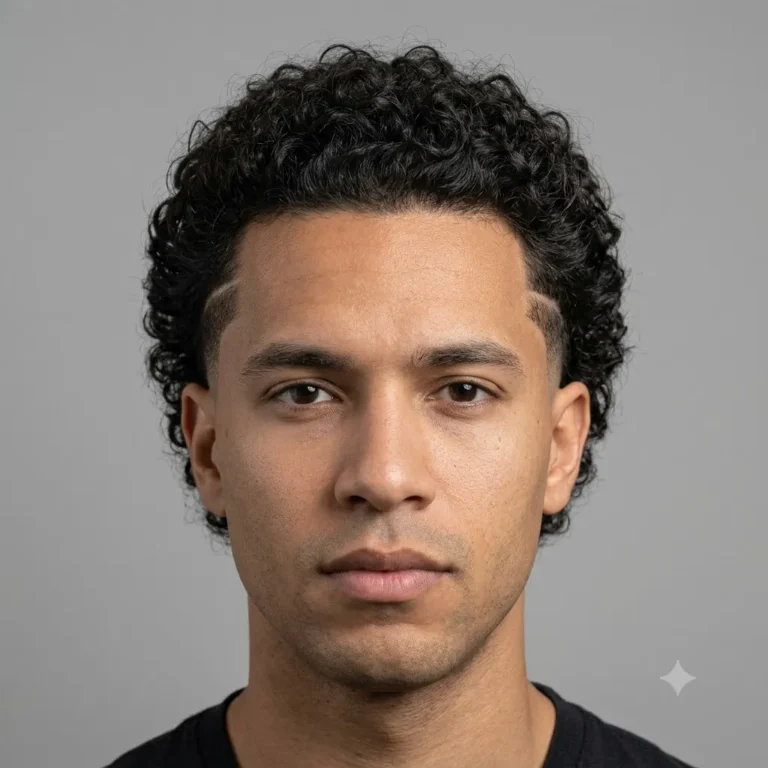
Who it suits: Men who want a fade focused around the temples, often paired with a hard part.
Maintenance: Medium.
Styling difficulty: Low.
Barber instructions: “Fade only around the temple area, leave length elsewhere, add a hard part line if desired.”
Products: Pomade or curl cream depending on finish.
Pros: Subtle but defined; pairs well with a side part.
Cons: Less impactful on very thick curls.
Ideal face shapes: Oval, rectangle.
Ideal curl types: 2A–3A.
8. Skin Fade
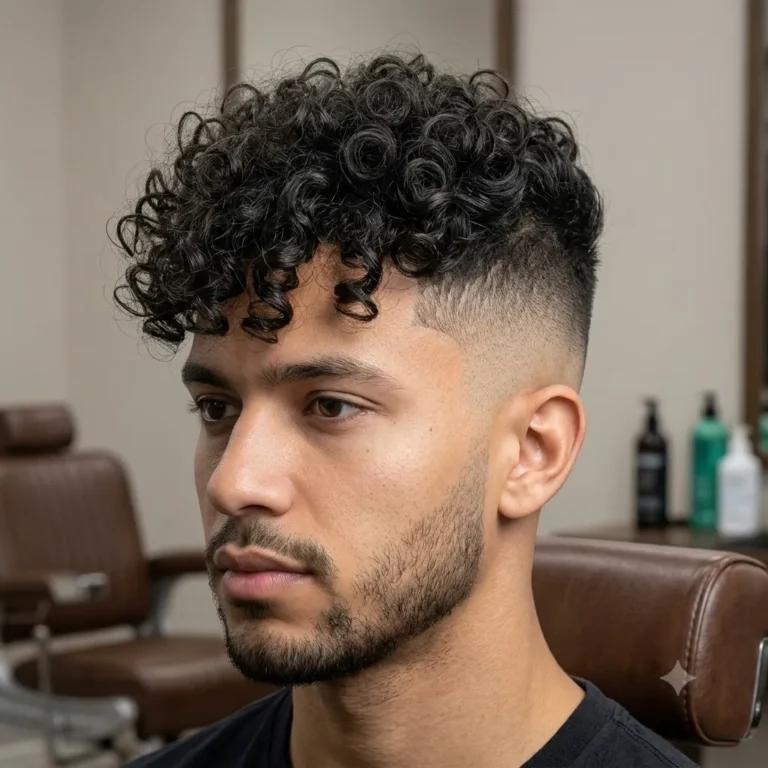
Who it suits: Men who want the sides taken down to skin for maximum contrast.
Maintenance: High — visible regrowth within a week.
Styling difficulty: Medium.
Barber instructions: “Take the sides down to skin, blend upward into a 1 or 1.5 guard, leave curls long on top.”
Products: Curl cream, diffuser.
Pros: Bold, sharp, great for showing off curl volume on top.
Cons: Highest maintenance fade on this list.
Ideal face shapes: Round, square, oval.
Ideal curl types: 3A–4C.
9. Taper Fade
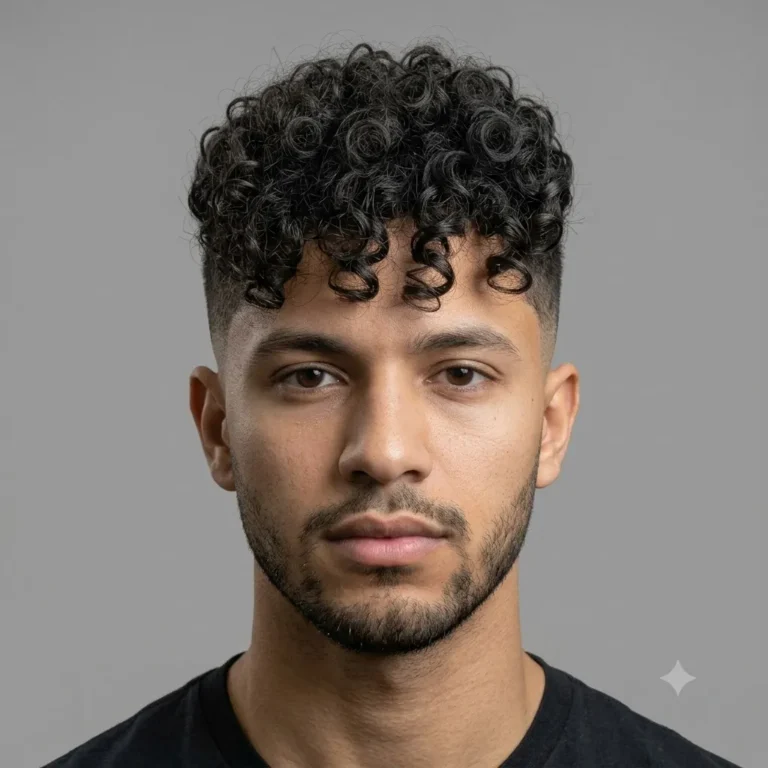
Who it suits: Men who want a softer transition than a skin fade — hair gradually shortens rather than disappearing to skin.
Maintenance: Medium.
Styling difficulty: Low.
Barber instructions: “Taper the sides gradually with scissors or clippers over comb, no skin exposure, leave curl length on top.”
Products: Light curl cream.
Pros: Most forgiving fade for grow-out; office-friendly.
Cons: Less dramatic contrast.
Ideal face shapes: All face shapes.
Ideal curl types: 2A–3B.
10. French Crop

Who it suits: Men who want short, textured length on top with a fringe.
Maintenance: Medium.
Styling difficulty: Low.
Barber instructions: “Crop the top to 1–2 inches, texturize with scissors, pair with a low or mid fade on the sides.”
Products: Matte clay or curl cream.
Pros: Low daily effort, works with most curl types.
Cons: Less curl definition shows with very short lengths.
Ideal face shapes: Oval, square, heart.
Ideal curl types: 2A–3A.
11. Textured Crop

Who it suits: Men wanting visible texture and movement without much length.
Maintenance: Low to medium.
Styling difficulty: Low.
Barber instructions: “Point-cut the top for texture, keep length uneven for natural movement, pair with any fade.”
Products: Texturizing cream or sea salt spray.
Pros: Very low maintenance, disguises fine curls well.
Cons: Can look messy if over-styled.
Ideal face shapes: Round, oval.
Ideal curl types: 2A–2C.
12. Curly Fringe
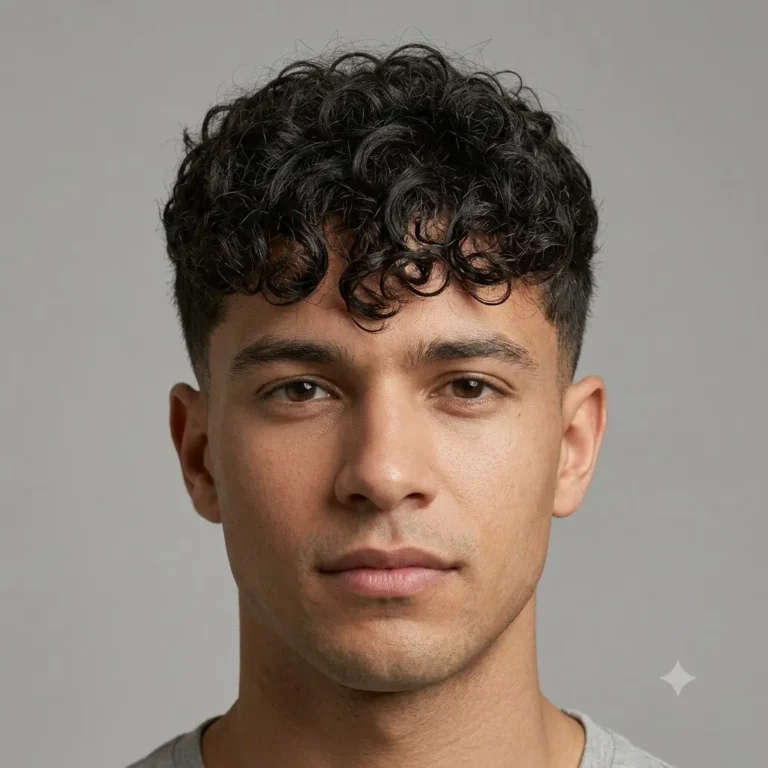
Who it suits: Men who want curls to fall forward over the forehead.
Maintenance: Medium.
Styling difficulty: Medium.
Barber instructions: “Leave 3+ inches at the front, cut sides shorter for contrast, encourage forward curl fall when styling.”
Products: Curl cream, light-hold gel.
Pros: Trendy, softens strong foreheads and angular faces. Cons: Can obstruct vision if not trimmed regularly.
Ideal face shapes: Square, rectangle, diamond.
Ideal curl types: 2B–3B.
13. Curly Quiff
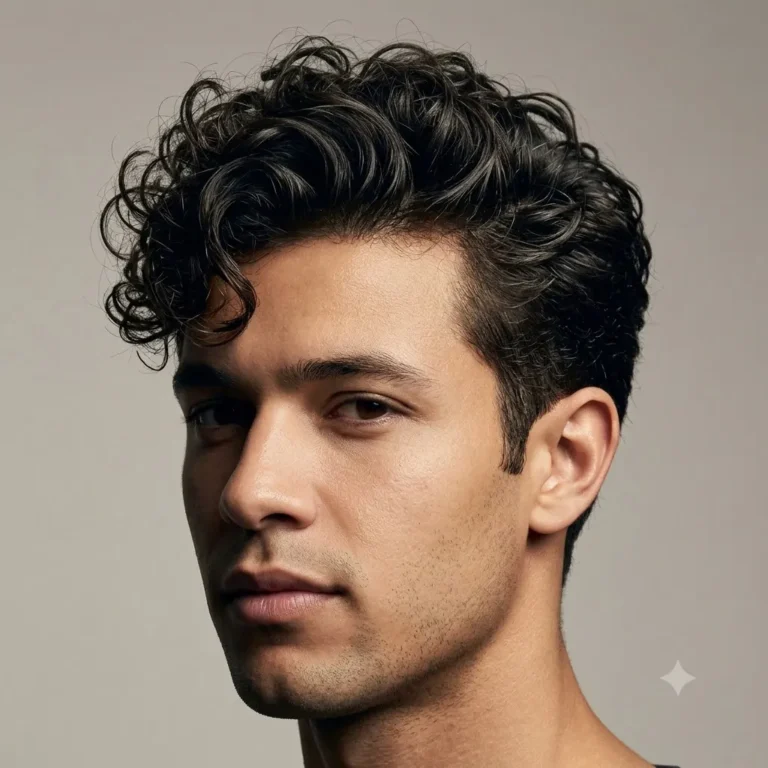
Who it suits: Men who want height and volume swept upward and back.
Maintenance: High.
Styling difficulty: High.
Barber instructions: “Leave 3–4 inches on top, shorter sides, cut to encourage upward volume when blow-dried.”
Products: Mousse, strong-hold gel, diffuser.
Pros: Dramatic, great for formal or dating occasions.
Cons: Daily styling required; doesn’t hold in humidity without product.
Ideal face shapes: Round, square (adds height).
Ideal curl types: 2B–3B.
Celebrity inspiration: A go-to red carpet look for men with looser curl patterns.
14. Curly Pompadour
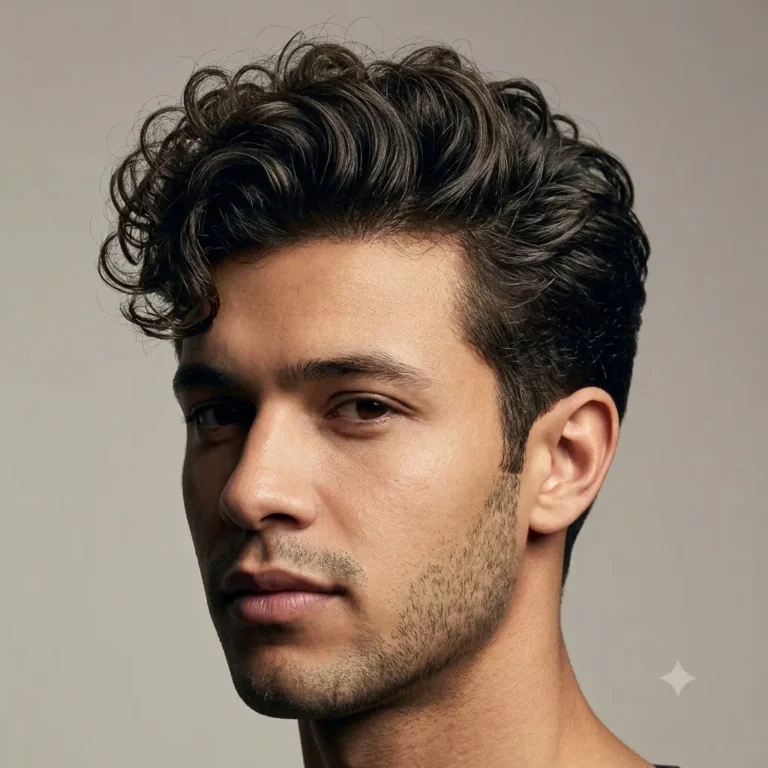
Who it suits: Men wanting a bold, voluminous, swept-back look.
Maintenance: High.
Styling difficulty: High.
Barber instructions: “Leave 4+ inches on top, taper or fade sides, cut with weight distribution that supports upward sweep.”
Products: Strong-hold pomade, diffuser, blow dryer with comb attachment.
Pros: Statement style, great for special occasions.
Cons: Most time-intensive style on this list.
Ideal face shapes: Round, square, oval.
Ideal curl types: 2A–3B.
15. Buzz Cut
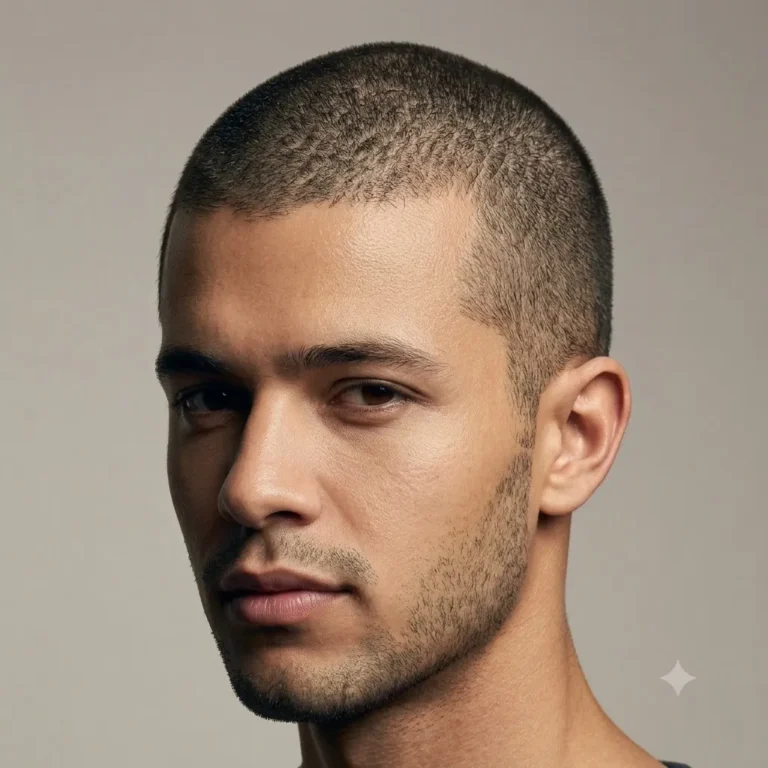
Who it suits: Men wanting the lowest-maintenance option possible.
Maintenance: Very low.
Styling difficulty: None.
Barber instructions: “Clip all over with a 1–2 guard, uniform length, no scissor work needed.”
Products: None required; light moisturizer for scalp.
Pros: Zero styling time, gym and heat-friendly, shows off curl texture in miniature.
Cons: No length to style; less versatile.
Ideal face shapes: Oval, square (avoid on very round faces without facial hair balance).
Ideal curl types: All types, especially coily 4A–4C.
16. Crew Cut
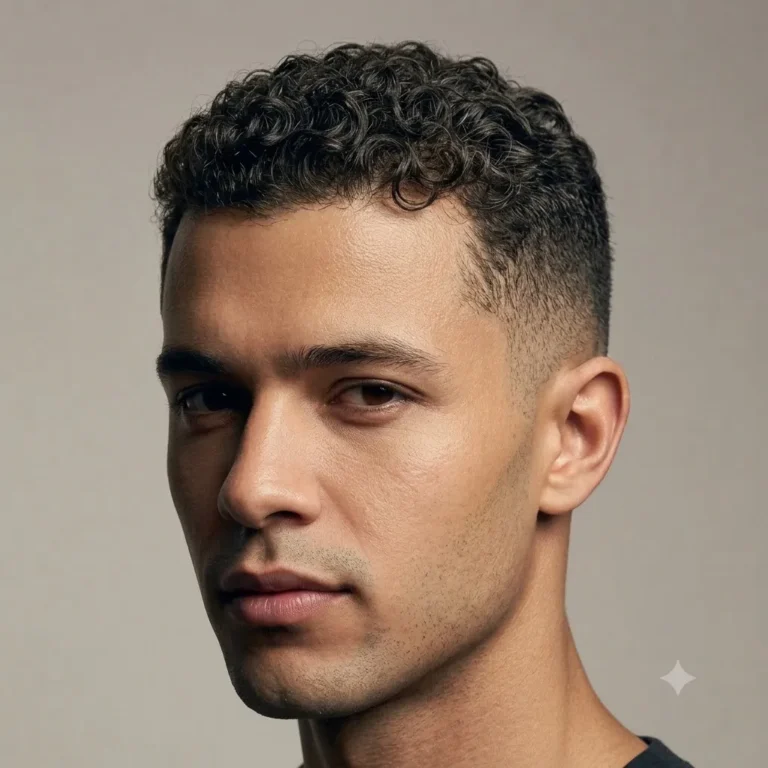
Who it suits: Men wanting short, classic, professional styling with minimal effort.
Maintenance: Low.
Styling difficulty: Low.
Barber instructions: “Clip sides short, leave 1–1.5 inches on top, scissor-blend into a natural taper.”
Products: Small amount of curl cream or pomade.
Pros: Timeless, office-appropriate, minimal daily work.
Cons: Not much curl definition shows at this length.
Ideal face shapes: All shapes.
Ideal curl types: 2A–3A.
17. Caesar Cut

Who it suits: Men who want short, horizontal fringe with uniform length.
Maintenance: Low.
Styling difficulty: Low.
Barber instructions: “Cut uniform length all over, roughly 1 inch, with a straight-across fringe.”
Products: Light curl cream.
Pros: Very low maintenance, classic look.
Cons: Limited styling versatility.
Ideal face shapes: Oval, square.
Ideal curl types: 2A–2C.
18. Modern Mulle
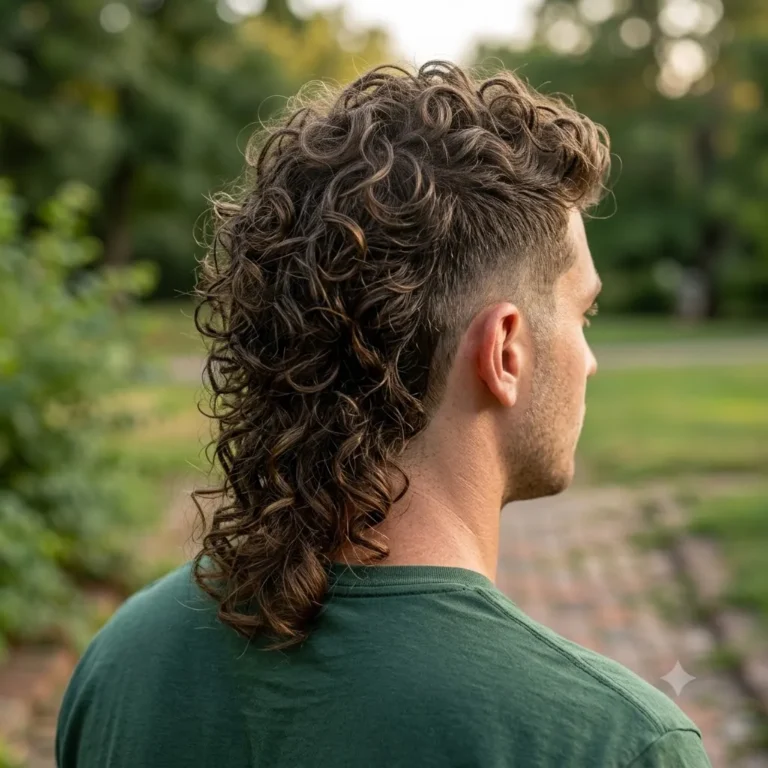
Who it suits: Men wanting short sides and significant length in the back.
Maintenance: Medium.
Styling difficulty: Low.
Barber instructions: “Fade or taper sides, leave 4+ inches in the back, blend top into the length gradually.”
Products: Curl cream, sea salt spray.
Pros: Trendy, distinctive, low daily styling effort.
Cons: Not office-appropriate in all industries.
Ideal face shapes: Oval, heart, square.
Ideal curl types: 2B–3C.
Celebrity inspiration: A favorite among musicians and creatives with looser curl patterns.
19. Curly Wolf Cut

Who it suits: Men who want heavy layering, shag texture, and a mullet-adjacent shape.
Maintenance: Medium.
Styling difficulty: Medium.
Barber instructions: “Heavily layer throughout, shorter on top building to length at the back, texturize ends for shag effect.”
Products: Texturizing spray, curl cream.
Pros: Extremely trendy, great for thick curls, disguises bulk.
Cons: Needs regular trims to maintain shape.
Ideal face shapes: Oval, round, heart.
Ideal curl types: 2B–3C.
20. Undercut

Who it suits: Men who want a sharp contrast between very short sides and long curly top.
Maintenance: Medium to high.
Styling difficulty: Medium.
Barber instructions: “Clip sides very short (0.5–1 guard) with a hard line, leave 3+ inches on top untouched.”
Products: Curl cream, light gel for hold.
Pros: Bold contrast, great for showing off curl volume.
Cons: Hard line needs regular upkeep.
Ideal face shapes: Oval, square, diamond.
Ideal curl types: 2B–3C.
21. Slick Back
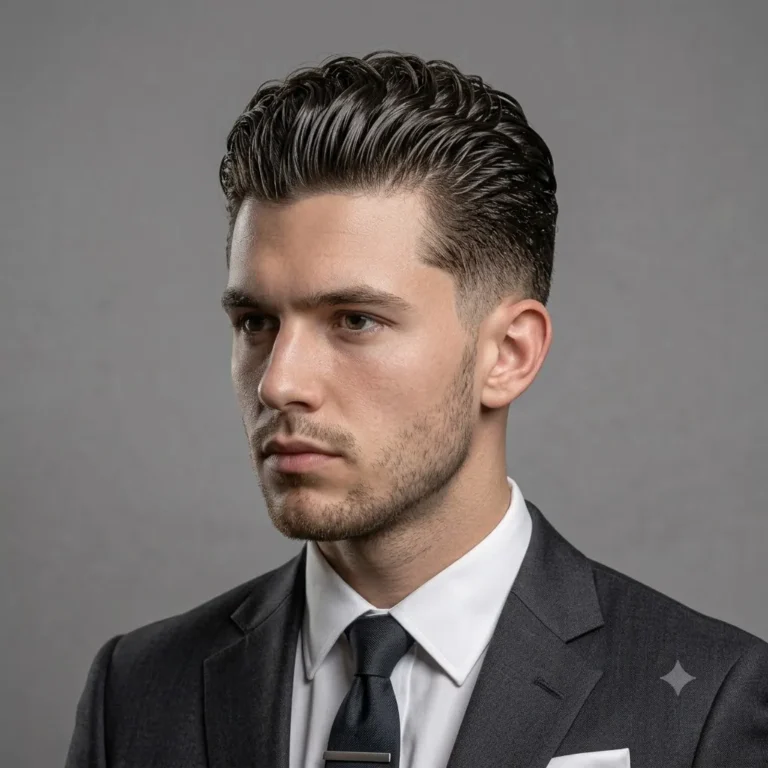
Who it suits: Men with looser curls who want a polished, controlled finish.
Maintenance: Medium.
Styling difficulty: Medium.
Barber instructions: “Leave 3+ inches on top with minimal layering so hair can be combed straight back.”
Products: Strong-hold pomade or gel.
Pros: Polished, professional, works well for formal events.
Cons: Fights natural curl pattern; can look flat if curls are tight.
Ideal face shapes: Oval, rectangle.
Ideal curl types: 2A–2C (loose waves work best)
22. Bro Flow
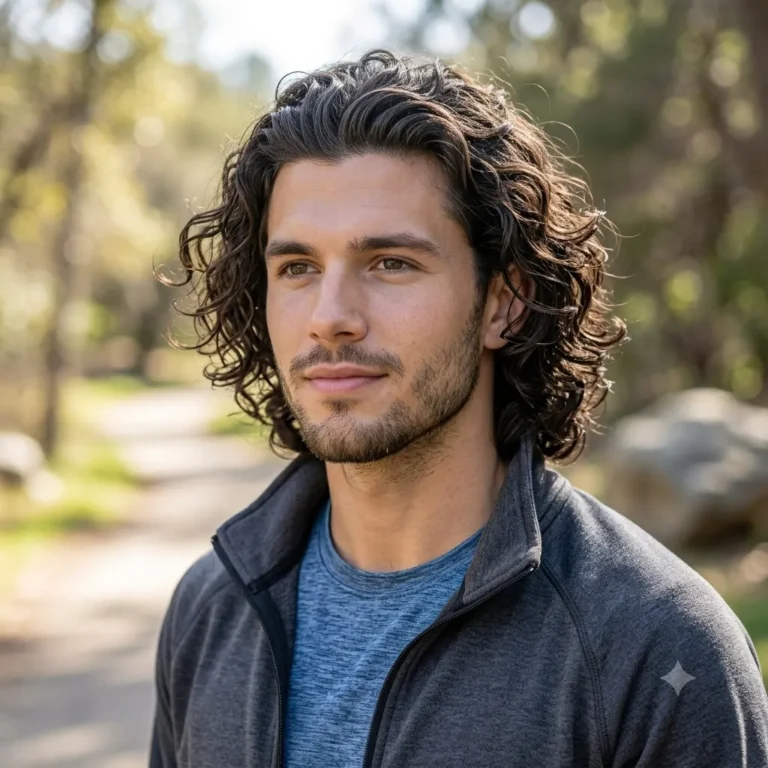
Who it suits: Men wanting a natural, longer, effortless swept-back look.
Maintenance: Low.
Styling difficulty: Low.
Barber instructions: “Leave length throughout (4+ inches), light layering to prevent bulk, no hard lines.”
Products: Sea salt spray or light curl cream.
Pros: Effortless, low daily maintenance, athletic and casual.
Cons: Can look unkempt without occasional trims.
Ideal face shapes: Oval, square, heart.
Ideal curl types: 2B–3B.
23. Shoulder Length Curls
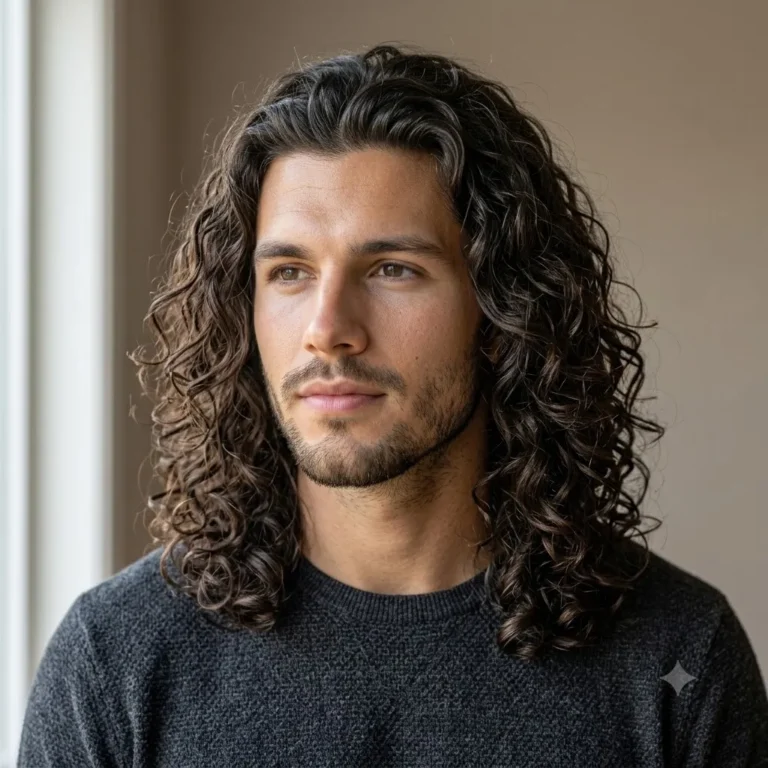
Who it suits: Men growing hair out who want length while maintaining curl health.
Maintenance: Medium (regular trims to avoid split ends).
Styling difficulty: Medium.
Barber instructions: “Trim only split ends, maintain even length, minimal layering to preserve density.”
Products: Leave-in conditioner, curl cream, diffuser.
Pros: Distinctive, versatile for tying back.
Cons: Requires patience during the growing-out phase.
Ideal face shapes: Oval, square.
Ideal curl types: 2C–3C.
24. Afro Curls

Who it suits: Men with tight coily curl patterns wanting a natural, rounded silhouette.
Maintenance: Medium.
Styling difficulty: Low to medium.
Barber instructions: “Cut for shape and symmetry with clippers or shears, round the silhouette rather than layering flat.”
Products: Leave-in conditioner, curl cream or butter for moisture retention.
Pros: Celebrates natural texture fully, low daily styling once shaped.
Cons: Needs regular moisture to prevent dryness and breakage.
Ideal face shapes: Oval, heart, diamond.
Ideal curl types: 4A–4C.
25. Messy Curls

Who it suits: Men wanting a relaxed, undone look with visible curl texture.
Maintenance: Low.
Styling difficulty: Low.
Barber instructions: “Leave moderate length (2–4 inches), light texturizing, no rigid shape required.”
Products: Sea salt spray, light curl cream.
Pros: Effortless, forgiving of humidity and regrowth.
Cons: Can look unintentional if curls are very fine.
Ideal face shapes: All shapes.
Ideal curl types: 2A–3B.
26. Side Part

Who it suits: Men wanting a polished, defined part with curls on top.
Maintenance: Medium.
Styling difficulty: Medium.
Barber instructions: “Cut a defined part line, leave enough length (2–3 inches) for curls to fall naturally to one side.”
Products: Light-hold gel or curl cream.
Pros: Professional, classic, flattering on most face shapes.
Cons: Part line can be tricky to maintain with tight curl patterns.
Ideal face shapes: Oval, rectangle, heart.
Ideal curl types: 2A–2C
27. Comb Over

Who it suits: Men wanting a more formal, structured version of the side part.
Maintenance: Medium to high.
Styling difficulty: High.
Barber instructions: “Leave length on top (3+ inches), fade or taper sides, style with a defined sweep across.”
Products: Strong-hold pomade or gel.
Pros: Sharp and formal; great for business settings.
Cons: High daily styling effort, especially with tighter curl patterns.
Ideal face shapes: Oval, square.
Ideal curl types: 2A–2B (loose waves style most easily).
28. Mohawk Fade
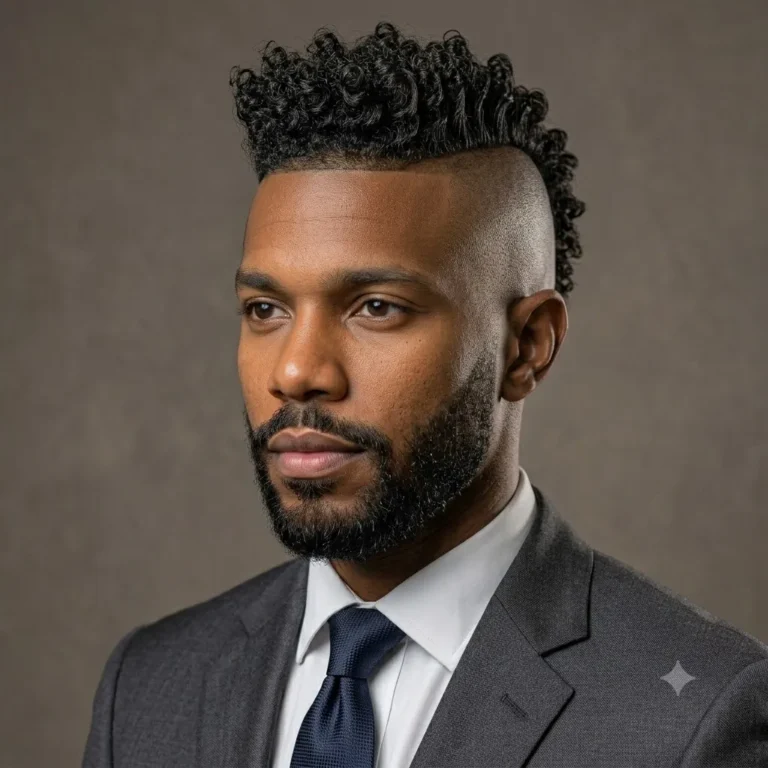
Who it suits: Men wanting a bold strip of length down the center with faded sides.
Maintenance: High.
Styling difficulty: High.
Barber instructions: “Fade both sides down to skin, leave a center strip 2–4 inches long, style upward with product.”
Products: Strong-hold gel or pomade.
Pros: Bold, edgy, statement-making.
Cons: Not suitable for conservative workplaces; high upkeep.
Ideal face shapes: Oval, square.
Ideal curl types: 2B–3C.
29. Faux Hawk
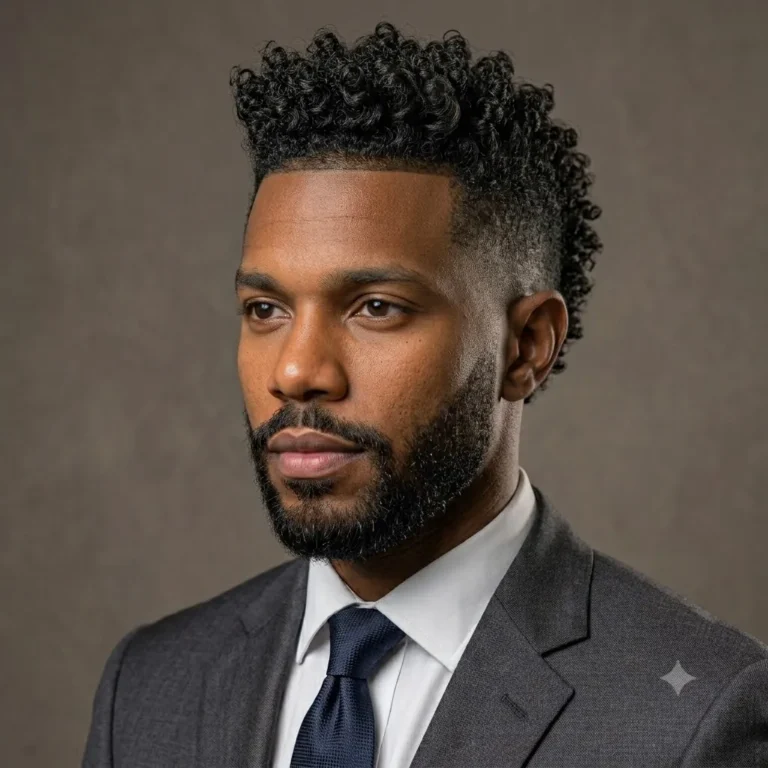
Who it suits: Men wanting a softer, less permanent version of the mohawk.
Maintenance: Medium to high.
Styling difficulty: Medium.
Barber instructions: “Taper sides rather than skin fade, leave center section longer, style upward or leave natural.”
Products: Medium-hold curl cream or gel.
Pros: Edgier without being extreme; more versatile than a full mohawk.
Cons: Needs daily styling to maintain shape.
Ideal face shapes: Oval, square, diamond.
Ideal curl types: 2B–3B.
30. Disconnected Undercut

Who it suits: Men wanting a hard contrast between a longer top and buzzed sides with no blend.
Maintenance: Medium.
Styling difficulty: Medium.
Barber instructions: “Clip sides to skin or a 0.5 guard with no fade transition, leave top 3+ inches long.”
Products: Curl cream, light gel.
Pros: Distinct, modern, great for showing curl volume.
Cons: Grows out into an odd shape faster than a blended fade.
Ideal face shapes: Oval, square, heart.
Ideal curl types: 2B–3C.
31. Ivy League
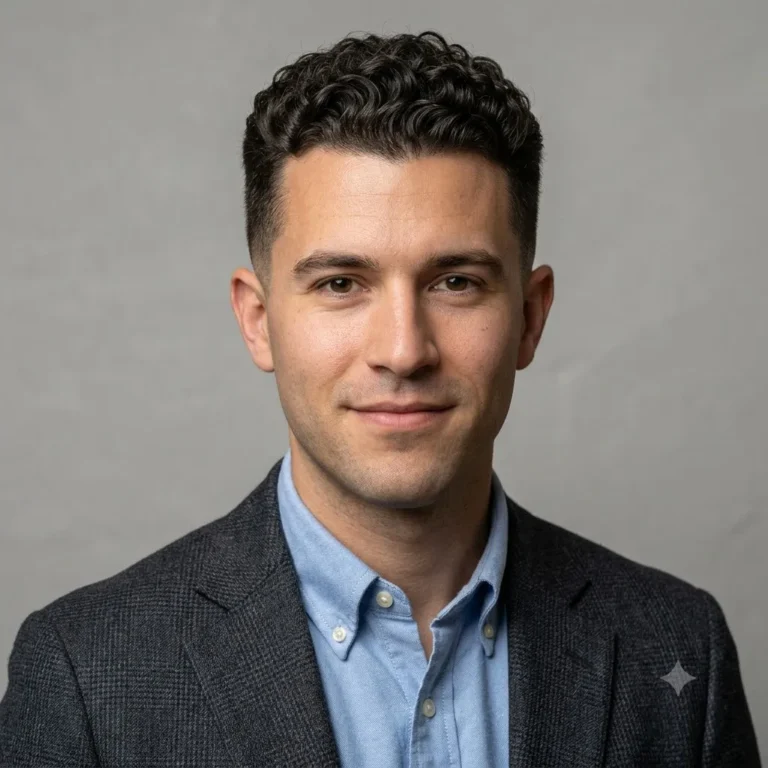
Who it suits: Men wanting a slightly longer, classic American preppy cut.
Maintenance: Low to medium.
Styling difficulty: Low.
Barber instructions: “Leave 2 inches on top, taper sides shorter, blend for a clean, classic finish.”
Products: Light pomade or curl cream.
Pros: Timeless, professional, easy to maintain.
Cons: Not much room for bold styling.
Ideal face shapes: Oval, square.
Ideal curl types: 2A–2C.
32. Curly Shag

Who it suits: Men wanting heavy layers and a retro, textured silhouette.
Maintenance: Medium.
Styling difficulty: Low to medium.
Barber instructions: “Layer heavily throughout with a razor or texturizing shears, keep ends piecy and uneven.”
Products: Texturizing spray, curl cream.
Pros: Trendy, forgiving of growth, great for medium-length curls.
Cons: Needs regular trims to maintain the shag silhouette.
Ideal face shapes: Oval, round, heart.
Ideal curl types: 2B–3C.
33. Curly Bowl Crop
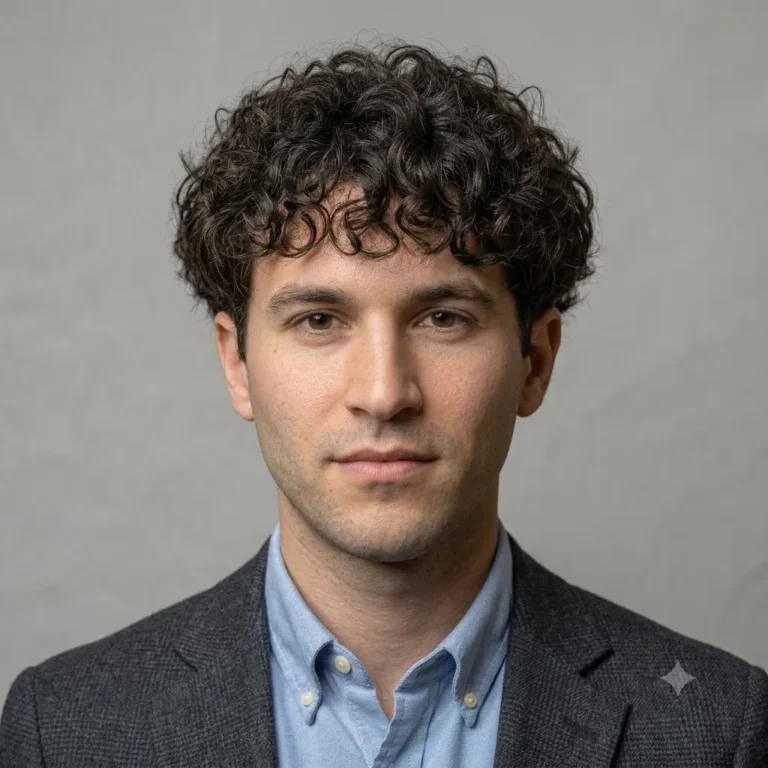
Who it suits: Men wanting a modern, rounded silhouette reminiscent of the bowl cut but textured and updated.
Maintenance: Low to medium.
Styling difficulty: Low.
Barber instructions: “Cut a rounded silhouette with length concentrated on top, texturize edges to avoid a harsh line.”
Products: Light curl cream.
Pros: Distinctive, low daily effort.
Cons: Not universally flattering; works best on symmetrical face shapes.
Ideal face shapes: Oval, square.
Ideal curl types: 2B–3B.
34. Curly Taper with Beard Fade

Who it suits: Men who want their haircut and beard to blend into one continuous fade. Maintenance: High.
Styling difficulty: Medium.
Barber instructions: “Taper the sides, blend the fade directly into the beard line at the jaw and sideburns.”
Products: Beard oil plus curl cream.
Pros: Cohesive, polished look; great for facial hair-forward men.
Cons: Requires both haircut and beard maintenance on the same schedule.
Ideal face shapes: Oval, square, rectangle.
Ideal curl types: 2A–3B.
35. Long Layered Curls
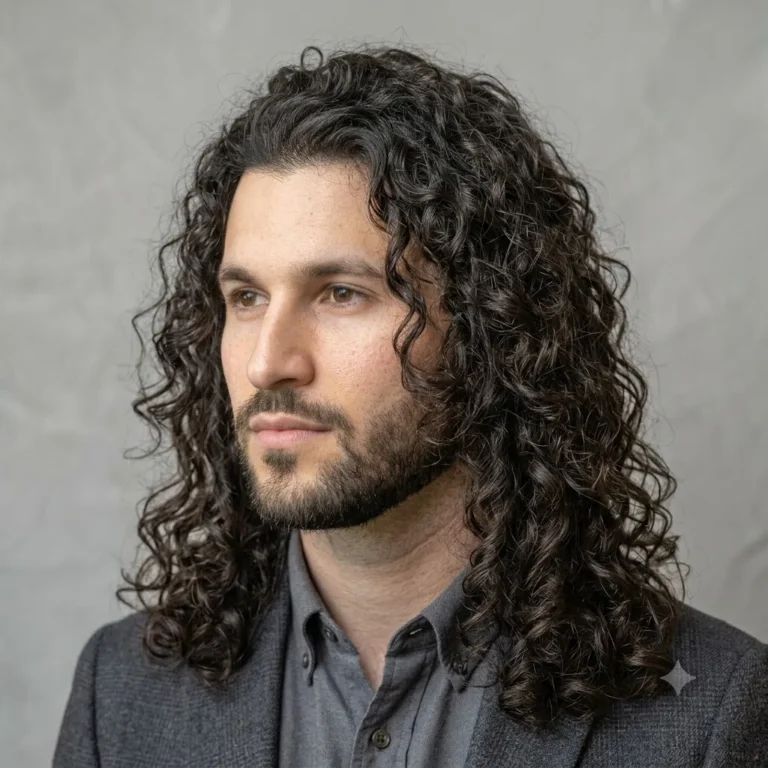
Who it suits: Men growing curls past ear length who want shape without bulk.
Maintenance: Medium.
Styling difficulty: Medium.
Barber instructions: “Layer throughout to reduce bulk while maintaining length, trim only as needed to preserve density.”
Products: Leave-in conditioner, curl cream, diffuser.
Pros: Versatile for tying back or wearing loose.
Cons: Long growing-out phase before the style fully forms.
Ideal face shapes: Oval, heart, square.
Ideal curl types: 2C–3C.
36. High Top Fade (Bonus Style)
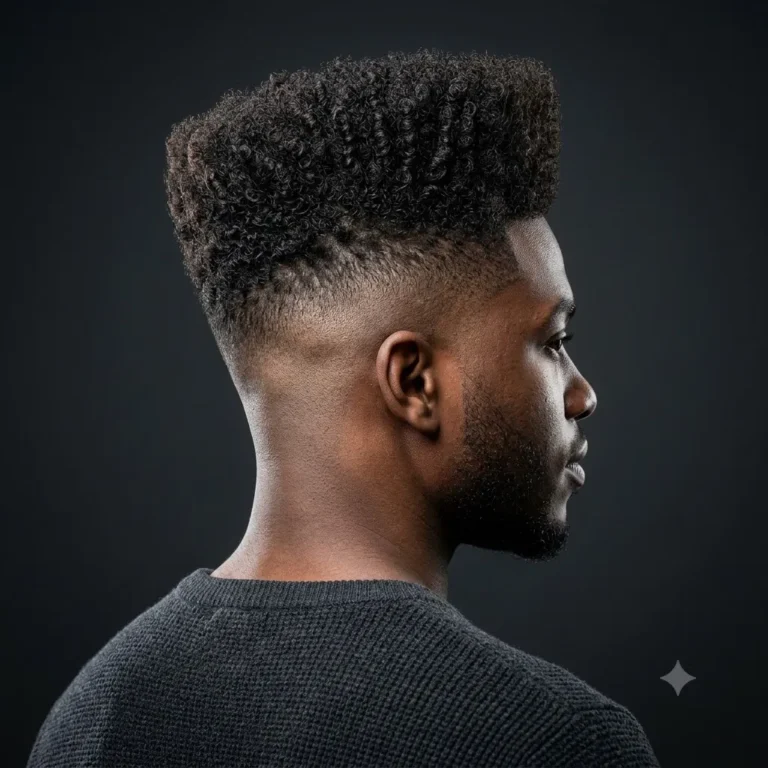
Best Haircuts by Curl Type
| Hair Type | Hair Pattern | Recommended Hairstyles |
|---|---|---|
| 3A | Loose, springy curls | Quiff, taper fade |
| 3B | Springy ringlets | Curly fade, modern mullet, curly wolf cut |
| 3C | Tight, dense curls | Undercut, disconnected undercut, curly shag |
| 4A | Soft, tight coils | Afro curls, curly taper, high top fade |
| 4B | Z-shaped tight coils | Buzz cut, afro curls, skin fade with top length |
| 4C | Tightest coil pattern with the most shrinkage | High top fade, afro curls, low-length buzz with shape-up |
Best Haircuts by Face Shape
Oval: Almost every style on this list works. Curly quiff, French crop, and side part are especially flattering.
Round: Add height and reduce width — high fade, curly quiff, high top fade, and mohawk fade all elongate the face.
Square: Soften strong angles with curly fringe, textured crop, or messy curls; avoid boxy, blunt shapes on top.
Diamond: Balance narrow forehead and chin with volume through the middle — curly fringe, undercut, or afro curls work well.
Heart: Balance a wider forehead with fuller sides — bro flow, modern mullet, or shoulder length curls help.
Rectangle: Avoid excessive height; side part, Ivy League, and taper fade keep proportions balanced.
Triangle: Add width and volume up top to balance a wider jaw — curly pompadour or curly quiff work best.
Best Haircuts by Hair Length
Short: Buzz cut, crew cut, Caesar cut, curly fade, French crop.
Medium: Curly quiff, curly fringe, textured crop, curly shag, taper fade.
Long: Modern mullet, bro flow, shoulder length curls, long layered curls, curly wolf cut.
Best Haircuts for Thick Curly Hair
Thick, dense curls carry more weight and volume naturally, so cuts should manage bulk rather than add to it.
- Curly shag — layering removes bulk while keeping shape.
- High fade — contrast makes thick curls on top look intentional, not overwhelming.
- Curly wolf cut — heavy layering disguises density beautifully.
- Textured crop — point-cutting thins out visual weight.
Barber tip: ask for “thinning shears through the mid-lengths only” if your curls feel heavy — never at the ends, which weakens curl definition.
Best Haircuts for Thin Curly Hair
Fine or low-density curls need cuts that create the illusion of fullness rather than removing bulk.
- Curly quiff — height creates volume.
- French crop — shorter length looks fuller and denser.
- Textured crop — texturizing adds the appearance of thickness.
- Side part — controlled shape reads as more deliberate and full.
Barber tip: avoid heavy layering on fine curls — it removes density you don’t have to spare. Ask for blunt cutting with light texturizing only at the ends.
Best Professional Curly Hairstyles for Men
For office environments, the goal is polish without losing curl texture entirely.
- Taper fade — clean and conservative.
- Side part — classic, professional, timeless.
- Ivy League — short, tidy, easy to maintain between cuts.
- Low fade — subtle contrast that reads as intentional, not trendy.
- Curly taper with beard fade — polished from hairline to jawline.
Low Maintenance Haircuts
If mornings are tight, these need the least daily effort:
- Buzz cut — zero styling.
- Crew cut — a little curl cream, done.
- Messy curls — designed to look undone.
- Modern mullet — grows out gracefully, minimal daily work.
- Curly shag — texture does the work for you.
Trending Curly Haircuts for This Year
Popular current requests include the curly wolf cut, modern mullet, burst fade, and high top fade — all styles that lean into natural curl texture rather than fighting it. The disconnected undercut and curly fringe combo is also trending among younger clients wanting a bolder, editorial look.
Barber Tips for Maintaining Curly Hair
A haircut is only half the equation. How you wash, condition, and style between cuts determines whether curls look defined or frizzy.
Washing routine: Wash 2–3 times a week max. Daily washing strips natural oils and increases frizz. Use sulfate-free shampoo.
Conditioning: Condition every wash, focusing on mid-lengths and ends where dryness and breakage happen most.
Leave-in conditioner: Apply to damp hair before any styling product — this is your moisture retention layer and it matters more than any single product after it.
Curl cream: Apply through damp hair for curl definition and to control frizz without weighing curls down.
Sea salt spray: Good for texture and a beachy, undone finish on looser curl patterns; use sparingly on drier or coarser curls, as it can be dehydrating.
Mousse: Adds volume and hold without the heaviness of gel — good for fine curls needing lift.
Diffuser: Attach to a blow dryer on low heat and low speed to dry curls without disrupting the pattern or causing frizz.
Air drying: The gentlest option — scrunch curls upward with a microfiber towel or cotton t-shirt (never a regular towel, which causes frizz).
Night protection: Sleep on a silk or satin pillowcase, or use a silk bonnet, to prevent friction that breaks up curl pattern and causes frizz overnight.
Common Mistakes Men Make with Curly Hair
Cutting curls wet without accounting for shrinkage. This leads to a cut that looks noticeably shorter once fully dry.
Using regular cotton towels. Cotton fibers rough up the hair cuticle and cause frizz — switch to microfiber or an old t-shirt.
Over-washing. Stripping natural oils daily leaves curls dry, frizzy, and harder to define.
Skipping leave-in conditioner. Curly hair loses moisture faster than straight hair; skipping this step is the number one cause of frizz.
Brushing dry curls. Brushing breaks up curl clumps and creates frizz — detangle only when wet and conditioned, using fingers or a wide-tooth comb.
Choosing a fade without a curl-experienced barber. Fade blending on curly hair requires different technique than on straight hair; an inexperienced barber will leave visible disconnection.
Using heavy products on fine curls. This weighs curls down and flattens volume — match product weight to your density.
Frequently Asked Questions
What is the best haircut for curly hair men? There’s no single “best” cut — it depends on curl type, density, and face shape. That said, the curly fade, textured crop, and curly quiff are consistently the most requested and most versatile across curl patterns.
How often should men with curly hair get a haircut? Every 4–6 weeks for fades and short styles, every 8–12 weeks for longer, layered cuts like mullets or shags, since they rely less on a sharp fade line.
Should curly hair be cut wet or dry? Both have a place. Cutting dry shows true curl fall and shrinkage, which is more accurate for shorter cuts. Cutting slightly damp works better for longer, layered styles where overall shape matters more than precise curl-by-curl behavior.
Do fades work with curly hair? Yes, but they require a barber experienced in curly textures. Curls don’t blend as smoothly as straight hair, so fade lines need extra blending work to avoid looking disconnected.
What’s the best low-maintenance haircut for curly hair? The buzz cut is the lowest maintenance option, followed closely by the crew cut and messy curls style, which relies on natural texture rather than daily styling.
How do I stop my curly hair from looking frizzy after a haircut? Use a leave-in conditioner and curl cream on damp hair, then diffuse on low heat or air dry with a microfiber towel. Avoid brushing dry curls.
What curl type responds best to a fade? Looser curl types (2B–3B) blend most smoothly into a fade because they lie flatter against the head. Tighter coils (3C–4C) can still get great fades, but need a barber skilled in coily textures.
Is a curly mullet still trendy? Yes — the modern mullet and curly wolf cut variations remain among the most requested styles, especially among men with looser to medium curl patterns.
What products should I use for curly hair after a haircut? Leave-in conditioner, curl cream, and a light-hold gel or mousse cover most needs. Add sea salt spray only if your curls are looser and not prone to dryness.
Can thick curly hair be cut shorter? Yes — shorter cuts like a curly fade or high fade actually manage thick curl volume well by removing bulk through fading rather than length alone.
What haircut is best for thin curly hair? The curly quiff or French crop, since both create the illusion of volume and density rather than relying on natural fullness.
How do I ask my barber for a curly haircut? Bring reference photos of both the shape and length you want, mention your curl type if you know it, and specify whether you want the cut done dry (to see true curl fall) or damp.
Do I need a diffuser for curly hair? Not required, but it significantly speeds up drying time while preserving curl definition better than air drying alone, especially for looser curl patterns.
What’s the difference between a taper and a fade? A taper gradually shortens hair without exposing skin; a fade blends down to skin or a very short guard length for sharper contrast.
Can I get a curly haircut for a professional office job? Yes — the taper fade, side part, Ivy League, and low fade all read as polished and conservative while still working with curl texture.
How do I fix an uneven curly haircut? See a barber experienced specifically in curly and textured hair for a dry-cut correction, since wet-cut corrections often miss true curl shrinkage.
What’s the best haircut for curly hair and a receding hairline? Shorter styles like a buzz cut, crew cut, or curly fade with shorter length on top draw less attention to a receding hairline than longer, heavier styles.
Is curly hair harder to maintain than straight hair? It requires a different routine, not necessarily more effort — moisture retention, gentler detangling, and less frequent washing are the main adjustments.
Can curly hair handle a mohawk or faux hawk? Yes, and curl texture actually adds natural volume and definition to both styles, reducing the need for heavy styling products.
What’s the best curly haircut for gym-goers? Buzz cut, crew cut, or a low fade — all handle sweat and frequent washing better than longer, product-dependent styles.
How do I know my curl type? Look at your hair when fully dry and undisturbed: loose S-shapes are 2A–2C waves, springy loops are 3A–3C curls, and tight coils or zigzags are 4A–4C.
Haircut Recommendations by Age
Teenagers: Buzz cut, crew cut, textured crop — low maintenance, low cost, easy to grow out.
20s: Curly fade, disconnected undercut, curly fringe — bolder, trend-forward styles work well here.
30s: Taper fade, curly quiff, modern mullet — balances style with professional versatility.
40+: Side part, Ivy League, low fade — classic, polished, and flattering as hair texture and hairlines change with age.
Seasonal and Lifestyle Recommendations
Summer/humid climates: Shorter cuts (buzz cut, crew cut, curly fade) resist frizz better than longer styles.
Winter/dry climates: Longer styles with more length (shoulder length curls, curly shag) retain moisture better with proper conditioning.
Office-friendly: Taper fade, side part, Ivy League, low fade.
Gym-friendly: Buzz cut, crew cut, textured crop — easy to towel-dry and restyle post-workout.
Dating and social occasions: Curly quiff, curly pompadour, curly fringe — these carry the most deliberate, “styled” impression.
Comparison Table: Maintenance and Difficulty
| Haircut | Maintenance | Styling Difficulty | Best For |
|---|---|---|---|
| Buzz Cut | Very Low | None | Gym, low effort |
| Crew Cut | Low | Low | Office, everyday |
| Taper Fade | Medium | Low | Professional |
| Curly Fade | Medium | Low–Medium | Everyday versatility |
| Curly Quiff | High | High | Special occasions |
| Curly Pompadour | High | High | Formal events |
| Modern Mullet | Medium | Low | Trend-forward, casual |
| Skin Fade | High | Medium | Bold contrast |
| Afro Curls | Medium | Low–Medium | Natural texture |
| Curly Shag | Medium | Low–Medium | Medium-length versatility |
Conclusion
Finding the right haircuts for curly hair men comes down to working with your curl pattern, not against it. Start with your curl type and density, factor in your face shape, and be honest about how much time you actually want to spend styling each morning. Whether that’s a five-minute buzz cut or a ten-minute curly quiff, there’s a version of these 35+ styles that will fit your hair and your life. The single best move you can make is finding a barber who genuinely understands curl texture — ask about their experience with curly cuts before you sit in the chair.