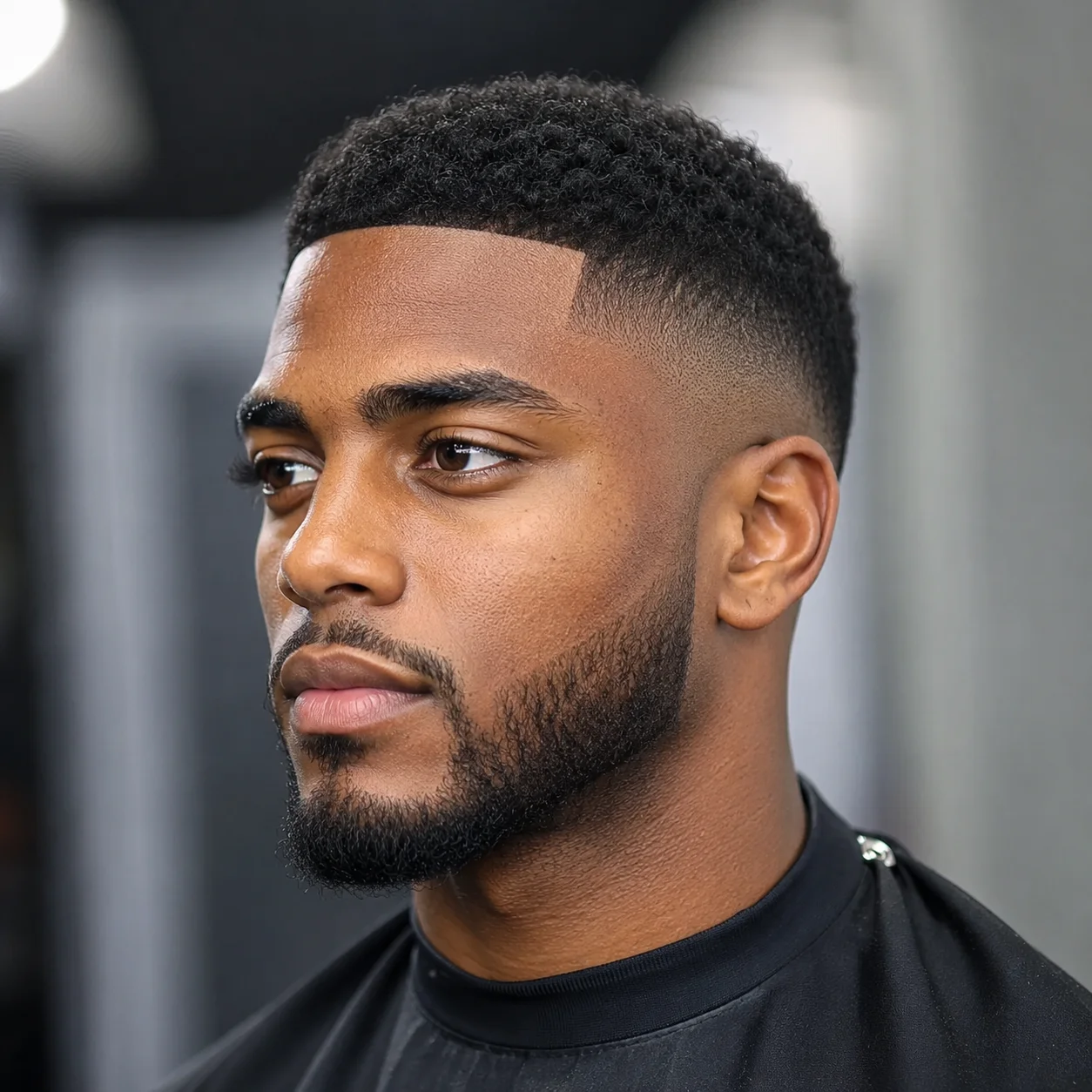
A mid fade is a fade that starts roughly halfway up the side of the head, between the top of the ear and the temple, then blends down to very short hair at the bottom. It sits in the middle of the fade family: more contrast than a low fade, less than a high fade.
That balance is why the mid fade is one of the most popular fades in barbershops. It looks modern and clean, suits a wide range of face shapes, and works with almost any top.
Mid fade at a glance
| Where the fade starts | About halfway up the sides, between the ear and the temple |
| Best for | Round, oval and square faces; straight, wavy, curly and coily hair |
| Hair density | Best on medium to thick hair; the shorter sides remove bulk |
| Length on top | Short crops to medium lengths of 3 to 5 inches |
| Maintenance | Barber visit roughly every 2 to 4 weeks |
| Styling difficulty | Easy to moderate, depending on the top |
| Workplace friendly | Usually yes, especially with a neat top |
Where a mid fade starts
Picture a line around your head halfway between the top of your ear and your temple. On a mid fade, the shortest length runs below that line and blends up into the longer side hair above it. At the back, the fade usually sits around the widest part of the head or a little lower.
Because barbers place fade lines slightly differently, show your barber the exact height you want. Our low vs mid vs high fade comparison explains how the three heights differ.
Clipper guard numbers for a mid fade
| Guard | Hair length left |
|---|---|
| #0 (no guard) | Very close; the exact length depends on the clipper and its lever position |
| #1/2 | 1/16 inch |
| #1 | 1/8 inch |
| #2 | 1/4 inch |
| #3 | 3/8 inch |
| #4 | 1/2 inch |
A common mid fade runs from a #0 or #1/2 at the bottom to a #2 or #3 where it meets the side hair, with the top cut by scissors or a longer guard. A mid skin fade takes the bottom to bare skin for extra contrast; a mid taper keeps more length and only shortens the edges.
Popular mid fade variations
Mid skin fade
The bottom goes to skin, so the contrast with the top is strong. It looks sharp but needs a touch-up every 2 to 3 weeks.
Mid drop fade
The fade line dips down behind the ear toward the nape. It follows the head’s shape and suits waves, curls and afro textures.
Mid fade with a textured crop
A choppy, forward-styled top over a mid fade is a low-effort, modern look. See our textured crop guide.
Mid fade with a quiff or pompadour
The shorter sides make the height on top stand out. Browse quiff and pompadour styles.
Mid fade with an Edgar cut
A straight, blunt fringe over a mid or high fade is the classic Edgar shape. Our Edgar cut guide covers the variations.
Mid fade with curls or twists
Clean sides keep curly and coily tops looking deliberate. See haircuts for curly hair by curl type and black men hairstyles for short hair.
Who a mid fade suits
- Round faces: shorter sides and some height on top make the face look longer and slimmer.
- Oval faces: almost any top works.
- Square faces: keeps the jaw sharp and the overall shape balanced.
- Thick hair: removing weight from the sides stops the head looking wide.
Who might prefer a different fade
- Long or oblong faces: a mid fade with a tall top can over-lengthen the face; a low fade or a flatter top is usually better.
- Very conservative workplaces: a low fade or taper is safer.
- Men who dislike frequent barber visits: a mid skin fade shows grow-out quickly; ask for a #1 at the bottom instead of skin.
For face-shape detail, see our haircuts by face shape guide.
How to ask your barber for a mid fade
“I’d like a mid fade that starts about halfway between my ear and my temple. Take it down to a #1/2 [or: skin] at the bottom and blend it up to a #3. Leave about three inches on top and texture it so I can push it forward.”
Touch the spot where you want the fade to start and bring a side-on photo. More tips are in how to ask your barber, or generate a script with the barber instruction generator.
How long a mid fade lasts
Expect it to look crisp for about 2 weeks. Because the short section is larger than on a low fade, grow-out shows sooner, so most people book every 2 to 4 weeks. Skin fades are at the shorter end of that range.
Styling products
- Textured or messy tops: matte clay or paste.
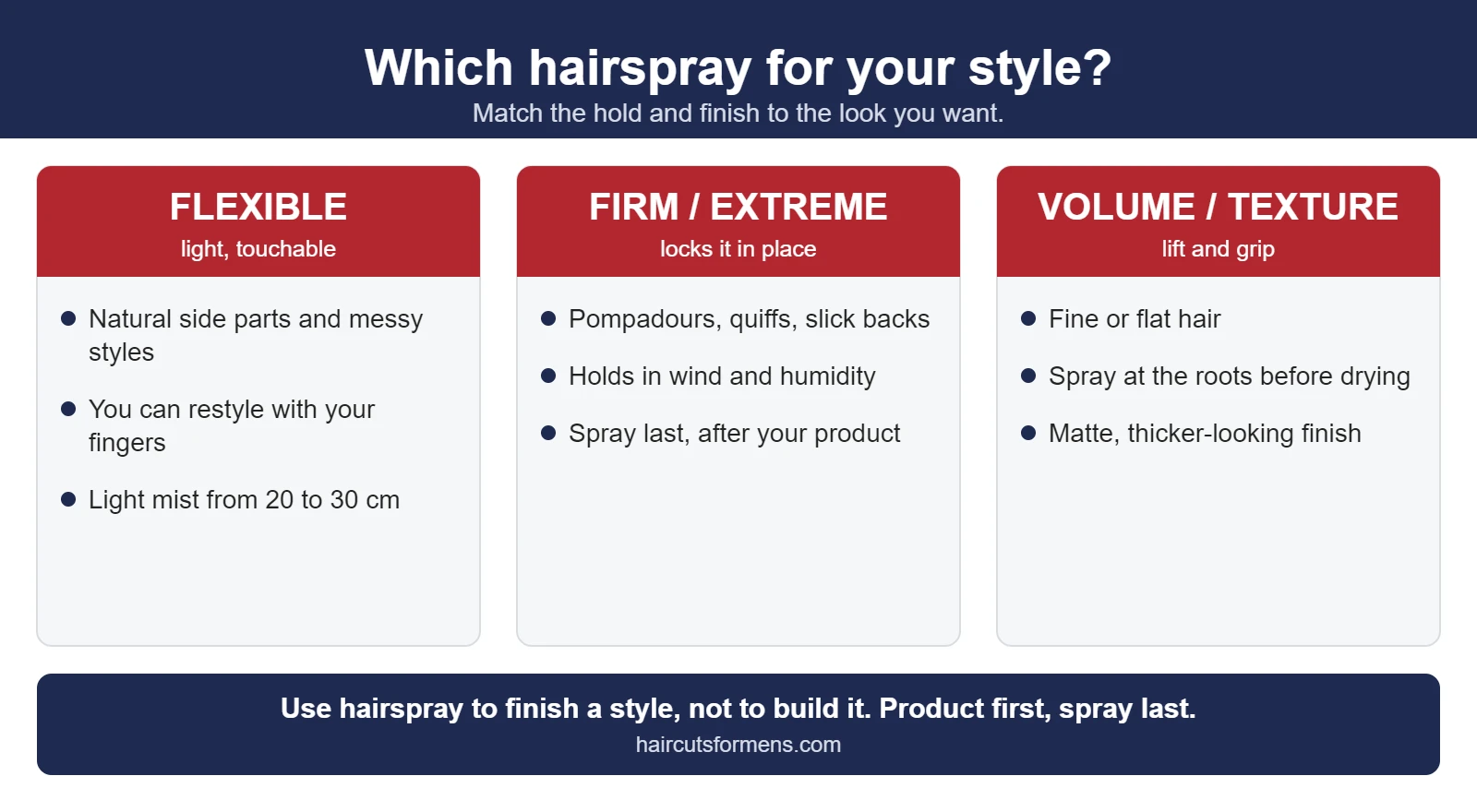
- Quiff, pompadour or slick back: pre-styling spray and blow-dry, then pomade or cream.
- Curls and coils: leave-in conditioner, curl cream or a light gel.
- Buzzed tops: nothing beyond a light moisturizer for the scalp.
Common mid fade mistakes
- Too tall a top on a long face. Balance the height or keep the top flatter.
- A fade line that’s too high for what you wanted. Point to the height before the barber starts.
- Heavy weight line where the fade meets the top. Ask the barber to blend or scissor-over-comb the transition.
Frequently asked questions
Is a mid fade the same as a medium fade?
Yes, the two names are used for the same height.
Mid fade or low fade: which is more professional?
A low fade is the more conservative choice, but a neat mid fade is accepted in most workplaces.
Does a mid fade work on thinning hair?
It can, but shorter sides make the top look thinner by contrast. A low fade or taper often flatters thinning hair more.
Mid fade or taper?
A taper only shortens the edges, while a mid fade blends a much larger area. Compare them in skin fade vs taper fade, or use our fade selector. For more ideas, see all fade haircuts for men.