
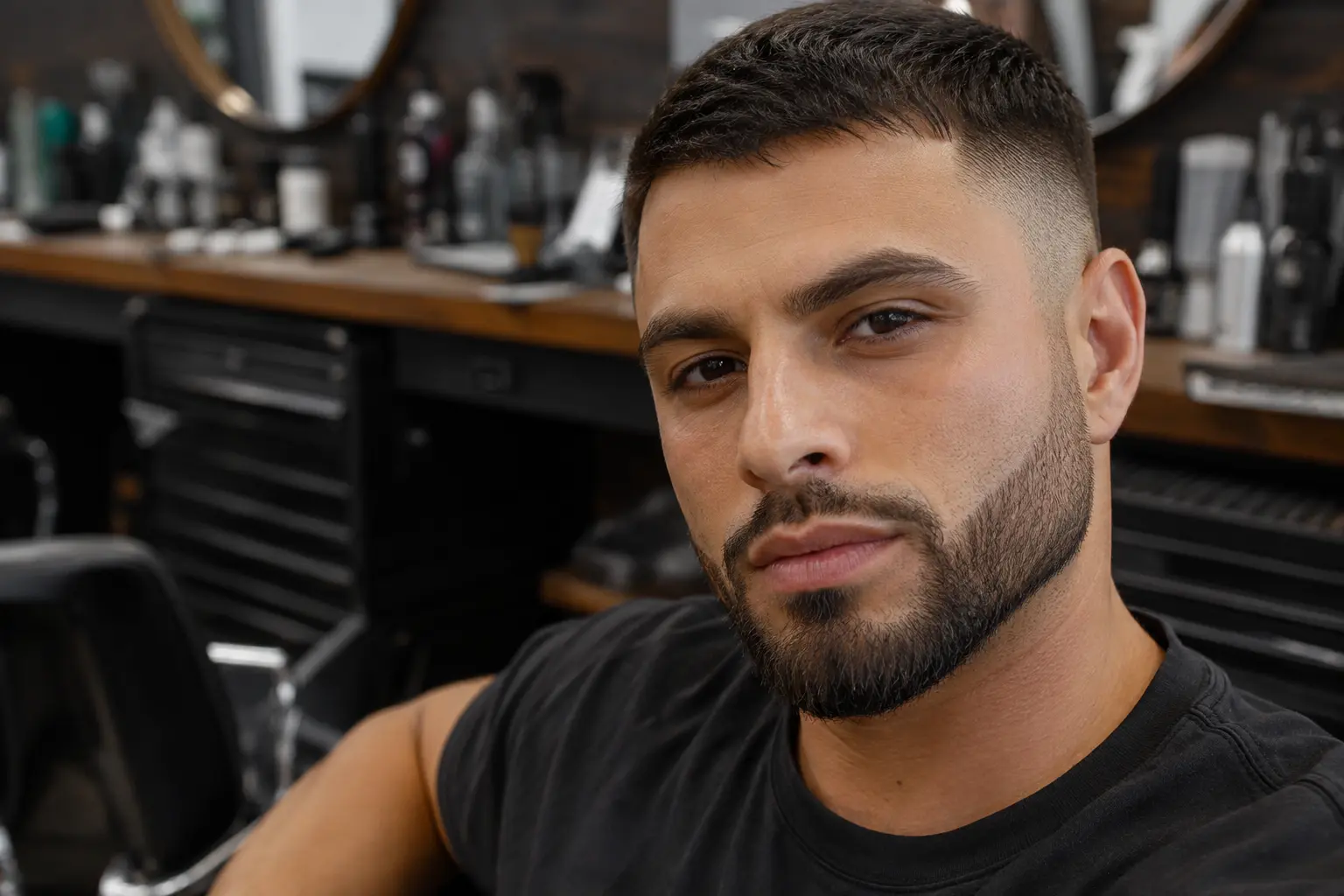
The most popular beard styles for men right now are stubble, the short boxed beard, the beard fade and the full beard. Each suits a different face shape, growth pattern and amount of upkeep. This guide covers 14+ styles with pictures, from stubble to the Garibaldi, which face shapes each one flatters, and realistic trim schedules. Whether you call it a beard style or a dadhi style, start with the quick comparison table below.
Are beards still in style in 2026?
Yes. Beards remain a mainstream look in 2026, but the emphasis is on shape and upkeep rather than size: short, well-defined beards, faded sides that blend into the haircut, and clean cheek and neck lines. A long beard still works if it is shaped and trimmed regularly. For this year’s specific trends and the haircuts they pair with, see our beard trends 2026 guide.
Beard styles at a glance
| Style | Length | Upkeep | Good for |
|---|---|---|---|
| Stubble | Very short | Trim every 2 to 4 days | Most faces; patchy or new beards |
| Short boxed / corporate beard | Short | Weekly lines and neckline | Office settings; round and oval faces |
| Beard fade | Short to medium | Every 1 to 2 weeks | Pairing with a faded haircut |
| Balbo | Short to medium | Weekly shaping | Round faces; weaker cheek growth |
| Medium boxed beard | Medium | Every 1 to 2 weeks | Oval, square and long faces |
| Full beard | Medium to long | Every 2 to 3 weeks | Dense, even growth |
| Garibaldi / Bandholz | Long | Neckline and occasional shaping | Patient growers with thick beards |
| Goatee / Van Dyke | Short to medium, chin-focused | Weekly | Patchy cheeks; round faces |
Find the right style for you: beard styles for a round face · thin faces · short beard styles · patchy beards · grey beards · beard designs
The 2026 Beard Trend Landscape
Beards in 2026 are less about size and more about intention. The biggest shift from a few years ago is precision: sharper cheek lines, cleaner transitions between beard and haircut, and styles chosen to work with your face shape rather than just grown out and hoped for. Corporate dress codes have loosened further, textured and coily beard styles are getting far better dedicated grooming advice than they used to, and the beard fade has cemented itself as the default “modern” look for anyone pairing facial hair with a fresh haircut.
None of that means low-effort beards are dead — stubble is still, by a wide margin, the easiest entry point into facial hair, and it remains one of the most consistently well-received looks. What’s changed is that more men are picking a specific style, not just letting things grow. For the specific styles trending this year and the haircuts they pair with, see our beard trends 2026 guide.
How to Choose a Beard for Your Face Shape
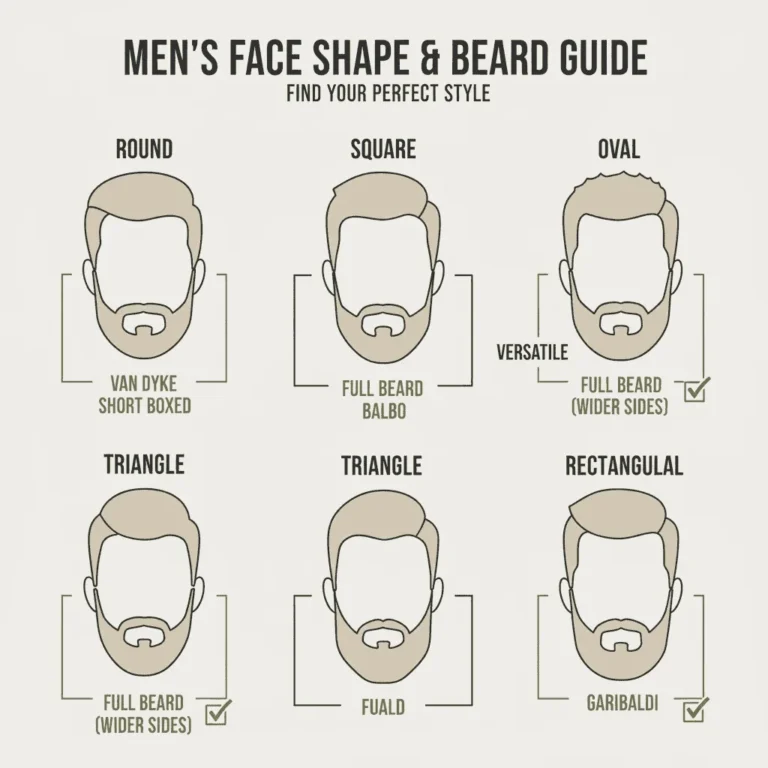
Length isn’t the main variable that makes a beard look good on you — shape is. A well-chosen beard adds angles where your face is soft, softens angles where your face is sharp, and generally nudges your proportions toward balance. Here’s how that plays out across all six common face shapes.
Oval Face
Oval is the most forgiving shape — you can wear almost anything, from heavy stubble to a full Bandholz, without it working against your features. Use that flexibility to pick a style based on maintenance level and personal taste rather than damage control.
Round Face
The goal is to add vertical length and reduce width. Favor beards that are shorter on the cheeks and fuller at the chin — a Balbo, an anchor beard, or a short boxed beard kept tight on the sides will elongate the face rather than widen it.
Square Face
Square faces already have strong angles, so the goal is to soften them slightly, not add more. A circle beard, a rounded full beard, or a medium boxed beard with rounded (not sharp) cheek lines works well.
Diamond Face
Cheekbones are the dominant feature here. Keep some hair on the chin — Garibaldi or medium boxed styles work — to balance the width up top, but avoid letting the chin hair taper to a sharp point, which can exaggerate the diamond shape further.
Heart-Shaped Face
Heart faces are wider at the forehead and narrower at the chin, so the goal is to add width and weight to the lower face. A beard fade, a high short boxed beard, or a natural medium-length beard all help balance the proportions.
Oblong / Rectangle Face
If your face is long with a fairly even width top to bottom, keep the beard shorter than your hair on top, and avoid adding much length on the chin — you want to add width, not more length. If your jaw is notably narrower than your forehead, do the reverse: slightly longer on the chin to build out the jawline.
Short Beard Styles
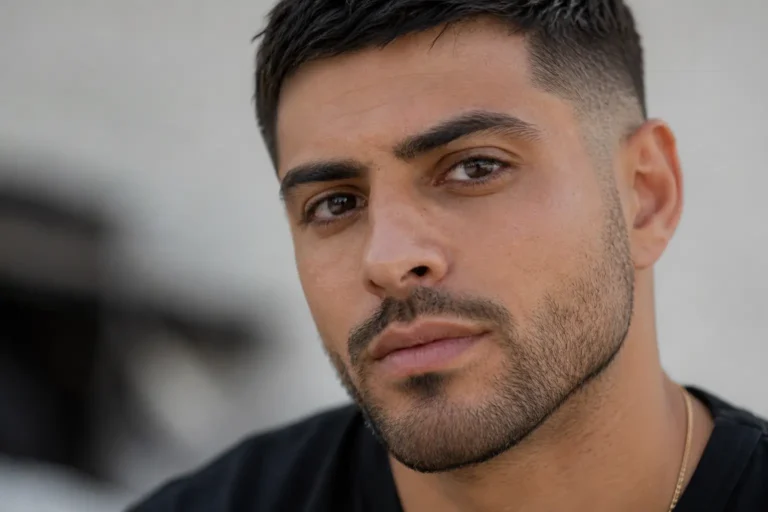
Short beards are the most versatile category, and for most men, the most practical starting point. This is a quick overview; our short beard styles guide covers 14 looks with exact lengths.
Stubble (Light, Medium & Heavy)
Stubble remains one of the most consistently well-received looks a man can wear, largely because it requires almost no shaping decisions — just consistent length. Depending on how dark and thick your hair is, a visible 5 o’clock shadow shows up in as little as two to five days of growth.
- Light stubble: 1-2 days of growth, subtle shadow.
- Medium stubble: 3-5 days, defined but still “just didn’t shave” territory.
- Heavy/designer stubble: 5-10 days, closely resembles a very short beard and needs a trimmer guard (typically the shortest 1-2mm setting) to maintain a consistent length rather than letting it drift into scruff.
Maintenance: Trim every 2-4 days with a guard to hold the length; use a lightweight beard oil to manage the itch phase.

Corporate Beard (Short & Clean)
This is the safest, most universally office-appropriate style: close-cropped, usually in the 10-15mm range, with a crisp neckline and a slightly curved (not razor-sharp) cheek line. It’s forgiving of most face shapes but requires the most consistent upkeep of any short style because any straggler hairs are immediately visible at this length.
Maintenance: Full trim weekly; neckline and cheek line touch-up every 3-4 days.
Short Boxed Beard (Low, Medium & High)
A boxed beard adds slightly more length and structure than a corporate beard, with a defined taper from sideburn to chin.
- Low boxed: Cheek line sits lower — flattering for round faces.
- Medium boxed: Balanced, natural cheek line — works for most face shapes.
- High boxed: Cheek line sits higher, showing more definition — best if you have strong, well-defined cheekbones.
How to get it: Ask your barber (or use a trimmer with multiple guard lengths) to taper from a shorter guard on the sideburns to a slightly longer one on the chin — this is what creates the “boxed” edge rather than a straight, uniform length.
Maintenance: Trim every 1-2 weeks; touch up the cheek and neck lines weekly.
Medium Beard Styles
Medium Boxed Beard
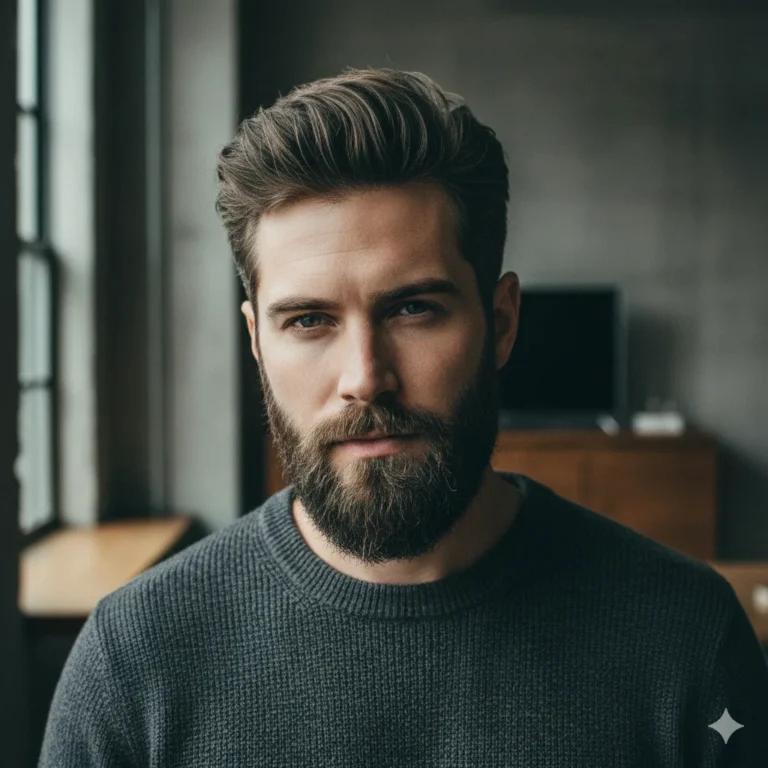
A step up from short boxed, in the 15-20mm range, giving more visual weight and definition without tipping into “long beard” territory. This is a strong option if you want a more masculine, structured look but aren’t ready for the maintenance demands of a full beard.
Beard Fade (Tapered Beard)
The beard fade — sometimes confused with a skin fade, though they’re related but distinct — blends the sideburn and cheek hair into a gradient that connects seamlessly into your haircut, rather than a hard line between hair and beard. It works especially well with textured and coily hair, and on fashion-forward, higher-contrast haircuts.
How to ask for it: Tell your barber you want a “tapered beard” or “a fade that connects into the beard” — most barbers will know exactly what you mean, but naming it clearly avoids ambiguity.
Maintenance: This is a high-maintenance style relative to its payoff — fades grow out and lose their crispness fast, so plan on a touch-up every 7-14 days to keep the gradient looking intentional rather than patchy.
Balbo
A disconnected combination of a floating mustache and a chin beard, with the cheeks shaved clean. It’s a genuinely good option if you have patchy cheek growth, since it sidesteps the cheeks entirely and focuses on the areas where your hair actually grows in well.
Maintenance: Line up the chin hair evenly on both sides using a trimmer or straight razor; touch up weekly.
Full & Long Beard Styles
Full Beard (Low, Medium & Heavy)
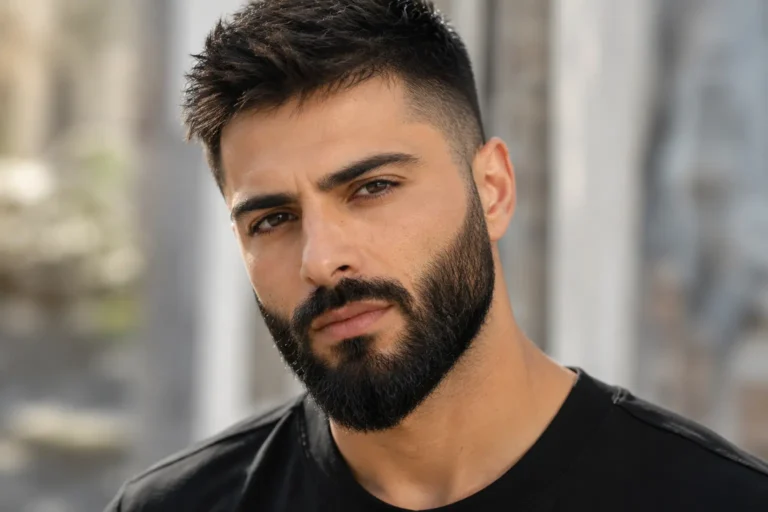
The full beard has evolved to be sharper and more intentional than the “just let it grow” versions from a decade ago — the 2026 version still has a defined neckline and cheek line, even at longer lengths. A beard shaping tool makes both lines easier to keep even at home.
- Low full beard: Shorter, more controlled, closer to a heavy stubble but fuller.
- Medium full beard: Balanced volume, the most common “full beard” length.
- Heavy beard: Bold, longer growth with real volume — needs regular conditioning to avoid looking coarse or wiry.
Maintenance: Define the neckline and cheek line weekly even as the length grows; condition with beard oil or balm daily to manage frizz and prevent split ends.
Garibaldi
A rounded, full beard paired with a neatly trimmed mustache — fuller and more natural-looking than a boxed beard, but still shaped rather than left completely wild.
Maintenance: Comb and brush regularly to train the rounded shape; trim the bottom edge every 2-3 weeks to maintain the round silhouette rather than letting it grow into a shapeless mass.
Bandholz / Yeard
The Bandholz is a beard grown out for a full year or more without shaping — genuinely low-maintenance in terms of trimming, but it demands real patience through the awkward mid-length stages and consistent conditioning to avoid becoming brittle or wispy as it gets longer.
Maintenance: No trimming beyond occasional neckline cleanup; daily conditioning with oil or balm is non-negotiable at this length.
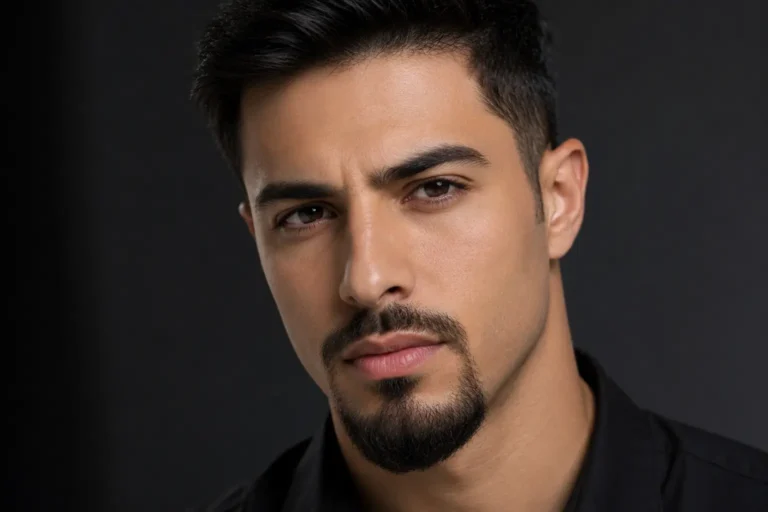
Goatee, Van Dyke & Chin-Focused Styles
These styles concentrate hair on the chin and mustache while keeping the cheeks clean — genuinely useful options if your cheek growth is patchy or uneven.
- Classic Goatee: Chin hair only, no mustache, cheeks shaved clean.
- Van Dyke: A pointed chin beard with a disconnected mustache — one of the sharper, more deliberate-looking chin styles.
- Anchor Beard: Named for its anchor-shaped outline; a full mustache combined with a beard that traces the jawline down to a point at the chin.
- Circle Beard: The mustache connects to the chin beard in a continuous circular shape — a neat, symmetrical look that tends to suit mature faces and square/rectangular shapes well.
Maintenance: All of these require weekly edge maintenance — the entire look depends on crisp, deliberate lines, so a blurry edge undoes the style faster than length ever will.
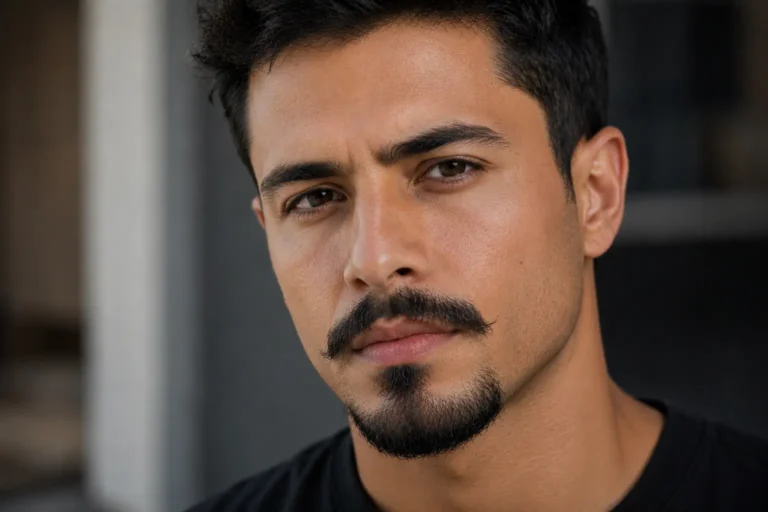
Mustache-Forward & Partial Styles
A mustache doesn’t have to be an accessory to a beard — several of the most on-trend looks right now are mustache-first.
- Chevron Mustache: Full, following the natural curve of the upper lip — classic, easy to maintain, works with almost any beard length or none at all.
- Horseshoe Mustache: Extends down past the corners of the mouth toward the jaw — bold, high-commitment, best with darker or coarser hair.
- Handlebar Mustache: Long, waxed, and curled at the tips — high-maintenance (daily wax and combing) but a genuine statement look.
- Beardstache: A full mustache paired with light stubble or a short beard — currently one of the most-searched hybrid looks, giving the mustache the spotlight while the surrounding beard adds jawline definition.
- Soul Patch: A small tuft of hair just below the lower lip, everything else clean-shaven — minimal commitment, works well as a standalone accent.
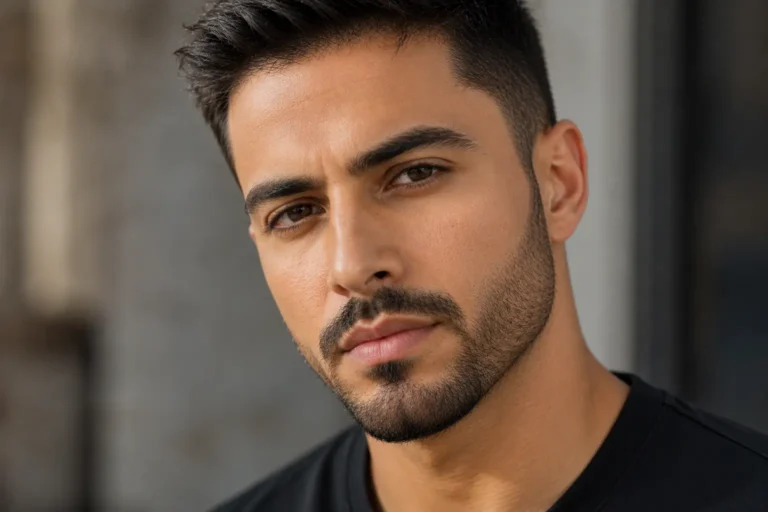
Best Beard Style by Situation
For Patchy Beards
Keep it shorter. Heavy stubble and short boxed beards minimize the visual gap between patchy and full areas because shorter hair reads as more uniform at a distance. Alternatively, chin-focused styles (Van Dyke, goatee, Balbo) sidestep problem cheek areas entirely by concentrating growth where it’s already strongest.
For the Office
The corporate beard is the safest default, but a well-maintained short boxed beard or light-to-medium stubble also reads as professional in most modern workplaces. The common thread across all office-appropriate styles: a crisp, clean neckline. An otherwise great beard reads as unkempt fast if the neckline is neglected.
For Bald Men
A full or medium beard tends to balance a shaved or bald head well by adding visual weight to the lower half of the face — a Bandholz or Garibaldi paired with a clean scalp is a classic, well-proportioned combination. If you prefer something lower-maintenance, a well-defined short boxed beard also works, since the contrast between bare scalp and structured beard reads as deliberate rather than accidental.
By Age
There’s no hard rule tying beard style to age, but there are a couple of practical patterns worth knowing. Younger men with thinner, patchier growth often get better results from chin-focused styles (goatee, Balbo, Van Dyke) that don’t rely on even cheek coverage. Men with greying beards often find that shorter, more structured styles (corporate beard, short boxed) show grey in a way that reads as sharp and intentional, while longer, looser styles can start to look unkempt as grey coarsens the hair texture.
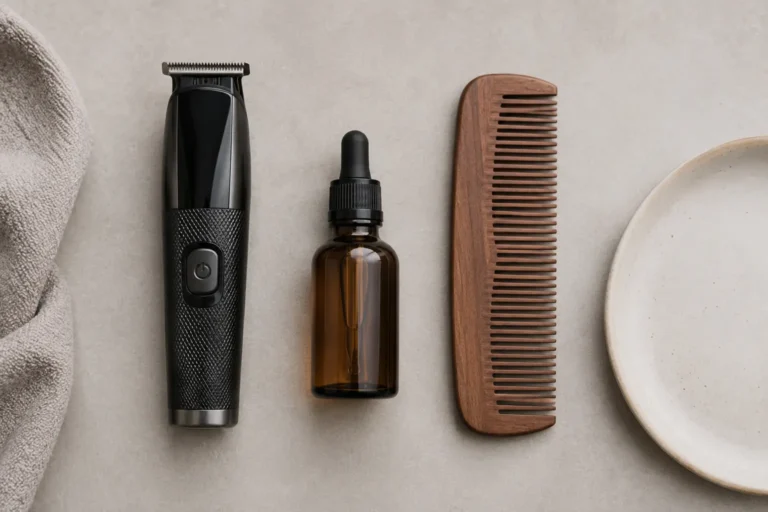
Beard Maintenance: Trim Schedule & Tools
| Style Category | Trim Frequency | Key Tool | Daily Care |
|---|---|---|---|
| Stubble | Every 2–4 days | Trimmer with short guard | Beard oil |
| Corporate / short boxed | Weekly | Trimmer + edging tool | Beard oil, occasional balm |
| Beard fade | Every 7–14 days | Trimmer with multiple guards | Beard oil |
| Medium/full beard | Every 2–3 weeks | Trimmer + scissors | Beard oil or balm daily |
| Bandholz / long beard | Neckline only, occasional | Comb, scissors for split ends | Balm or leave-in conditioner daily |
Essential tools: a quality trimmer with multiple guard lengths, a comb (for shaping longer styles) or brush (for shorter, denser beards), beard oil (daily hydration, prevents flaking/”beardruff”), and beard balm for styles that need hold or shaping. To get everything in one box, see our guide to the best beard kits and gift sets.
Common Beard Mistakes to Avoid
- Neglecting the neckline. This is the single fastest way to make an otherwise well-groomed beard look sloppy — the neckline should generally sit just above the Adam’s apple, not down at the collar.
- Skipping conditioning on longer beards. Beard hair gets drier and more prone to breakage the longer it grows; skipping oil or balm shows up as frizz and split ends within weeks.
- Trimming too aggressively, too soon. Give any new style at least 2-3 weeks of even growth before shaping it — trimming too early makes it hard to judge how your hair actually grows in.
- Copying a style that ignores your face shape. A style that looks great on a friend with a different face shape can visually work against your own proportions — use the face-shape section above as a starting filter, not just inspiration photos.
- Ignoring how your hair type behaves. Curlier, coilier beard hair needs more conditioning and less frequent trimming to avoid excessive dryness; straighter beard hair holds sharp lines longer but can look flat without some texturizing product.
Frequently Asked Questions: Beard Styles for 2026
1. What are the top beard trends for 2026?
2026 is the year of precision and blending. The beard fade (where the beard tapers seamlessly into the haircut), the corporate beard, and the return of true stubble are the three most consistently requested looks. High-contrast combinations, like a disconnected undercut paired with a full beard, are also trending.
2. How do I choose the right beard style for my face shape?
Square faces benefit from more chin fullness and less cheek/side bulk (goatee, ducktail). Round faces do best with styles that are longer at the bottom and tighter on the cheeks. Oval faces can wear almost anything. Long/rectangular faces benefit from more fullness on the sides and less length on the chin, to add width rather than length.
3. What is a “beard fade” and how do I ask for it?
A beard fade tapers the hair from the sideburns down into the beard in a smooth gradient, rather than a hard line. Ask your barber for a “tapered beard” or “a skin fade that connects into the beard” to describe exactly what you want.
4. How can I fix a patchy beard in 2026?
Keep it shorter — heavy stubble or a short boxed beard minimizes the visible contrast between patchy and full areas. Chin-focused styles like the Van Dyke, Balbo, or goatee are also strong options since they concentrate growth where your hair is already thickest.
5. How often should I trim my beard to keep it looking fresh?
Stubble and short styles: every 2-4 days. Corporate or medium beards: about once a week for the neckline and cheek line. Long or full beards: every 2-3 weeks for shaping and split-end removal.
6. What are the essential beard care products for 2026?
Beard oil for daily hydration and to prevent flaking under the beard, beard balm for medium-to-long beards that need hold or shaping, a dedicated beard wash (regular shampoo is too harsh for facial hair), and a matte styling clay for shaping mustaches without shine.
7. Is the long “lumberjack” beard still in style for 2026?
The unkempt, fully wild version has faded, but a more sculpted version — a full or Bandholz-style beard with a clean, defined neckline and sideburn fade — remains a strong, current look.