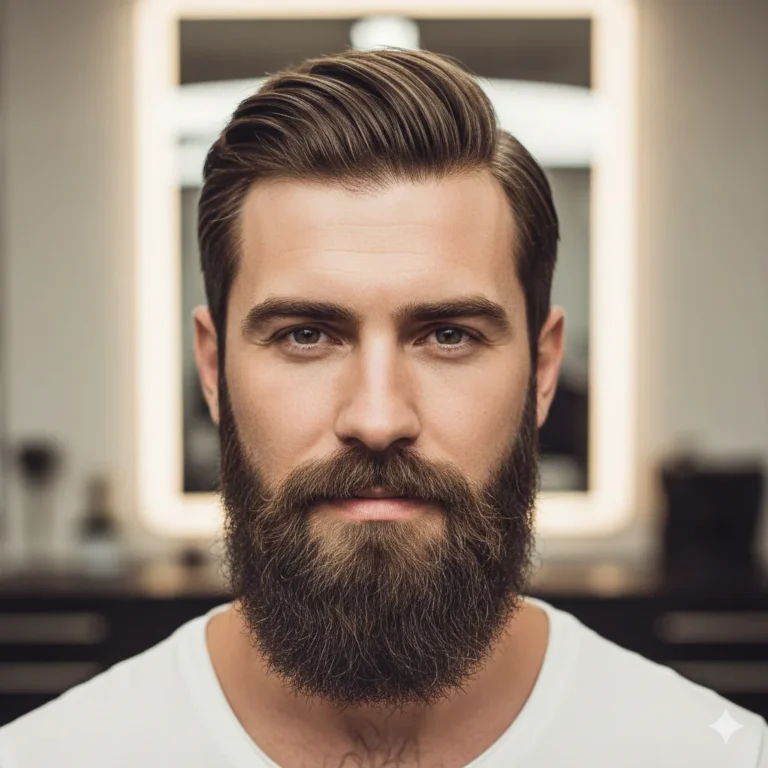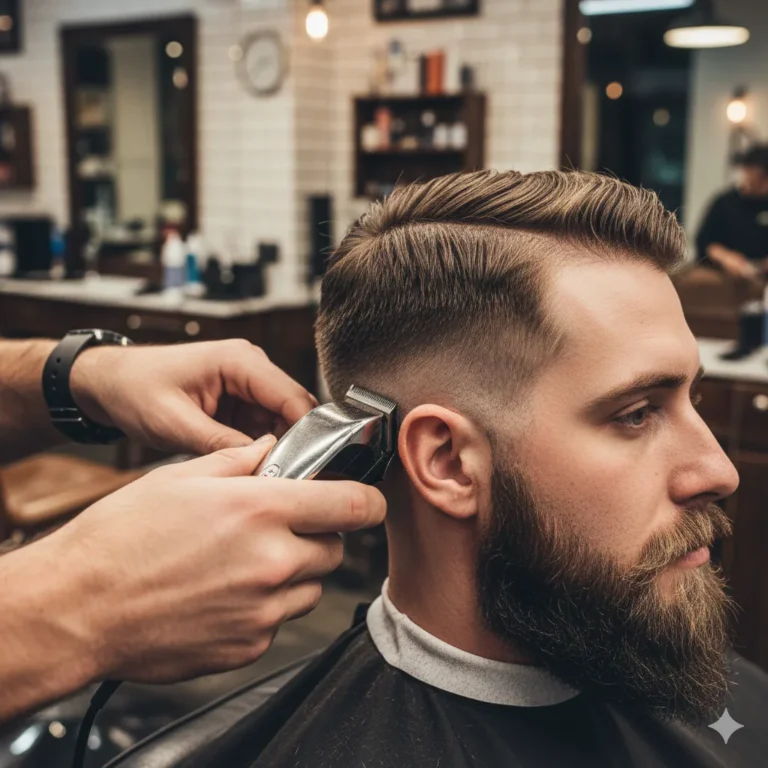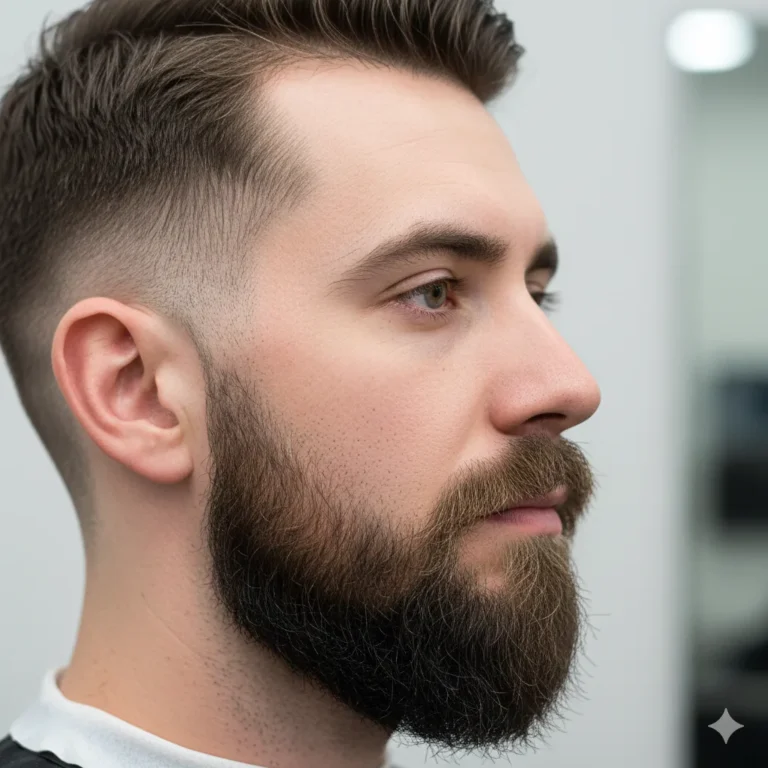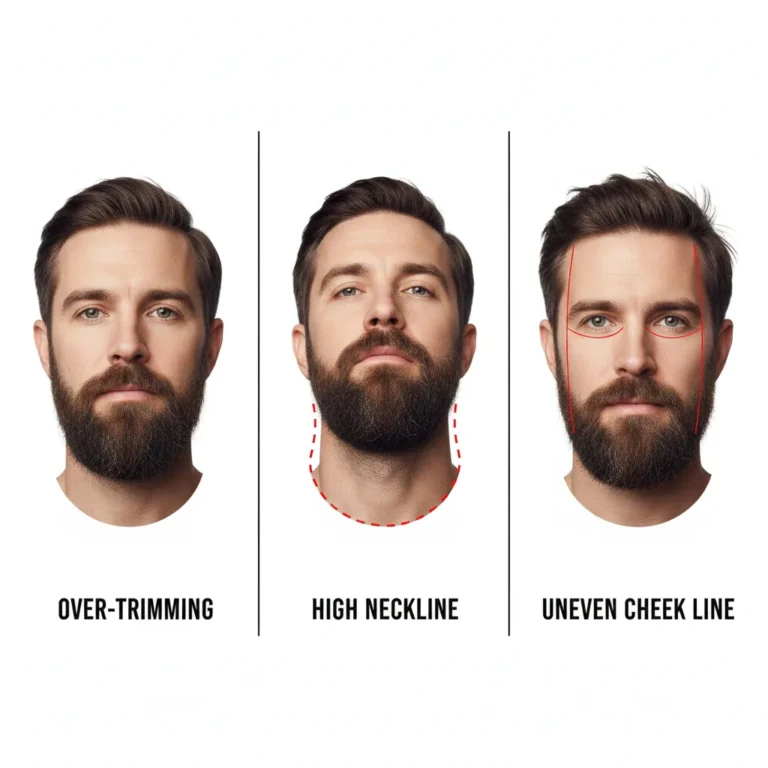
A thin or patchy beard is extremely common, and it usually looks far better with the right length and shape than most men expect. This guide explains the difference between a thin and a patchy beard, why beards grow that way, how long to wait before deciding, the best beard styles for patchy growth, shaping and fading tricks that make a beard look fuller, and what to realistically expect from growth products.
Quick answer: first, let it grow for 4 to 6 weeks, since many gaps fill in with length. If patches remain, choose a style that plays to your strongest areas: heavy stubble (3 to 5 mm), a low boxed beard, a goatee or Van Dyke if your cheeks are thin, or a beardstache. Keep the edges sharp and blend shorter cheeks into a longer chin. If your beard is thin all over rather than gappy, keep it short (3 to 10 mm) and even, with sharp edges.
Why Beards Grow Thin or Patchy
- Genetics is the most common reason. Follicle density and growth pattern are inherited.
- Age. Many men’s beards keep filling in through their 20s and into their 30s.
- Not enough time. At 2 to 3 weeks, almost every beard looks patchy.
- Hormones or medical conditions. Sudden round bald patches can be a sign of alopecia areata, which needs a doctor.
For the full picture, read our beard growth guide.
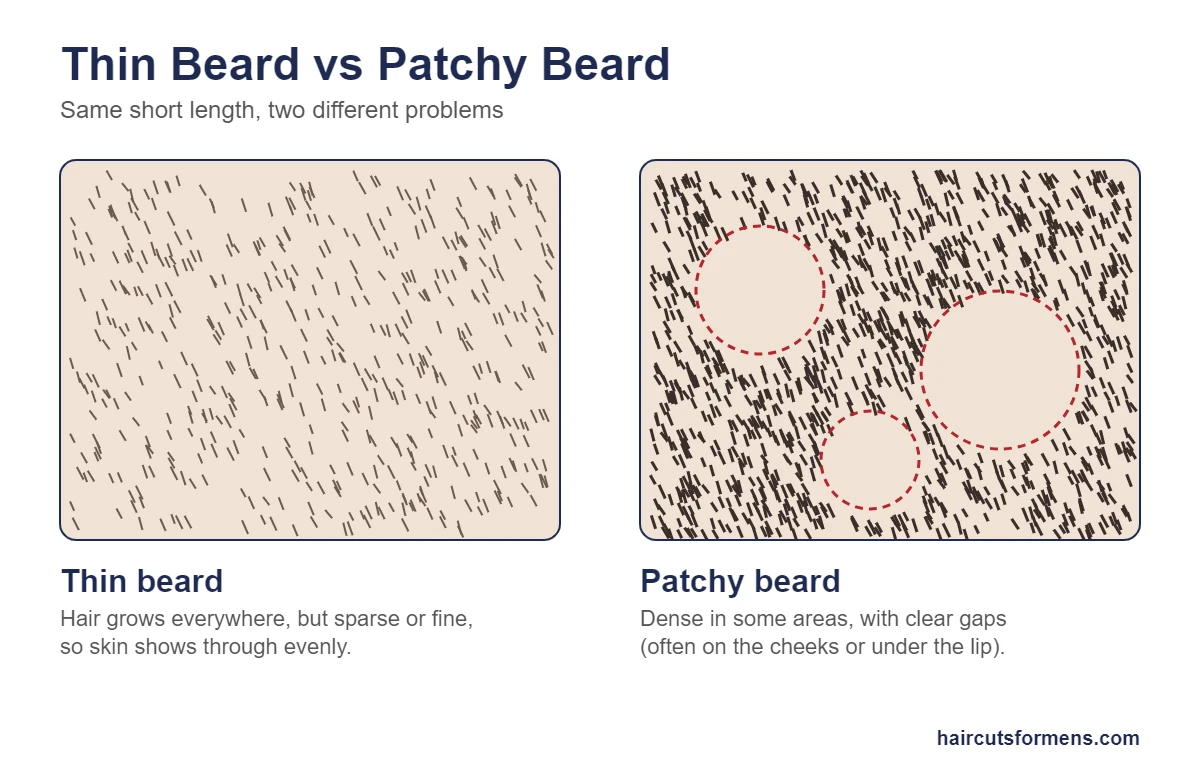
Thin Beard vs Patchy Beard: What’s the Difference?
They look similar from a distance, but they are different problems with different fixes.
| Thin beard | Patchy beard | |
|---|---|---|
| What you see | Hair grows across the whole beard area, but it’s sparse, fine or light, so skin shows through evenly | Dense hair in some areas with clear gaps, often on the upper cheeks, under the lip or between moustache and beard |
| Best length | Short: stubble to a short beard (3 to 10 mm) | Short on the cheeks, longer where growth is strong |
| Main fix | Keep it short and even, add a defined shape | Lower the cheek line, focus on your strongest areas, blend the gaps |
Best Styles for a Thin Beard
With a thin beard, length works against you: the longer the hairs, the more the skin between them shows. Shorter styles with sharp edges look denser.
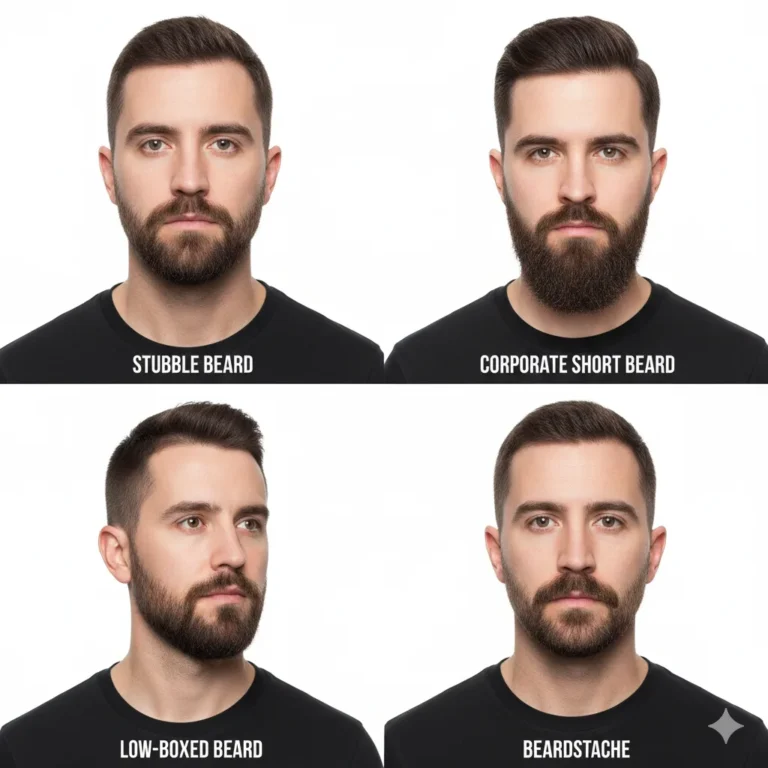
- Heavy stubble (3 to 5 mm): the most reliable option. Even length hides how sparse the growth is.
- Short corporate beard (5 to 10 mm): works if growth is thin but even. Keep a clean cheek line and neckline.
- Thin line or chin strap: only if the jawline itself grows well. See our thin line beard guide.
- Beardstache: if your moustache is fuller than the rest, let it lead and keep everything else as stubble.

How to Make a Thin Beard Look Thicker
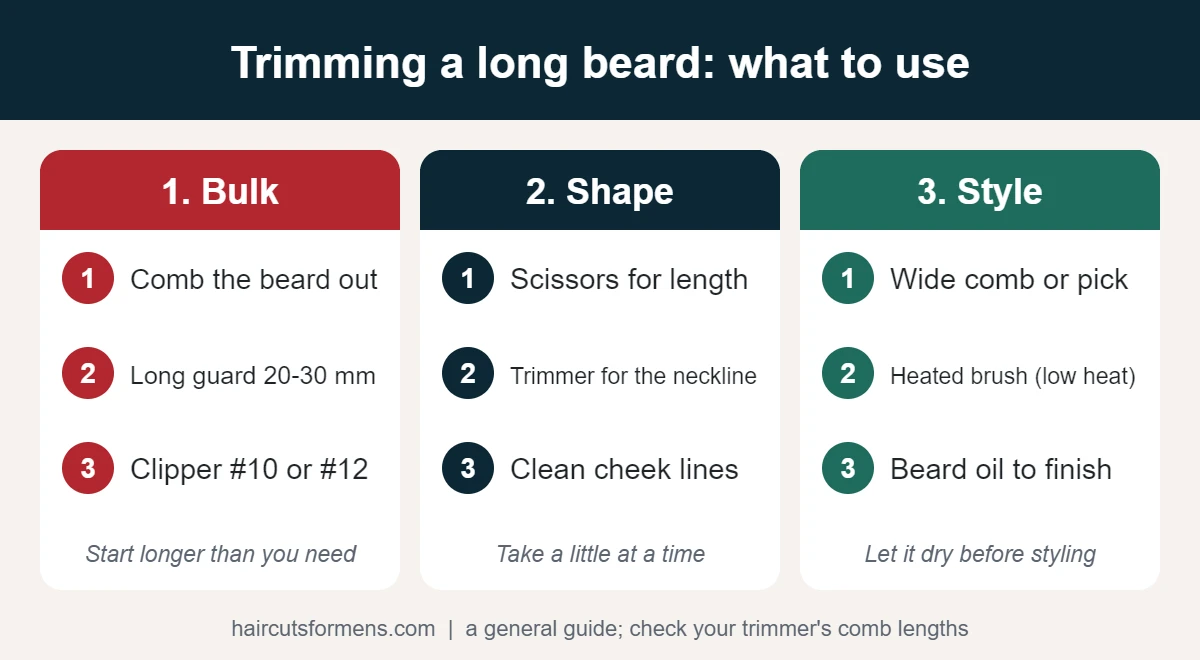
- Trim it shorter and evenly. Uneven length shows gaps; one even length looks denser. A trimmer with fine length settings makes this much easier; see our beard trimmer guide.
- Brush and blow-dry. Brushing against the grain while blow-drying on a cool setting lifts the hairs so they cover more skin.
- Use a little beard balm, not just oil. Balm gives light hold and body; heavy oil can make fine hairs clump and show skin.
- Define the edges. A sharp cheek line and neckline make any beard look more deliberate and fuller.
- Consider tinted beard products. On very light or grey hair, a beard dye or tinted balm close to your natural colour can make sparse hair show up more. Do the skin test the product’s instructions ask for first.
- Give it time. Many men’s beards keep getting fuller into their late 20s and 30s. Our beard growth guide explains what does and doesn’t help growth.
Best Beard Styles for a Patchy Beard
| Style | Length | Best when |
|---|---|---|
| Heavy stubble | 3 to 5 mm | Patches are spread across the face |
| Corporate short beard | 5 to 10 mm | Growth is mostly even with small gaps |
| Low boxed beard | 6 to 12 mm | Upper cheeks are thin |
| Beardstache | Stubble + full moustache | The moustache grows well |
| Goatee, Van Dyke, circle beard | 6 to 15 mm | Cheeks are thin but chin is strong |
Heavy stubble and short corporate beard
Shorter hair makes gaps much less visible and gives an even texture. Keep it at 3 to 10 mm and trim every few days. See our short beard styles.
Low boxed beard
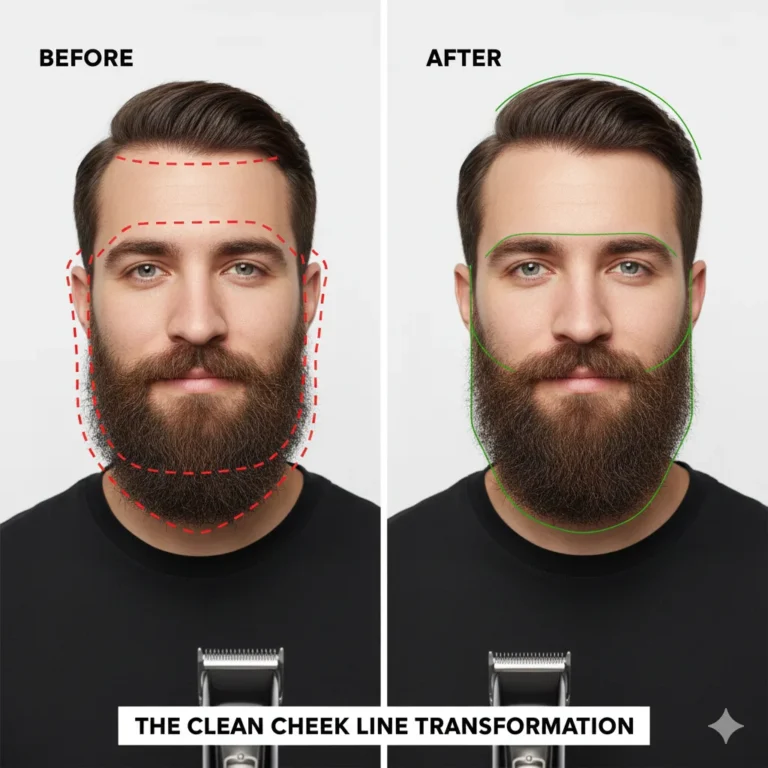
Setting the cheek line lower, where growth is consistent, removes the sparse area entirely and gives a strong, clean outline.
Beardstache
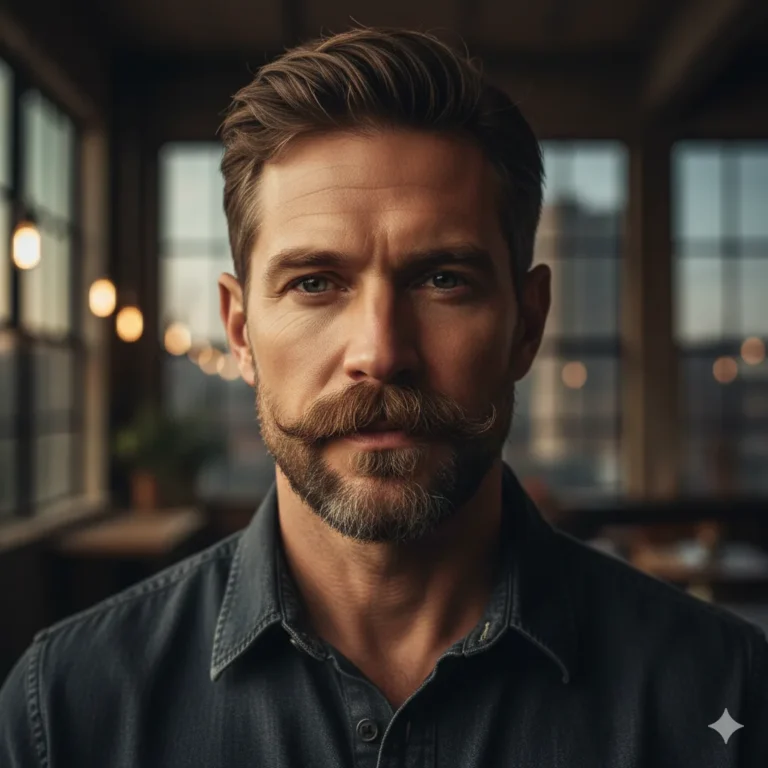
A full moustache over short stubble shifts attention to the moustache and makes thin cheeks look intentional. See our moustache styles guide.
Chin-focused styles
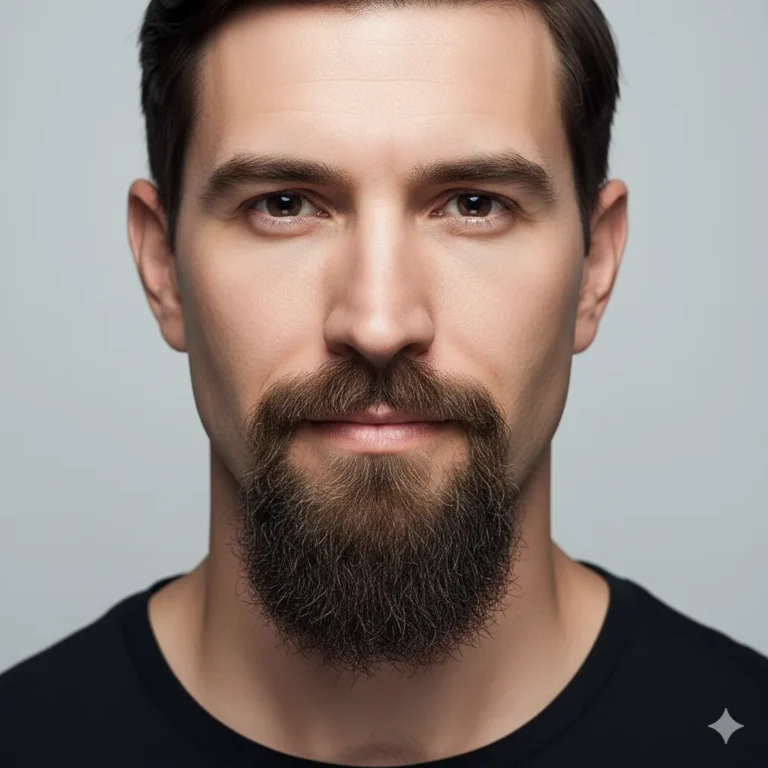
Goatees, the Van Dyke, the circle beard and the Balbo use the chin and moustache, where growth is often densest, and skip the cheeks altogether.
Shaping Tricks That Make a Beard Look Fuller
- Lower the cheek line to where hair grows consistently.
- Keep the sides shorter than the chin, for example 2 to 3 mm on the cheeks and 6 to 10 mm on the chin.
- Set a clean neckline about two fingers above the Adam’s apple.
- Grow the moustache slightly longer to add weight to the centre of the face.
- Keep everything symmetrical. Sharp, even lines make a beard look intentional and denser.
Widen the jawline
Shaping the beard straight down from the sideburn with a slight curve under the jaw makes the face look stronger and the beard fuller.
Fade and Blend Techniques
- Sideburn fade: the barber fades the sideburns from very short into the beard, so thin sideburns don’t show.
- Cheek shadow fade: cheeks kept shorter, chin longer, for a natural gradient.
- Stubble-to-beard gradient: 1 to 2 mm on the cheeks blending to 4 to 10 mm on the chin.
Pair a beard fade with a fade haircut for a seamless look.
Ask your barber
“My cheeks grow in patchy. Can you lower the cheek line to where it’s even, keep the cheeks at about a 2 and the chin at a 5 or 6, and fade the sideburns into the beard?”
Care That Actually Helps
- Brush daily to direct hairs over thinner areas.
- Moisturise with a light beard oil; a dry beard separates and shows gaps more. See our best beard oils and balms for thin or patchy beards.
- Look after your general health (sleep, diet, stress), which supports hair health.
About growth products: oils and balms make a beard look healthier but don’t grow new hair. Supplements like biotin are unlikely to help unless you have a deficiency. Some men try minoxidil or microneedling; both have limited evidence for beards and possible side effects, so speak to a doctor or dermatologist before trying them.
Mistakes That Make Patchiness Worse
- Giving up before 4 to 6 weeks.
- Letting it grow wild with no shape.
- No clear cheek line or a neckline that’s too high.
- One length all over when cheeks and chin grow differently.
- Heavy, shiny products that clump hairs.
Thin and Patchy Beard FAQ
Will my patchy beard fill in?
Often, partly. Many gaps fill in with length, and many men’s beards get fuller with age. Give it at least 4 to 6 weeks.
What is the best beard style for a patchy beard?
Heavy stubble works for most men. If your cheeks are thin, a goatee, Van Dyke or beardstache works well.
Should I shave a patchy beard?
Not before trying a short, sharply shaped version. Many patchy beards look good at 3 to 5 mm.
Does beard oil fix patchiness?
No, but it keeps the hair soft and stops it separating, which makes gaps less obvious.
Is a thin beard the same as a patchy beard?
No. A thin beard grows everywhere but sparsely; a patchy beard is dense in places with clear gaps. Both look best shorter, but patchy beards benefit most from moving the cheek line and blending.
How do I make a thin beard look thicker?
Keep it short and even, brush and blow-dry it for volume, use a little balm, and keep the cheek line and neckline sharp.
When should I see a doctor?
If you get sudden round bald patches or rapid thinning.