
Affiliate disclosure: this guide contains Amazon affiliate links in the product section. As an Amazon Associate I earn from qualifying purchases, at no extra cost to you. See our affiliate disclosure.
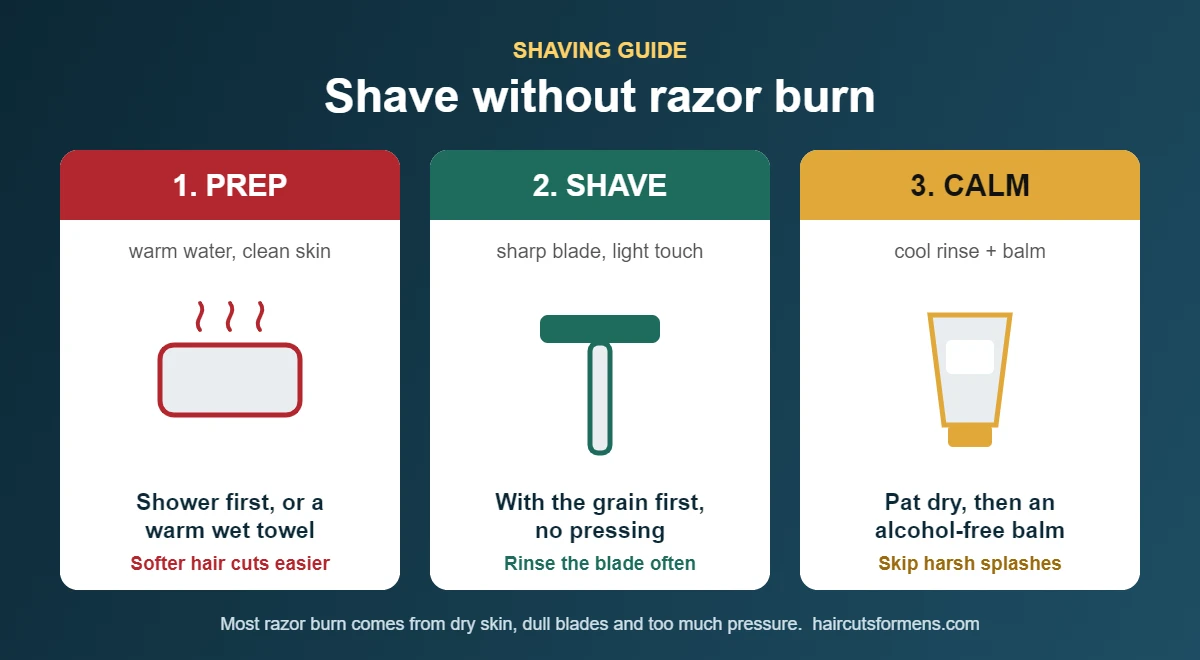
Razor burn is not bad luck. The redness, stinging and bumps after a shave almost always come from a few fixable things: dry hair, a dull blade, too much pressure and going against the grain too soon.
This guide walks through a shave from start to finish, explains what each step does, and links to our buying guides for the razors, shaving creams and aftershave balms that make it easier.
Quick answer: shave after a warm shower, use a proper shaving cream or gel, a sharp blade and light pressure, shave with the grain first, rinse with cool water and finish with an alcohol-free balm.
What causes razor burn?
Razor burn is irritation of the top layer of skin. It usually shows up within minutes as redness, stinging or a rash-like patch. Razor bumps are different: they appear a day or two later when cut hairs curl back into the skin. The same habits help prevent both.
| Cause | What happens | Fix |
|---|---|---|
| Dry or cold hair | Hair is stiff, so the blade drags | Shave after a warm shower |
| No lather or soap only | Little glide, more friction | Use a shaving cream or gel |
| Dull blade | Pulls and tugs at the hair | Change blades or cartridges regularly |
| Too much pressure | Scrapes the skin | Let the razor’s weight do the work |
| Against the grain first | Cuts below skin level, irritates | First pass with the grain |
| Harsh aftershave | Alcohol stings freshly shaved skin | Use an alcohol-free balm |
Step 1: prepare your skin and beard
- Shave after a warm shower. Two or three minutes of warm water softens the hair. No time? Hold a warm, wet towel on your face for a minute.
- Wash your face. Oil and dirt make the blade skip. A gentle face wash is enough; see our men’s skincare basics.
- Trim long stubble first. If you have more than a few days of growth, trim it short with a trimmer before you shave.
- Check the grain. Run your fingers over your beard. The smooth direction is with the grain; it often changes on the neck.
Step 2: use the right lather
A good shaving cream or gel keeps the hair soft and lets the blade glide. Gels from a can are quick and many are made for sensitive skin. Traditional creams give a thicker cushion, especially with a brush and safety razor. Clear gels let you see beard lines if you keep a beard. Our shaving cream guide compares all three types.
- Apply a thin, even layer. Work it in against the grain so it coats every hair.
- Leave it for a minute. This gives the hair extra time to soften.
Step 3: shave with a light touch
- Use a sharp blade. A dull blade is the most common cause of razor burn. Change cartridges or safety razor blades as soon as they start to tug.
- First pass with the grain. Short strokes, light pressure. Let the razor’s weight do the work.
- Rinse the blade often. A clogged blade drags.
- Re-lather before a second pass. Never shave over bare skin. For a closer result, go across the grain, then against it only if your skin tolerates it.
- Stretch the skin gently on tricky areas. The jawline and neck are where most nicks and irritation happen.
Safety razor or cartridge? Both work. Safety razors have one blade, which some men with sensitive skin find gentler; cartridges are quicker to learn. Electric shavers cause less irritation for many men because they do not cut as close; see our electric shavers guide.
Step 4: aftercare
- Rinse with cool water. It removes leftover lather and feels soothing.
- Pat dry. Rubbing with a towel irritates fresh skin.
- Apply an aftershave balm. An alcohol-free balm calms and moisturizes. Classic splashes sting more. Compare options in our aftershave balm guide.
- Add sunscreen in the morning. Freshly shaved skin is more sensitive to the sun.
If you get razor bumps
Bumps that appear a day or two after shaving are often ingrown hairs, especially on curly or coarse beards. Shave with the grain only, avoid stretching the skin too much, and consider a gentle exfoliating product between shaves. Our razor bump and ingrown hair guide covers treatments. If bumps are painful, infected or do not settle, see a doctor or dermatologist.
Mistakes to avoid
- Dry shaving or shaving with just water.
- Keeping blades too long.
- Pressing harder to get closer.
- Going against the grain on the first pass.
- Splashing on alcohol aftershave on irritated skin.
- Sharing razors, which can spread skin infections.
Products that make shaving easier
These picks come from our detailed buying guides, where each product is compared on its Amazon listing, features and buyer ratings. We have not tested them hands-on. Follow the links to the full comparisons for ratings, pros and cons.

1. Gillette Series 3X Action Shave Gel, Sensitive
A sensitive-skin gel with aloe and lubricating ingredients, our top pick for everyday shaving.
Full comparison: best shaving cream for men

2. Taylor of Old Bond Street Sandalwood Shaving Cream
A classic bowl cream for men who enjoy a traditional wet shave.
Full comparison: best shaving cream for men

3. L3 Level 3 Clear Shaving Gel
A non-foaming clear gel, so you can see exactly where the blade goes.
Full comparison: best shaving cream for men

4. VIKINGS BLADE Double Edge Safety Razor
Our pick for men switching from cartridges to a safety razor.
Full comparison: best wet shaving kit for men

5. Astra Platinum Double Edge Blades (100)
A large pack, so there is no excuse to keep shaving with a dull blade.
Full comparison: best wet shaving kit for men

6. NIVEA MEN Sensitive Post Shave Balm
An alcohol-free balm made for sensitive skin, our top aftershave pick.
Full comparison: best aftershave balm for men

7. Tend Skin Air Shave Gel
Featured in our razor bump guide for men who get ingrown hairs.
Full comparison: razor bump and ingrown hair products
Related guides
- Best wet shaving kit for men
- Best shaving cream for men
- Best aftershave balm for men
- Best razor bump and ingrown hair products
- Best electric shavers for men
- Men’s skincare routine basics
Frequently asked questions
How do I stop razor burn fast?
Rinse with cool water, pat dry and apply a soothing, alcohol-free balm. Avoid shaving the same area again until the redness settles.
Is it better to shave with or against the grain?
Shave with the grain first. Going against the grain gives a closer shave but causes more irritation, so do it only on a second pass if your skin tolerates it.
How often should I change my razor blade?
As soon as it starts to tug or feel less smooth. For many men that is every five to ten shaves, depending on beard thickness.
Should I shave in the morning or at night?
Either works. Shaving at night gives skin time to recover before the next day, which some men with sensitive skin prefer.
Do electric shavers cause less razor burn?
For many men, yes, because they do not cut as close to the skin. The trade-off is a slightly less close shave.
Can I shave with just water?
You can, but you will get more friction and irritation. A shaving cream or gel makes a big difference.
As an Amazon Associate I earn from qualifying purchases. Product picks come from our buying guides, which compare each product using its Amazon listing and buyer ratings; we have not tested them hands-on.