
Primary Keywords: beard and mustache designs, beard and mustache types, mustache styles list, facial hair history, mustache grooming guide
Secondary Intent Keywords: men’s grooming, mustache anatomy, face shape grooming, mustache maintenance, mustache fashion
Introduction: The Cultural Renaissance of the Modern Mustache
The mustache is experiencing a dramatic comeback. After nearly a century dominated by clean-shaven corporate grooming and later, the full lumberjack beard, the mustache has reclaimed the spotlight as the statement piece of masculine style. Its resurgence isn’t ironic or nostalgic—it reflects a deliberate appreciation for craftsmanship, identity, and classic grooming.
Historically, mustaches were casualties of early 20th-century public health fears. As germ theory spread and safety razors became widely accessible thanks to King Camp Gillette, facial hair fell out of favor. For decades, it was associated with fringe subcultures, academics, or specific working-class archetypes.
Today, the mustache has re-entered mainstream culture with force. Hollywood figures like Henry Cavill, Miles Teller, and Brad Pitt showcase it proudly. Creative industries embrace it. Even corporate culture is softening toward it. We are living in a genuine “Mustache Renaissance.”
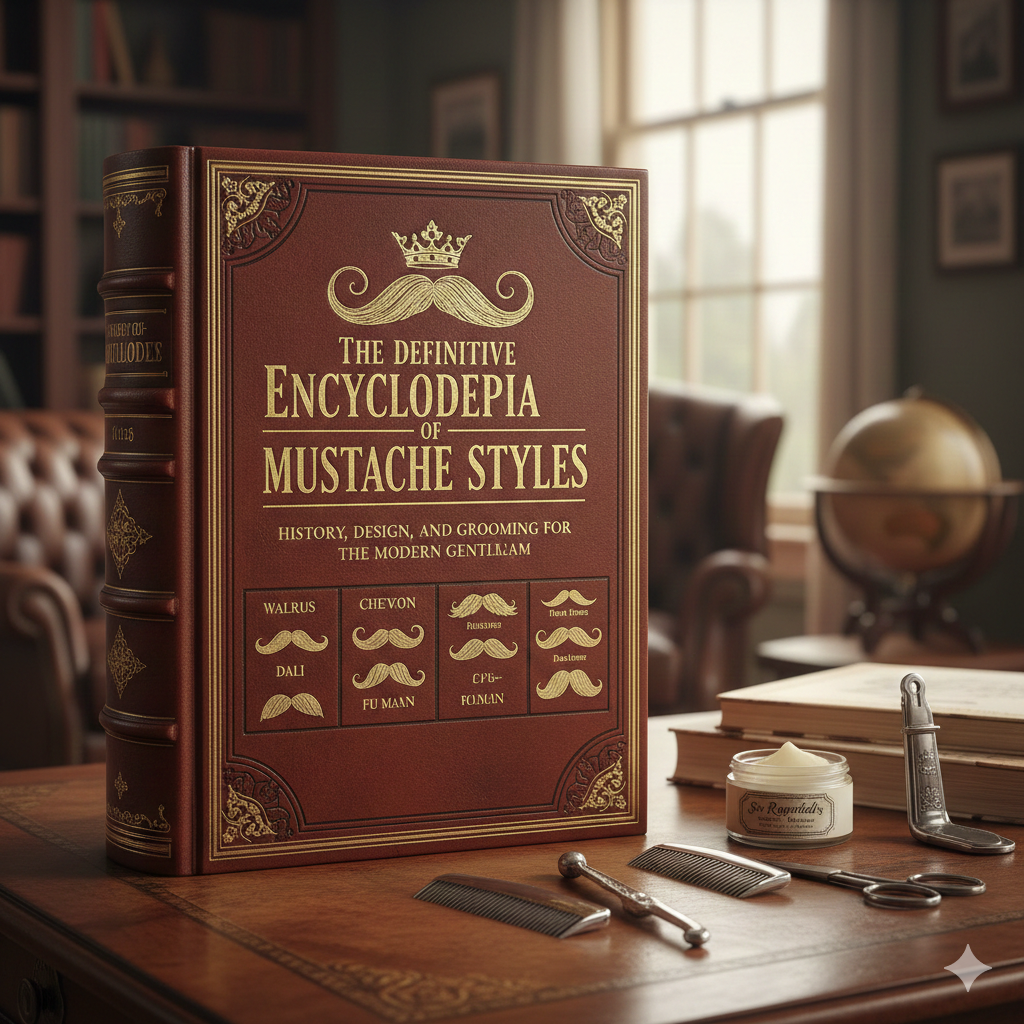
This encyclopedia is designed to be the authoritative guide on every major mustache family—from anatomy to grooming to style selection.
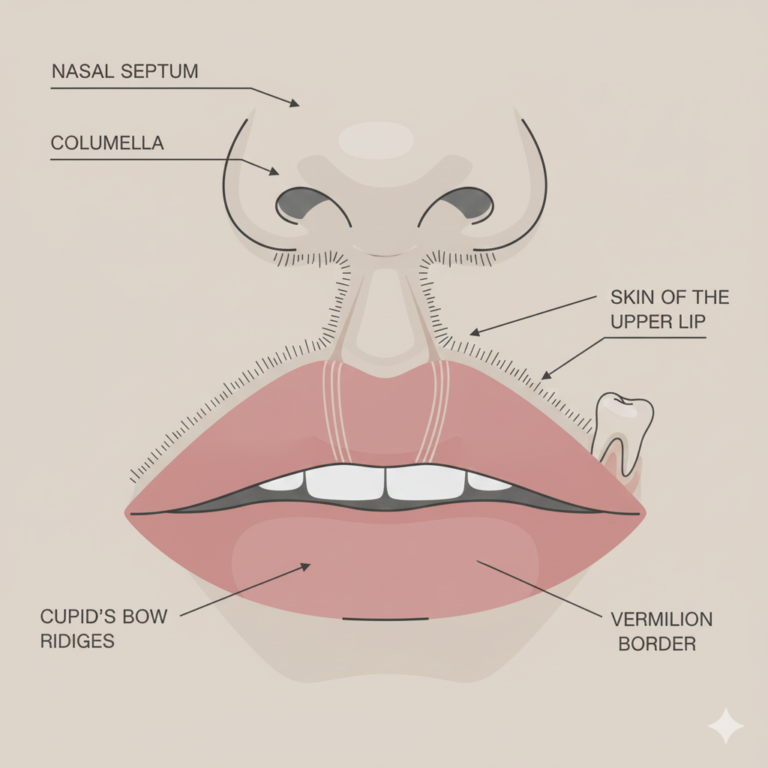
The Anatomy of the Mustache: Understanding the Foundation
Before choosing or growing a style, you need to understand the biological landscape you’re working with. Facial hair density, terminal length, and follicular direction all influence what styles are achievable.
The Philtrum (Cupid’s Bow)
The philtrum is the vertical groove running below the nose. Most men naturally have fewer follicles here, creating the infamous “mustache gap.” This is not a flaw—it’s anatomy. Some styles conceal it, while others emphasize it.
Why it matters:
• Determines whether you should choose a style that covers the gap (Walrus) or embraces it (Parted Pencil).
The Vermilion Border
This line separates the skin from the red area of the upper lip. Precision styles such as the Pencil mustache require razor-sharp negative space above this border.
Terminal Length
Every follicle has a maximum length it can grow before shedding. If your upper-lip hairs max out at one inch, you cannot grow a dramatic Handlebar—regardless of wax, heat, or patience.
The Ridges
These raised pillars on each side of the philtrum typically have the densest growth, and they anchor high-structure styles like the Chevron.
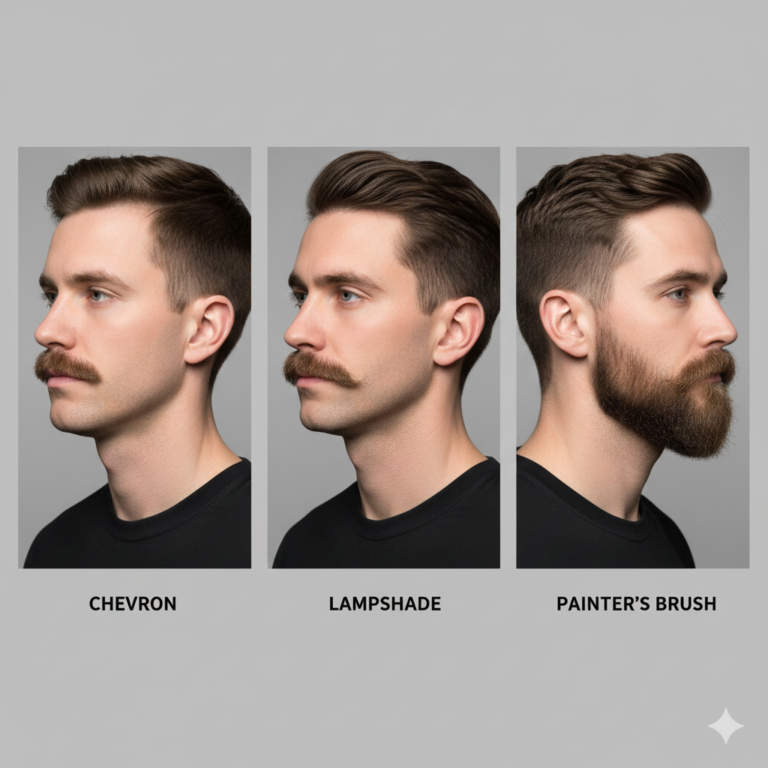
The Naturals (Low Maintenance Styles)
Best for beginners or men with naturally dense, coarse growth.
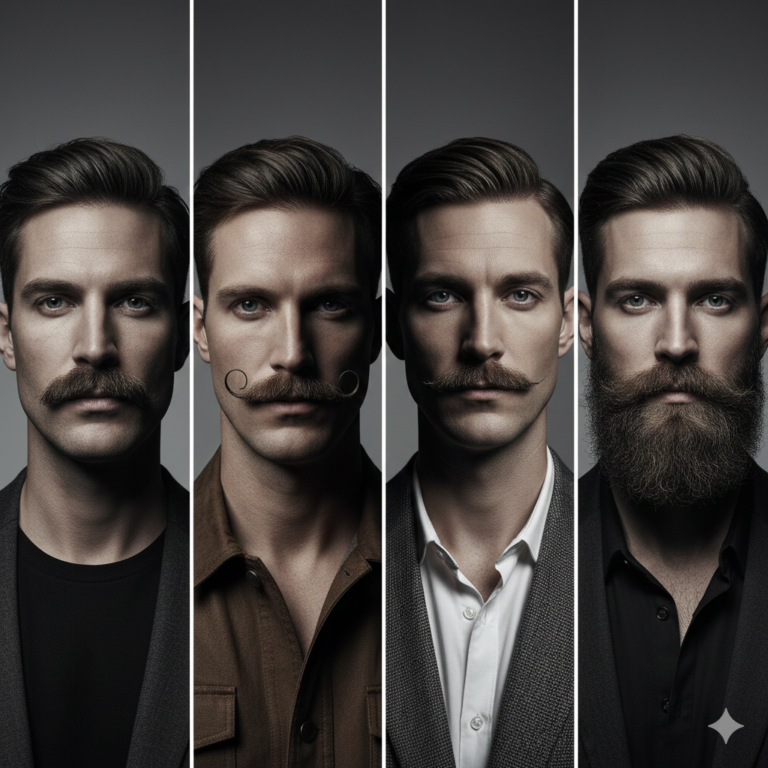
The Chevron
A thick, full mustache that follows the upper lip’s natural curve without extending past the corners.
Aesthetic: Rugged, classic, masculine.
Famous Wearers: Tom Selleck, Freddie Mercury.
Maintenance: Minimal—trim only the hairs that curl over the lip.
The Lampshade
A sculpted Chevron with a trapezoidal shape. Known as the “cop stache” due to military and police grooming standards.
Best for: Square or round faces.
The Painter’s Brush
A softer version of the Chevron with rounded edges.
Vibe: Artistic, approachable, less intense than the Chevron.
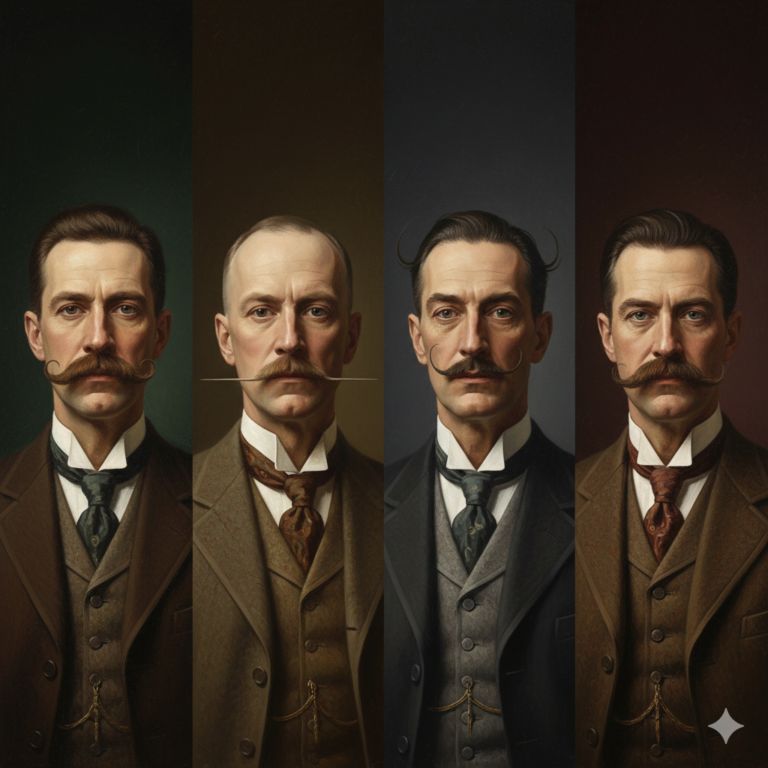
The Styled Classics (High Maintenance, High Reward)
These require wax, heat, patience, and daily styling.
The Handlebar
A thick mustache with long curled ends.
History: Wild West, Victorian aristocracy, bare-knuckle boxers.
Growth Strategy: Never trim the ends. Train the hair sideways with a boar bristle brush.
Essential Product: High-hold wax.
The English
Often mistaken for a Handlebar but styled straight outward into sharp points.
Aesthetic: Aristocratic and refined.
Face Requirement: Wider faces to balance the horizontal spread.
The Dalí
Inspired by Salvador Dalí’s surrealist persona—ultra-thin, upward-curved tips that may reach eye-level.
Requires: Extreme patience, strong glue (e.g., Got2B).
The Pyramidal
A triangular, tapered style: wide at the lip, pointed at the nose.
Vibe: Elegant, intellectual, vintage.
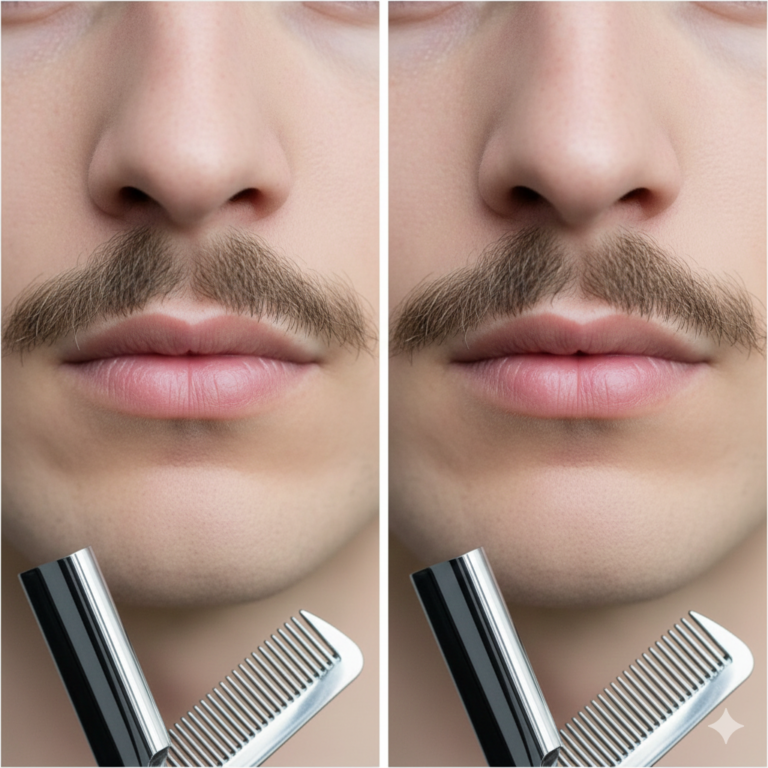
The Minimalists (Precision, Vintage, Negative Space)
The Pencil (Mouthbrow)
A razor-thin strip of hair above the lip, with 1–3mm of negative space.
Aesthetic: Golden Age Hollywood sophistication.
Variations:
• Parted Pencil — Clean shave through the philtrum.
• Single Line — Continuous strip without gaps.
Maintenance: Extremely high; requires daily shaving.
The Toothbrush
A short, thick block centered on the philtrum.
Cultural Note: Popularized by Chaplin; socially retired due to historical associations.
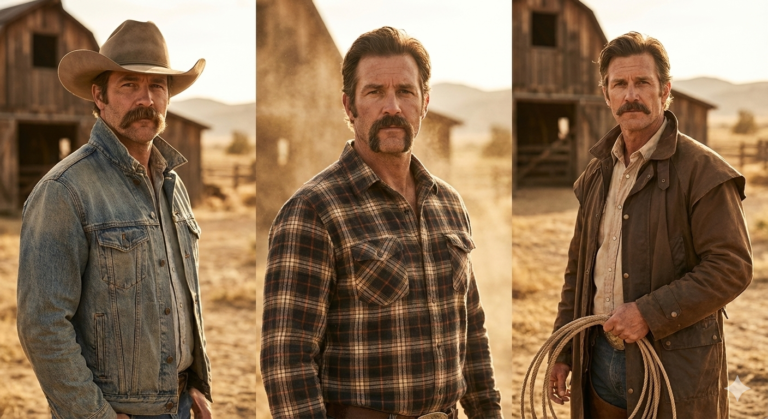
The Heavyweights (Big Volume, Big Personality)
The Walrus
A massive curtain of hair that drapes over the upper lip.
Wearers: Sam Elliott, Teddy Roosevelt.
Suitability: Best for large noses or broad faces.
Warning: Food trap—requires strong hygiene.
The Horseshoe
An upside-down “U” shaped mustache with vertical columns from the corners of the mouth down to the jaw.
Often Confused With
Fu Manchu — Hangs from the lip only; not connected to the chin.
Culture: Biker world, Hulk Hogan.
The Cowboy (Dallas)
A messy, rugged hybrid of the Chevron and Walrus.
Vibe: Rough, rural, bold—“I just stepped off a ranch.”
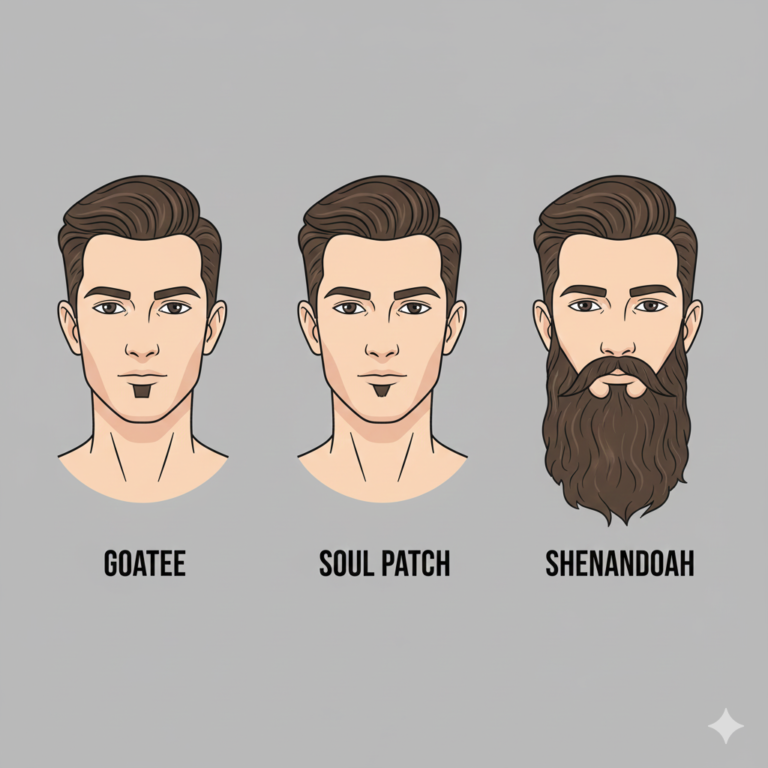
Beard Styles Without Mustaches
Technically not mustaches—but essential for full taxonomy.
The True Goatee
Chin hair only—no mustache.
The Soul Patch
A small tuft under the lower lip.
The Chin Puff
A narrow, elongated goatee.
The Shenandoah / Amish Beard / Whaler
A full beard with a completely shaved upper lip.
History: Associated with pacifist traditions and 19th-century academics.
ed version with a slimmer rectangle.
Looks neat and minimal.
Best For: men with lighter facial hair or artistic styles.
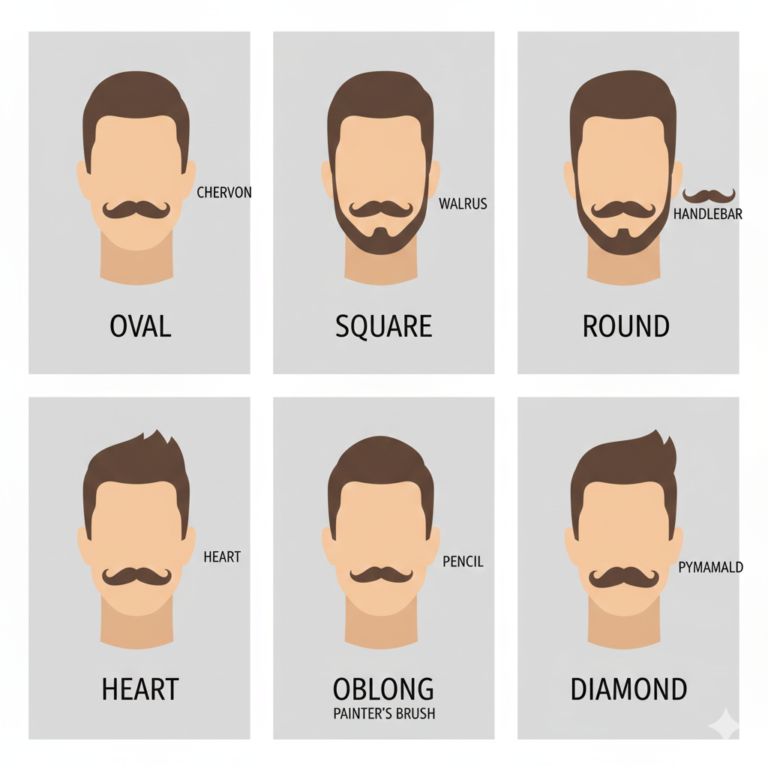
Face Shape Mapping Strategy: Choosing the Right Style
Choosing the right mustache is about geometry—not preference. The right style can lengthen, widen, soften, or balance the face.
|
Face Shape |
Recommended Styles |
Why They Work |
Avoid |
|
Round |
Horseshoe, Van Dyke, Anchor |
Adds vertical lines & structure |
Pencil, bushy sides |
|
Square |
Walrus, Chevron, Heavy Stubble |
Softens angles |
Thin styles |
|
Oval |
Pencil, Handlebar, Pyramidal |
Balanced proportions |
Overly long vertical styles |
|
Diamond |
Full Handlebar, Chevron |
Adds width at mouth |
Narrow styles |
|
Triangle |
Beardstache, Heavy Stubble |
Adds bulk to lower face |
Tiny mustaches |
|
Oblong |
Chevron, English, Walrus |
Adds width |
Horseshoe, Van Dyke |
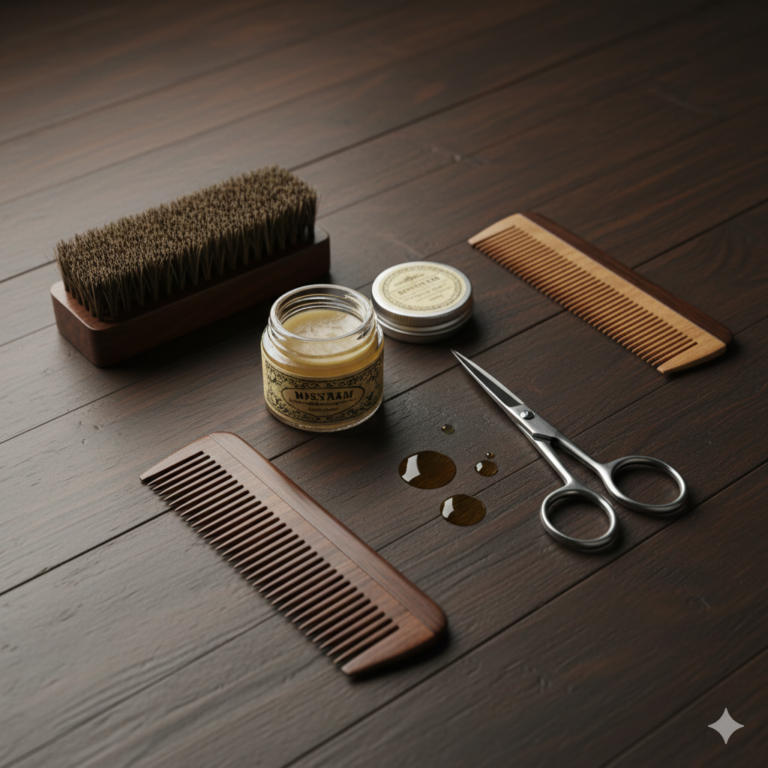
Essential Grooming Tools Every Mustachioed Man Needs
Mustache Wax vs. Beard Balm
Mustache Wax
Beeswax-based, high-hold, made for styling structured looks like the Handlebar or English.
Beard Balm
Light conditioning, mild hold—great for soft styles like the Cowboy.
Core Grooming Tools
Boar Bristle Brush — Trains growth direction.
Precision Trimmer / T-Blade — Defines edges, maintains negative space.
Mustache Scissors — Essential for shaping longer styles without catastrophic mistakes.
The Beardstache
A modern hybrid: a thick mustache paired with rugged stubble.
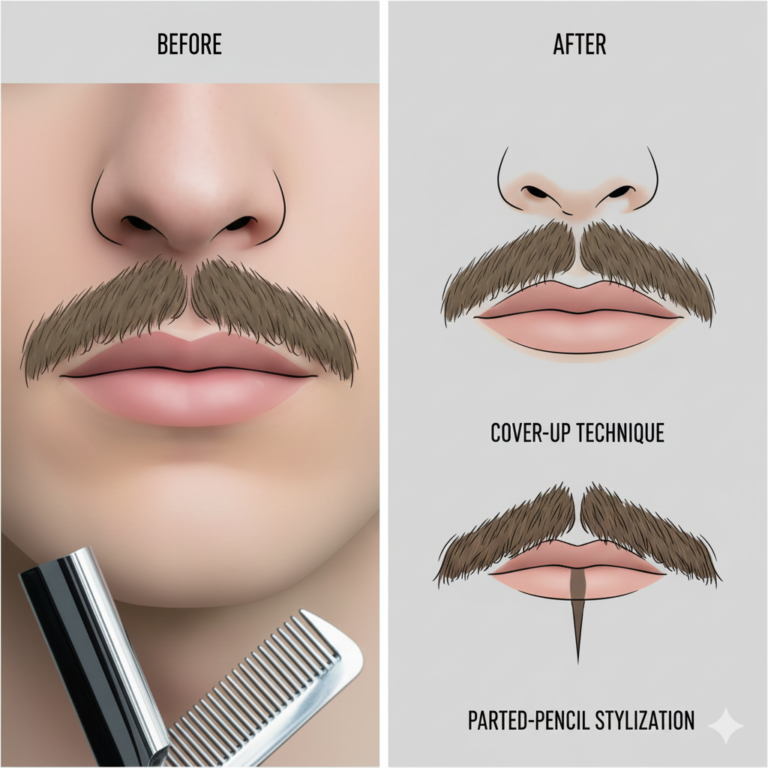
Advanced Troubleshooting: Solving the Mustache Gap
The “gap” is the most common mustache frustration—caused by fewer follicles in the philtrum.
Cover It
Grow the ridge hairs longer and brush them inward using wax.
Embrace It
Shave a deliberate center gap and own the Parted Pencil or Double Chevron.
Cosmetic Fill
Use beard pens or hair fibers to darken peach fuzz.

FAQ
What is the difference between a Goatee and a Van Dyke?
A Goatee = chin hair only.
A Van Dyke = mustache + chin beard that do not connect.
How long does a Handlebar take to grow?
Usually 3–6 months to achieve curlable length of 1.5–2 inches.
What is a beard without a mustache called?
A Shenandoah, Amish Beard, or Whaler.
How do I eat with a large mustache?
Sweep hairs aside before eating; use a straw for liquids or a whisker dam.
Why is my mustache red even though my hair is brown?
MC1R gene mutation increases red pigment (pheomelanin) in facial hair.
Conclusion
The modern mustache is more than fashion—it’s identity, craftsmanship, and self-expression rooted in centuries of history. Whether you prefer structured styles, rugged classics, or minimalist designs, this encyclopedia equips you with the knowledge to choose, grow, and refine the perfect mustache for your face, genetics, and personal style.