
The Rise of the Minimalist Crop
The French crop rejects the vanity of spending thirty minutes in front of a mirror in favor of a silhouette that looks intentional from the moment you wake up. By trading length for structure, it offers an architectural aesthetic that thrives on “organized chaos.”
Modern street style has embraced this look because it represents a rejection of over-styled trends. Whether you call it a classic french crop haircut or a modern textured french crop haircut, the goal remains the same: a look that works for you, not the other way around. ⏳
Why the “France Crop” is Trending
The term france crop hair has exploded in search volume, largely due to its association with European football icons and high-fashion runways in Paris and London. It’s the “uniform” of the modern minimalist—someone who values sharp lines but demands a wash-and-go lifestyle.
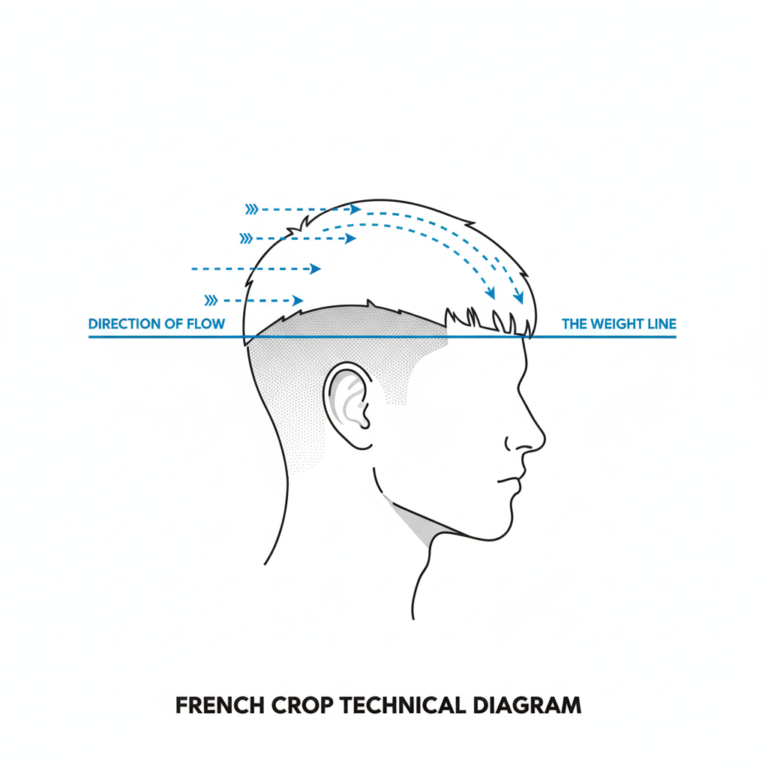
Anatomy of Efficiency: Defining the Silhouette
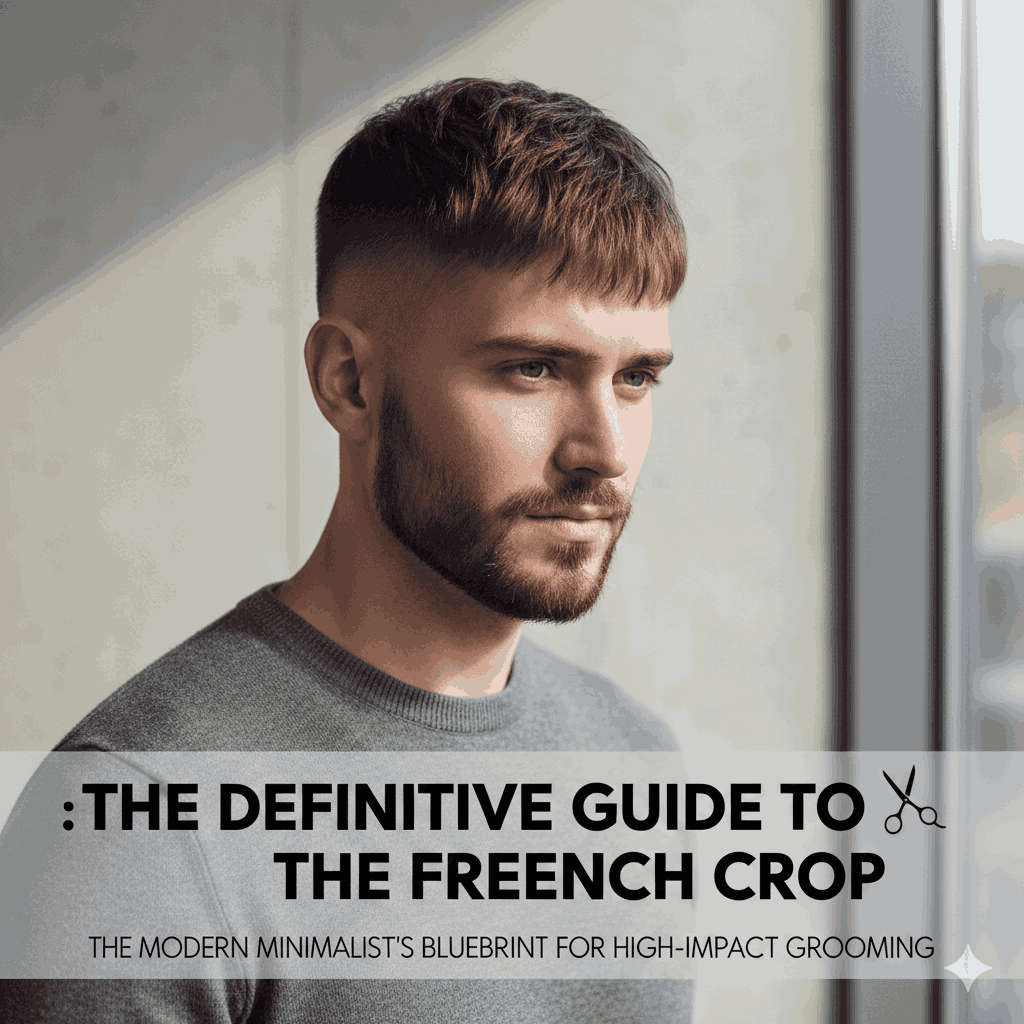
A french crop cut is defined by three distinct components: the forward-swept top, the fringe, and the faded sides. Unlike its cousin, the Caesar cut, the French crop allows for more length on top, which creates the opportunity for texture.
- The Top: Usually 2 to 4 inches in length, directed entirely toward the face.
- The Sides: Short and tapered, usually featuring a french crop fade.
- The Fringe: The “shelf” of hair that sits on the forehead.
The Signature Fringe: Framing the Face
The fringe is the architectural centerpiece. For the minimalist, there are three primary paths:
The Blunt Cut
A razor-sharp horizontal line that creates a bold, geometric frame. This is the best french crop haircut for those with straight hair who want a striking, high-fashion look. 📐
The Textured Fringe
Point-cut with shears to create a “choppy” edge, perfect for the textured french crop haircut look. It breaks up the forehead line, making it softer and more approachable.
The Micro-Fringe
A high-fashion variation where the fringe is cut very short, exposing the forehead and emphasizing the jawline. This is often paired with a french crop high fade for maximum impact.
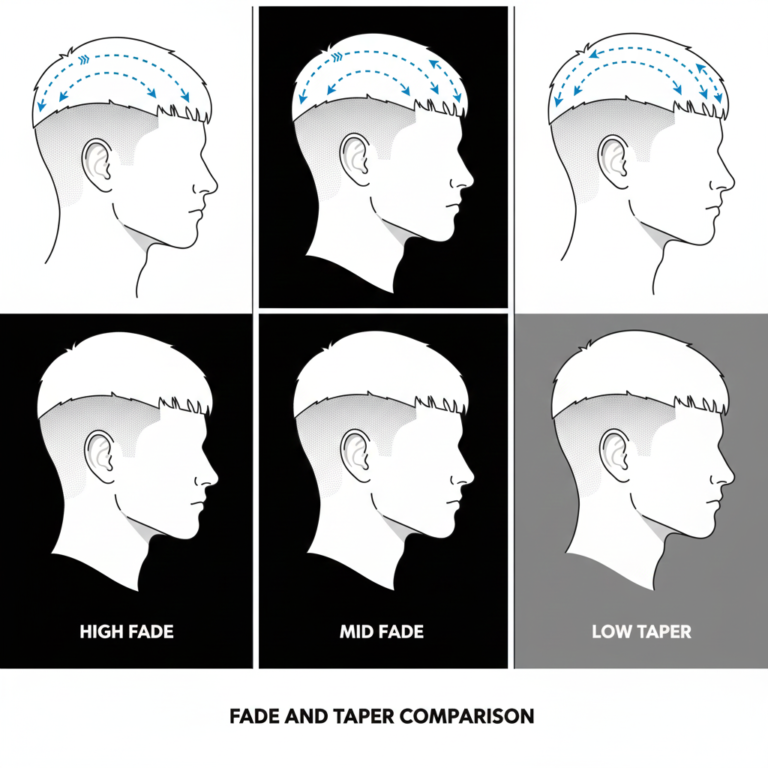
The Fade & Taper Spectrum: The Geography of the Sides
The “impact” of the french crop haircut comes from the sides. The fade acts as the “negative space” that makes the top pop.
French Crop High Fade
Starting near the crown, the french crop high fade provides the most contrast. It is aggressive, clean, and ultra-modern.
French Crop Mid Fade
The french crop mid fade is the “Goldilocks” of haircuts. It starts at the temple, offering a balanced silhouette that suits almost every face shape.
French Crop Low Fade
A low fade french crop is the most conservative version. It keeps more hair around the temples and ears, making it ideal for the corporate minimalist.
The Skin Fade vs. Taper
- Skin Fade: The hair is taken down to the bare skin. It is high-contrast and sharp.
- French Crop Taper: A french crop taper or french crop taper fade is more gradual. It leaves some hair around the perimeter, resulting in a softer, more classic look.
Texture & Styling Mastery: The “France” Aesthetic
The “messy” look of the textured french crop haircut is actually a result of precision engineering. To achieve that effortless “France” look, your barber uses specific techniques like slide cutting.
The Slide Cutting Technique
By sliding shears down the hair shaft toward the face, the barber removes weight and encourages the hair to lay forward naturally. This creates “channels” in the hair that respond beautifully to minimal product.
The 2-Minute Minimalist Routine
- Prep: Apply a sea salt spray to damp hair. This adds “grit” and volume.
- Dry: Briefly blow-dry forward or air-dry while walking to the office. 💨
- Finish: Use a dime-sized amount of matte clay or styling powder. Pinch and twist the ends of the hair to create french crop texture.
The Architectural Match: Finding Your Crop
Not all crops are created equal. The key to a successful french crop men hairstyle is matching the geometry of the cut to the geometry of your face.
Square & Oval Faces
These shapes are the “ideal” canvas. A french crop high fade with a blunt fringe emphasizes a strong jawline. 🏗️
Round & Heart Faces
To avoid a “circular” look, go for a french crop mid fade with plenty of texture on top. Adding height helps elongate the face.
Long Faces
Avoid high fades. A low fade french crop with a longer, heavier fringe helps balance proportions by “shortening” the forehead.
er fade French crop gradually shortens the hair near the neckline and temples without exposing the skin. It’s a clean, subtle option that maintains a natural look.
Best for: Professional environments, low-contrast preferences
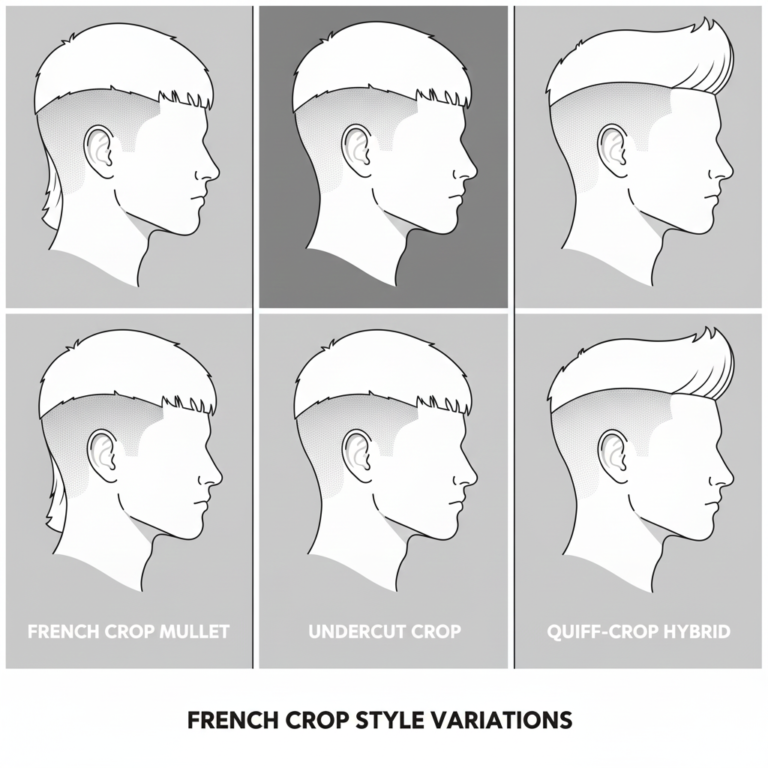
The Hybrid Era: Pushing the Boundaries
The French crop is evolving. We are seeing a rise in “Hybrid” styles that mix the crop with other cultural icons.
- French Crop Mullet: For the radical trend-seeker, the french crop mullet haircut combines a short, cropped fringe with a textured, long back. 🐎
- French Crop Undercut: A french crop undercut removes the fade entirely, creating a sharp, disconnected shelf of hair on top. 🏝️
- French Quiff: A french quiff haircut blends the forward sweep of a crop with the upward lift of a quiff at the very front of the fringe.
The Maintenance Cycle: Longevity of the Look
A minimalist style is only minimalist if it stays sharp. Because the french crop fade is so precise, growth becomes visible quickly.
- The Refresh (2-3 Weeks): Get a “touch-up” on the fade and a “line-up” on the fringe.
- The Full Cut (4-6 Weeks): A complete overhaul of the top length and texture.
Keeping the Fade Blurry
A “blurry” fade is one with a perfect gradient. As it grows, it becomes “fuzzy.” To maintain the french crop top fade, use a trimmer at home only for the very bottom of the neck—leave the rest to the professional.
The Growth-Out Guide: Transitioning with Style
If you decide to move on from your france crop hair, you don’t have to endure an “awkward phase.”
- Stage 1: Let the fringe grow past the eyebrows while keeping the sides in a low fade french crop.
- Stage 2: Transition the forward sweep into a side-swept fringe.
Stage 3: Once the hair hits 5-6 inches, you can transition into a mid-length messy style or a classic side part
The Barber Script: How to Ask for the Cut
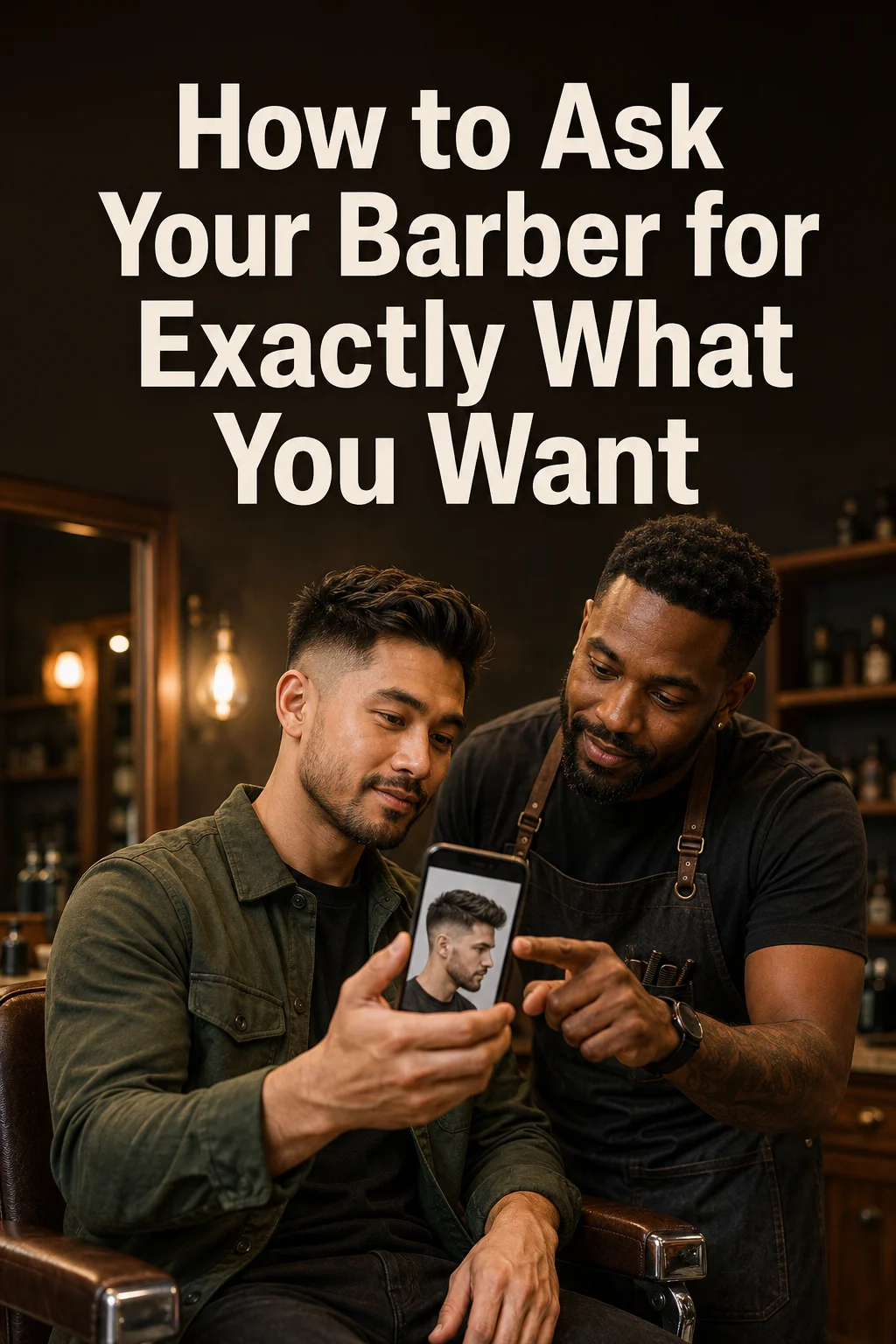
To ensure you get the best french crop haircut, use these exact terms with your stylist:
“I’d like a French Crop with a [High/Mid/Low] Skin Fade. I want the top to be [Textured/Blunt] and swept forward. Please use slide cutting to remove weight and give it a directional flow toward the front.”
Key Terms to Remember:
- Textured French Crop: Messy, choppy, movement.
- Blunt French Crop: Straight, geometric, bold.
- Skin Fade: Scalp-level short on the sides.
- Taper Fade: Subtle, blended sides.
Recommended Product Matrix
For the minimalist, fewer products are better. Invest in these three:
Product | Use Case | Result |
Sea Salt Spray | Pre-styling | Volume & Grit |
Matte Clay | Finishing | Texture & Hold |
Styling Powder | Root Lift | Gravity-defying volume |
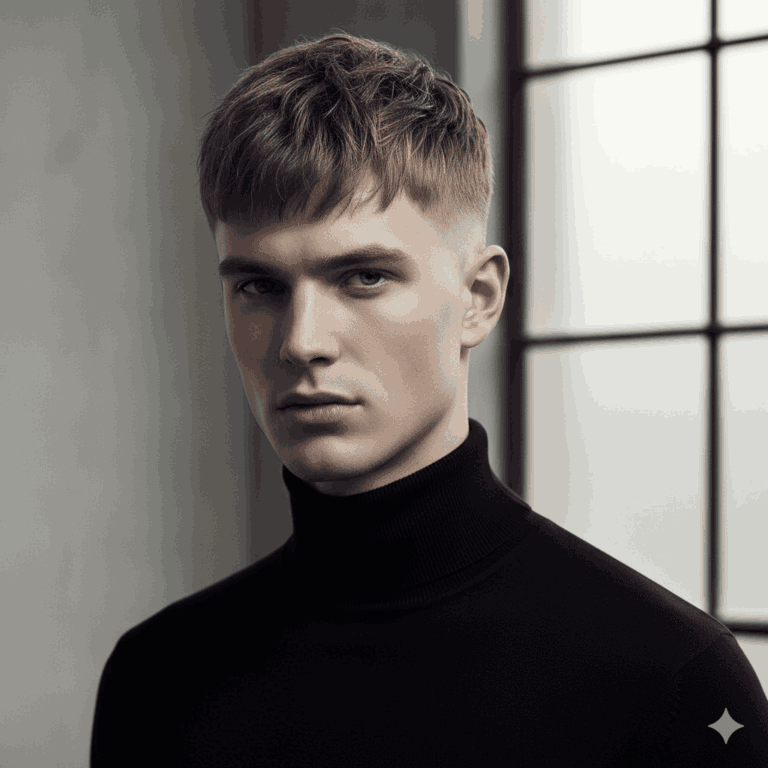
Conclusion: The Future of the French Crop
The france crop hair trend isn’t a passing fad; it is a fundamental shift in how men approach grooming. By embracing the french crop haircut, you are choosing a style that respects your time, enhances your features, and fits perfectly within the modern minimalist aesthetic.
Whether you opt for a french crop short for ultimate ease or a long french crop haircut for more styling versatility, the result is the same: a high-impact, low-maintenance look that defines the modern era of men’s style. 🏛️