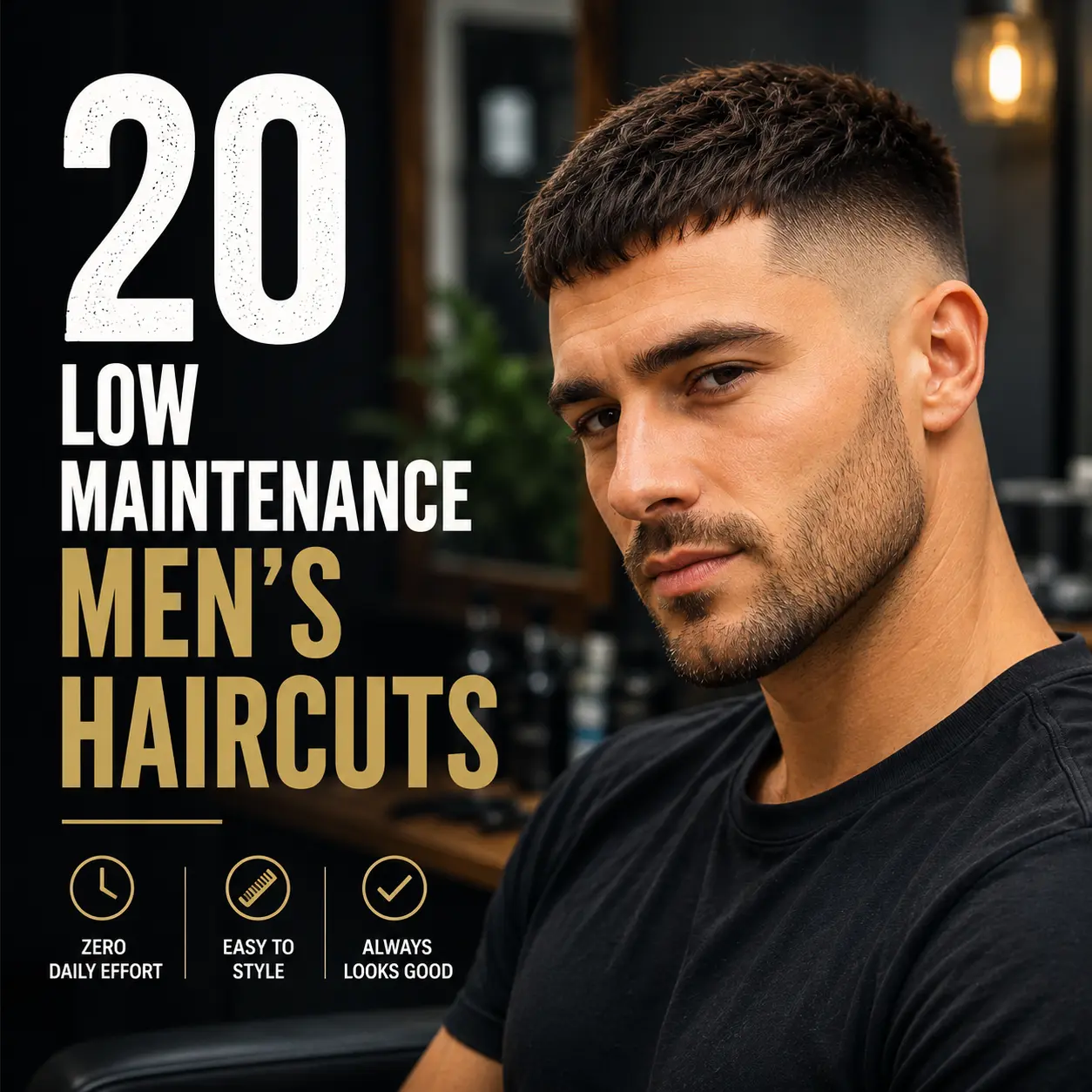

With over 50 distinct haircut styles trending in 2026, choosing the right one can feel overwhelming — but it doesn’t have to be.
Whether you’re heading to the barber for the first time or looking to switch up your look, this guide breaks down every major men’s haircut style: what it looks like, who it suits, and exactly how to style it at home.
From sharp skin fades to effortless textured crops, we’ve covered the cuts dominating barbershops across the US, UK, Europe, and Asia — so you can walk in with confidence and walk out looking exactly how you envisioned.
In this guide you’ll find:
- The 7 most popular men’s haircuts in 2026 (with photos)
- How to match your cut to your face shape and hair type
- Styling tips and product recommendations for each style
- A full maintenance routine to keep your cut fresh between visits
Pro tip: Before scrolling, identify your hair type — straight, wavy, curly, or coily. It’s the single biggest factor in which cuts will actually work for you.
Fade Haircut for Men: Low, Mid, High & Skin Fade
The fade is the most requested men’s haircut of 2026 — and for good reason. It works on almost every face shape, suits all hair types, and pairs with virtually any style on top, from a textured crop to a full pompadour.
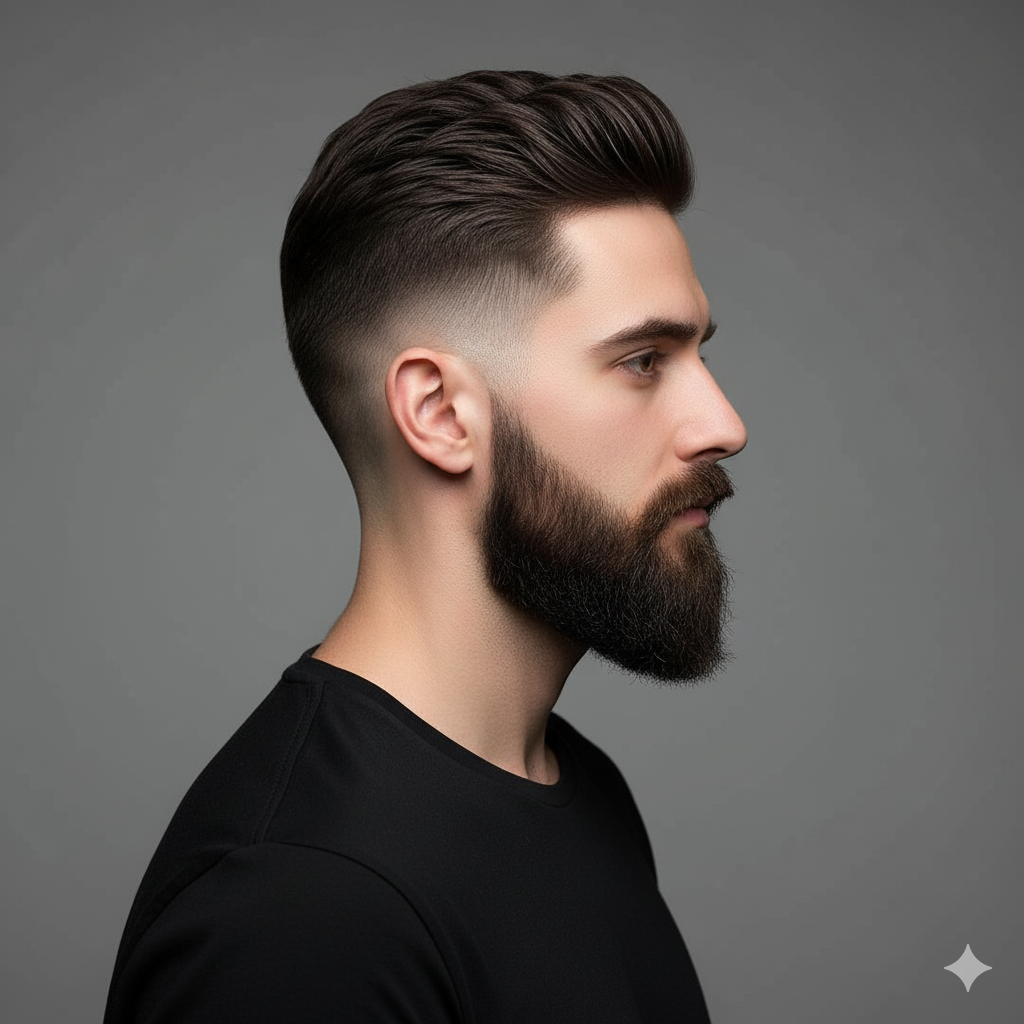
A fade gradually shortens the hair from top to bottom, blending into the skin with no hard lines. The difference between fade types comes down to where that blend starts on the head.
The 4 main fade variations:
| Fade Type | Where It Starts | Best For | Vibe |
|---|---|---|---|
| Low fade | Just above the ear | Professional settings | Subtle, clean |
| Mid fade | At the temples | Most face shapes | Balanced, versatile |
| High fade | Near the top of the sides | Bold personalities | Sharp, dramatic |
| Skin fade | All the way to bare skin | Statement looks | Maximum contrast |
Best for: All face shapes — oval and square faces benefit most from high fades; round faces should opt for mid or high fades to add length.
Hair types: Works on straight, wavy, and curly hair. For coily hair, a low or mid fade preserves natural volume on top.
How to style it:
- Ask your barber to specify the fade level (low/mid/high) and the guard number at the transition point.
- On top, style with a matte clay for a natural finish or a light pomade for shine.
- Use a boar bristle brush to lay the sides flat post-fade, especially in the first week.
Maintenance: A skin fade needs a touch-up every 2 weeks to stay sharp. A low or mid fade can go 3–4 weeks before looking grown out.
Recommended products:
- For natural finish: American Crew Forming Cream
- For shine & hold: Baxter of California Clay Pomade
- For curl definition on top: SheaMoisture Curl Enhancing Smoothie
“The fade is the foundation of modern men’s barbering — get the fade right and everything on top looks better.” — [Licensed Barber Name], [City]
→ See our full Fade Haircut guide with 30+ style photos
How to Choose the Right Haircut for Your Face Shape
Knowing your face shape is the fastest shortcut to a great haircut. The right cut balances your proportions — the wrong one can make your face look wider, longer, or unstructured.
How to find your face shape: Pull your hair back and look straight into a mirror. Trace the outline of your face with a finger or lipstick on the mirror. Compare to the shapes below.
Round Face
Characteristics: Wide cheeks, soft jawline, similar width and length.
Goal: Add height and length, reduce width.
Best cuts: High fade with quiff, pompadour, faux hawk, long top with shaved sides.
Avoid: Buzz cuts, bowl cuts, or anything with volume on the sides — these make a round face appear wider.
Styling tip: Always add height on top. A quiff or pompadour styled upward adds the vertical length a round face needs.
Square Face
Characteristics: Strong jawline, broad forehead, angular features.
Goal: Soften angles slightly while highlighting the jaw.
Best cuts: Crew cut, side part, classic taper, textured crop, ivy league.
Avoid: Very high fades that over-emphasize the jaw width.
Styling tip: A side part with a light hold cream creates structure without making the jaw look overly wide.
Oval Face
Characteristics: Forehead slightly wider than the jaw, balanced proportions, gently rounded chin.
Goal: Maintain balance — almost anything works.
Best cuts: Virtually every style suits an oval face. Fades, undercuts, quiffs, pompadours, buzz cuts — all work well.
Avoid: Very long styles that add length to an already long face shape.
Styling tip: You have the most flexibility of any face shape. Use this as an opportunity to experiment with bolder styles.
Long (Oblong) Face
Characteristics: Face length significantly greater than width, high forehead, long chin.
Goal: Add width, reduce length.
Best cuts: Textured crop with fringe, low fade, side sweep, styles with volume on the sides.
Avoid: Pompadours, quiffs, or anything that adds more height — this makes a long face look even longer.
Styling tip: A fringe or textured crop that falls forward shortens the appearance of a long forehead significantly.
Diamond Face
Characteristics: Narrow forehead and jawline, wide cheekbones.
Goal: Widen the forehead and soften the cheekbones.
Best cuts: Fringes, side-swept styles, textured top with low fade.
Avoid: Cuts that add width at the cheekbones, like high-volume sides.
Styling tip: A fringe brought slightly forward balances a narrow forehead and draws attention away from wide cheekbones.
Hair Type × Face Shape Quick Reference
| Face Shape | Straight Hair | Wavy Hair | Curly Hair | Coily Hair |
|---|---|---|---|---|
| Round | High fade + quiff | Textured quiff | Curly top high fade | Tapered afro |
| Square | Side part | Textured crop | Curl fade | Shape-up fade |
| Oval | Any style | Any style | Any style | Any style |
| Long | Fringe crop | Side sweep | Low fade + fringe | Low taper |
| Diamond | Side sweep | Textured fringe | Curly fringe | Defined coil top |
The Undercut
The undercut has been a barbershop staple for over a decade — and in 2026 it’s evolved beyond the classic disconnected look into a more refined, versatile style with several modern variations.
The defining feature is contrast: the sides and back are buzzed or shaved short at a uniform length, while the top is left significantly longer. That disconnected line between the two lengths is what gives the undercut its sharp, intentional look.
The main undercut variations:
| Style | Description | Best For |
|---|---|---|
| Classic undercut | Uniform short sides, long top slicked back | Formal settings |
| Disconnected undercut | Hard line between sides and top | Bold, fashion-forward looks |
| Textured undercut | Long, messy top with product for separation | Casual, everyday wear |
| Undercut fade | Sides fade into skin rather than hard cut | Softer, modern take |
| Curly undercut | Natural curls kept long on top, faded sides | Curly and wavy hair |
Best for: Straight and slightly wavy hair. Works well on oval and square face shapes.
Hair types: Straight hair holds the classic slicked-back style best. Wavy hair gives beautiful natural texture on top. Curly hair creates a dramatic volume contrast.
How to style it:
- Start with towel-dried, slightly damp hair on top.
- Apply a matte clay or fiber paste — work it through from roots to ends for separation and texture.
- For the classic look, use a comb to sweep the top back. For a textured finish, use your fingers instead.
- Finish with a light-hold hairspray to lock the style without stiffening it.
Maintenance: The sides need trimming every 2–3 weeks to maintain the disconnected line. The top can grow longer over time — many men let it grow to slick back or tie up.
Recommended products:
- For slicked-back look: Uppercut Deluxe Pomade
- For textured finish: Hanz de Fuko Quicksand
- For curly top: Cantu Wave Whip Curling Mousse
→ See our complete Undercut Hairstyles for Men guide with 40+ style photos
The Quiff
The quiff is the hybrid haircut — it borrows the volume of a pompadour, the sharpness of a fade, and the ease of a textured style. The result is a haircut that looks polished without appearing overdone.
The defining feature is the front section: hair is lifted, swept slightly back, and held with light-to-medium hold product, creating a soft peak above the forehead.
Quiff variations:
Best for: Oval, round, and long face shapes. The height from the quiff elongates round faces and adds structure to long ones.
Hair types: Works best on medium to thick hair. Fine hair can achieve the quiff look with the right volumizing products.
How to style it:
- Blow-dry damp hair upward and forward using a round brush — this builds the foundation of the lift.
- Apply a volumizing mousse to damp hair before blow-drying for extra body.
- Once dry, work a medium-hold matte clay through the front section and push upward and back.
- Use a comb or your fingers to shape the peak, then finish with a light mist of hairspray.
Maintenance: A quiff holds its shape best when trimmed every 3–4 weeks. Ask your barber to keep length at the front (the “quiff section”) while cleaning up the sides.
Recommended products:
- For volume: Hanz de Fuko Claymation
- For light hold: American Crew Fiber
- For fine hair: Schwarzkopf Osis+ Dust It Mattifying Powder
The Buzz Cut
Few haircuts carry as much confidence as a well-executed buzz cut. It’s minimal, masculine, and in 2026, it’s having a serious style moment — driven by celebrities and athletes embracing the clean, no-fuss aesthetic.
A buzz cut uses clippers with a guard attachment to cut all hair to one uniform length. Variations differ in length and whether the sides are tapered or left uniform.
Buzz cut variations:
Best for: Square and oval face shapes — the clean lines emphasize a strong jawline and balanced proportions. Also the best option for men with thinning hair.
Hair types: Works on all hair types. For coily hair, a buzz cut creates a clean, defined look that’s easy to maintain.
How to style it:
- A buzz cut needs no daily styling — that’s the point.
- After showering, pat dry and apply a very light moisturizer to the scalp, especially if you go very short.
- If you have a #3 or longer buzz, a tiny amount of matte paste can add slight definition.
Maintenance: The shorter the buzz, the more frequently it needs trimming. A #1–#2 needs a touch-up every 1–2 weeks. A longer buzz (#3–#4) can go 3–4 weeks.
Scalp care note: Very short buzz cuts expose the scalp to sun. Apply SPF to your head on sunny days — this is often overlooked but genuinely important.
Recommended products:
- For scalp care: Neutrogena Ultra Sheer SPF 50 (scalp application)
- For slight definition: Baxter of California Grooming Cream
The Pompadour
The pompadour has a rich history — popularized in the 1950s by Elvis Presley — and in 2026 it’s been thoroughly modernized. Today’s pompadour is less shiny, less structured, and far more wearable in everyday settings than its vintage predecessor.
The defining feature is volume at the front: a large section of hair swept upward and back from the forehead, creating a peak that sits high above the hairline.
Pompadour variations:
Best for: Oval and round face shapes. The height adds length to round faces and frames oval faces beautifully. Best suited to medium-to-thick hair.
Hair types: Medium to thick hair holds a pompadour best. Fine hair can achieve the look with volumizing products but may need more product and heat styling.
How to style it:
- Start with clean, damp hair. Apply a volumizing mousse from root to mid-length.
- Blow-dry the front section upward using a round brush, building height as you go.
- Once dry, scoop a small amount of pomade (matte for modern, shiny for classic) and work it through the front.
- Use a comb to sweep the hair back and up, forming the peak.
- Lock with a medium-hold hairspray — hold the can 30cm away for a natural finish.
Maintenance: Trim every 3–4 weeks. Keep the sides clean (a mid fade pairs perfectly) and maintain the length on top.
Recommended products:
- For classic look: Suavecito Original Hold Pomade
- For modern matte: Layrite Superhold Pomade
- For fine hair volume: Not Your Mother’s Curl Talk Mousse
→ Read our full guide: How to Style a Pompadour for Men
The Crew Cut
The crew cut is the benchmark of men’s haircuts — understated, universally flattering, and always appropriate. It’s been worn by athletes, executives, and military personnel for decades, and in 2026 it remains one of the most requested cuts in barbershops worldwide.
The defining structure: hair on top is cut short, with the longest point at the front hairline gradually tapering toward the crown. The sides are faded or buzzed clean.
Crew cut variations:
Best for: All face shapes — the crew cut is one of the most universally flattering cuts available. Particularly strong on square and oval faces.
Hair types: Ideal for straight and wavy hair. Works on thick and fine hair alike — fine hair actually benefits from the short length as it reduces the appearance of thinning.
How to style it:
- On freshly washed, towel-dried hair, apply a small amount of light-hold cream.
- Use a comb or your fingers to push the front section slightly upward or to one side.
- For the Ivy League variation, create a clean side part with a fine-tooth comb before applying product.
- Finish with a quick blast of cool air from a hairdryer to set the shape.
Maintenance: One of the lowest-maintenance cuts available. Trim every 3–4 weeks. No special tools or routine needed between visits.
Recommended products:
- For natural finish: American Crew Grooming Cream
- For slight shine: Redken Brews Maneuver Cream Pomade
The Curly Top Fade
For men with natural curls or coils, the curly top fade is the haircut that works with your texture rather than against it. The faded or tapered sides bring structure and balance to the volume sitting on top, letting your natural curl pattern take centre stage.
In 2026, curl-positive cuts are growing faster than any other category in men’s barbering — driven by a broader cultural shift toward embracing natural texture.
Curly top fade variations:
Best for: Round and square face shapes — the height from the curls balances wider facial features. Works on all curl types from wavy (2A) to coily (4C).
How to style it:
- Wash with a sulfate-free, moisturizing shampoo — sulfates strip the natural oils curls need.
- While hair is soaking wet, apply a curl-defining cream from roots through to ends using the “praying hands” technique (smoothing product between both palms and running through hair).
- Scrunch upward to encourage curl formation — don’t rub or it will frizz.
- Air-dry or use a diffuser attachment on a low heat setting.
- Once dry, break the “cast” (the crunchy feel from product) by scrunching gently with dry hands.
Maintenance: Curly hair needs moisture more than it needs trimming. Deep condition weekly. Visit the barber every 3–5 weeks to maintain the fade — the top can be left to grow between visits.
Recommended products:
- For curl definition: SheaMoisture Coconut & Hibiscus Curl Enhancing Smoothie
- For moisture: Cantu Shea Butter Leave-In Conditioning Repair Cream
- For hold without crunch: Eco Styler Olive Oil Gel
→ See more Curly & Wavy Haircut Ideas for Men
Haircut Maintenance & Styling Routine
A great haircut is only half the equation — how you maintain it between barber visits determines how long it stays sharp.
Weekly routine
Day 1–2 post-cut: Your haircut looks its sharpest right now. Minimal product needed — let the cut do the work.
Days 3–7: Light product application daily. Focus on keeping the shape intact rather than restyling from scratch.
Week 2–3: Edges begin to soften. This is when a good styling routine makes the biggest difference.
Week 3–4: Book your next appointment. Most short cuts start losing their structure here.
The essential grooming toolkit
Seasonal product adjustments
Spring/Summer: Switch to lighter, water-based products. Humidity increases frizz — use an anti-humidity spray as a finishing step. Wash hair more frequently if you’re sweating.
Autumn/Winter: Cold air and indoor heating dry hair out. Use richer conditioners and consider a weekly deep conditioning treatment. Switch to heavier pomades for better hold in wind.
Blow-drying correctly
Most men blow-dry their hair pointing the dryer downward — this flattens the cuticle against the shaft and kills volume. Instead:
- Always direct airflow upward and toward the root for volume.
- Use medium heat, not maximum — excessive heat causes breakage over time.
- Finish with a 10-second burst of cool air to set the shape and add shine.
- Keep the dryer moving — holding it in one spot causes heat damage.
When to wash vs. when to dry style
Not every day needs a full wash. Over-washing strips natural oils and makes hair harder to style.
- Fine hair: Wash every 1–2 days — fine hair gets oily quickly.
- Medium hair: Wash every 2–3 days.
- Thick or coily hair: Wash 1–2x per week — these hair types need natural oil retention.
On non-wash days, a small amount of dry shampoo at the roots refreshes the style without water.
Trending Men’s Haircuts Around the World (2026)
United States
High skin fades remain the dominant barbershop request, particularly in urban areas. The Edgar cut (a blunt, straight fringe with a high fade) has surged in popularity, especially among Hispanic communities where it originated. Textured crops and buzz cuts with shape-ups are also widely requested.
United Kingdom
The fringe-forward textured crop dominates UK barbershops — short on the sides with a longer, textured top pushed forward rather than back. The undercut remains a staple in cities like London and Manchester. The “wolf cut” (a shaggy, layered style with curtain bangs) is gaining ground among younger men.
Asia
South Korean men’s hair trends continue to influence global styles. Layered, straightened, and slightly longish cuts — often with a slight inner curl at the ends — are popular in Korea and Japan. In Southeast Asia, slick-back styles and permed textures are trending heavily.
Europe
Natural, effortless styles dominate across Western Europe. The French crop (short textured top, minimal fade, often with a short fringe) is having a moment in France, Spain, and Italy. Curly and wavy hair is increasingly worn in its natural state rather than straightened, with tapered sides for structure.
Middle East
The skin fade with a styled top remains the defining look — often paired with a sharp beard lineup. Pompadour fades and disconnected undercuts with heavy volume on top are also widely popular across the region.
Your Haircut, Your Identity
The right haircut isn’t just cosmetic — it shapes how you carry yourself. The confidence that comes from a cut that genuinely suits your face, your hair, and your lifestyle is immediate and visible.
But the best haircut in the world needs consistent care to stay at its best. Use this guide as a reference — come back when you’re thinking about switching styles, when your hair changes texture, or when you simply want something new.
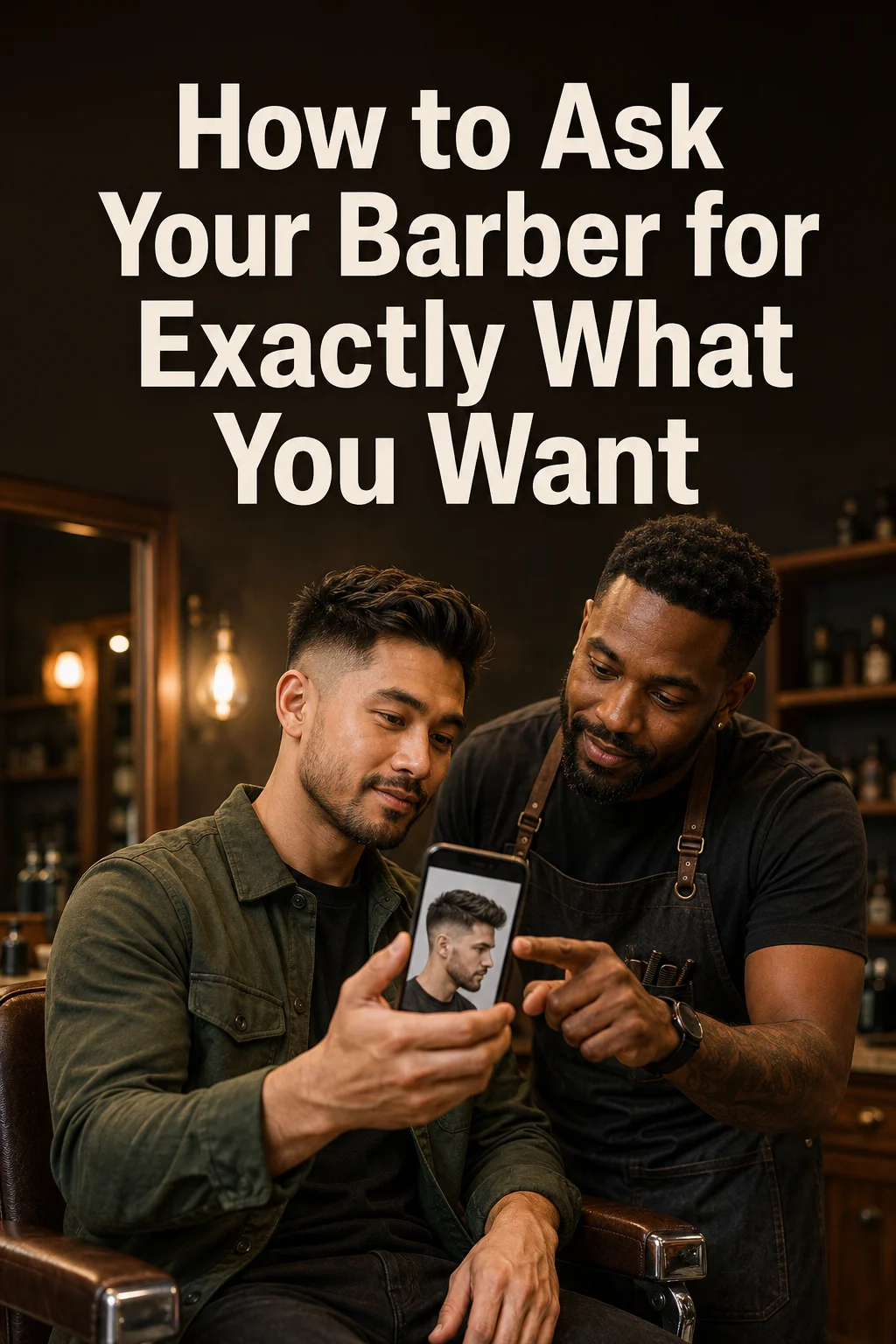
The most important step? Walk into your barber with a photo and a clear brief. Tell them your lifestyle, your hair type, and how much time you’re willing to spend styling. A great barber will do the rest.